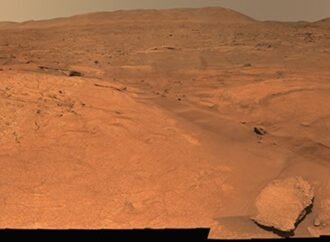
1 Min Read Perseverance’s View of ‘Turquoise Bay’ PIA26815 Credits: NASA/JPL-Caltech/MSSS Photojournal Navigation Science Photojournal Perseverance’s View of… Photojournal Home Photojournal Search Latest Content Galleries Feedback RSS About Description NASA’s Perseverance Mars rover used its Mastcam-Z camera to capture this 360-degree panorama of “Turquoise Bay,” a geologic area of interest in the “Margin Unit.”
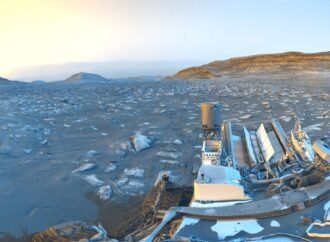
While parked at a sand ridge nicknamed “Chocolatal,” NASA’s Curiosity Mars rover used its black-and-white navigation cameras to capture panoramas at two times of day. The first was taken on Aug. 30, 2026, at 9:56 a.m. local Mars time; the second was taken on Sep. 2, 2026, at 5:39 p.m. local Mars time. Those dates
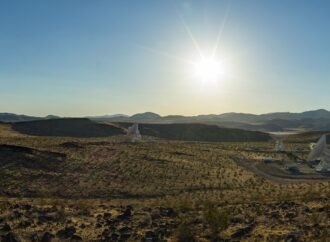
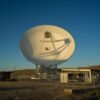
Five antennas soak in the summer sun at the Deep Space Network’s Goldstone complex near Barstow, California, in August 2026. The recently completed Deep Space Station 23, a 34-meter (114-foot) beam-waveguide antenna, can be seen to the right of the frame in the foreground. The other three 34-meter antennas are, from left, DSS-26, DSS-25, and DSS-24.
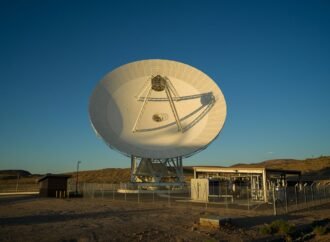
Long shadows are cast by the recently completed Deep Space Station 23 at the Deep Space Network’s Goldstone complex near Barstow, California, in August 2026. A 34-meter (114-foot) multifrequency beam-waveguide antenna, DSS-23 will boost the DSN’s capacity and enhance NASA’s deep space communications capabilities for decades to come. NASA leadership and personnel as well as
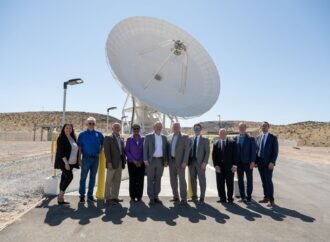
Leadership from NASA Headquarters, the Jet Propulsion Laboratory, and the Deep Space Network (DSN) stand in front of the recently completed Deep Space Station 23 antenna at the Deep Space Network’s Goldstone complex near Barstow, California, on Aug. 25, 2026. From left: Germaine Aziz (project manager, DSN Aperture Enhancement Project, JPL); Bradford Arnold (manager, Telecom
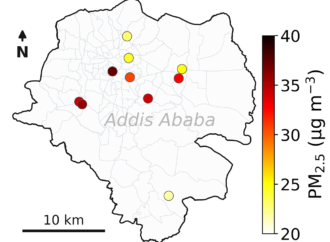
This map of Addis Ababa, the capital of Ethiopia, shows the locations of 10 air sensors that NASA’s Multi-Angle Imager for Aerosols (MAIA) mission is using to provide one of the most detailed looks ever at the city’s air pollution. Over the course of three years, these sensors measured particulate matter that is 2.5 micrometers or less in