Antimatter is not known for being easy to get ahold of. That’s part of why these particles remain so cryptic. But recently, a team of physicists at Northwestern University managed to trap a single antimatter particle for months. Cooling it to temperatures near absolute zero, they could control its quantum states with great precision without
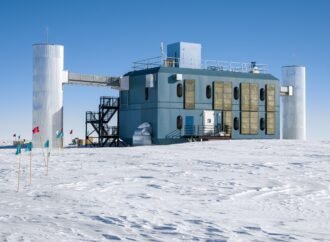
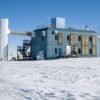
The IceCube Neutrino Observatory in Antarctica.Credit: Christopher Michel (CC BY-SA 4.0) I vividly remember the first time I read one of Francis Halzen’s papers about high-energy neutrinos. It was the late 1990s, and I was an undergraduate student at the University of California, Berkeley. The field of astroparticle physics was young, and Halzen was making
“There are continuing problems with positive leap seconds even after 50 years, and the concern was that the negative leap second would be much more serious because its effects had never been tested,” Levine says. BIPM time department director Patrizia Tavella confirmed those concerns in an email to WIRED. “The probability of a negative leap
As part of this work, hundreds of seismometers, as well as networks of fiber-optic cables, will be used to record even the tiniest of earthquakes during periods of tranquility and unrest. This monitoring effort will be aided by machine learning programs that will be taught to identify minute shifts in the seismic soundtrack of these
In 1915, Albert Einstein unveiled his general theory of relativity and transformed our view of the fabric of the physical world. The theory, which explains gravitation as a deformation of space-time by mass, is a pinnacle of modern physics that underpins cosmology, from work on black holes to measurements of gravitational waves, and is used
Time’s Second Arrow: Evolution, Order, and a New Law of Nature Robert M. Hazen and Michael L. Wong W. W. Norton (2026) Like evolution by natural selection, some ideas that start out as revolutionary can become so intuitive that they seem banal to future generations. Mineralogist Robert Hazen and planetary scientist Michael Wong must hope