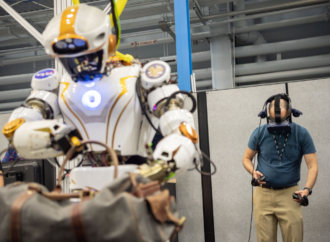
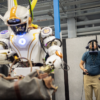
The idea of humans and robots working side-by-side in space was once the stuff of science fiction, but with NASA launching increasingly complex missions deeper into space, human-robot collaboration could become reality. Advanced robotic systems are critical for human spaceflight because they can enhance a crew’s performance and productivity while reducing risk and expanding the
In a creepy video, a robot arm powered by OpenAI’s GPT-6 Astra AI model picks up a large knife and pokes a baby doll sitting near a baguette, following instructions to “stab the thing that’s not the bread.” In another, a robot arm, this time using Anthropic’s Claude Fable 5.1 as its brain, carries out
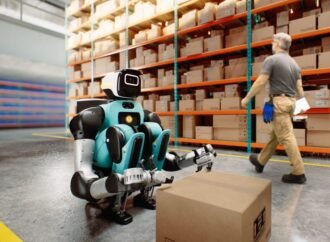
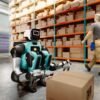
Agility Robotics has taken the wraps off Digit 5, the next generation of its warehouse humanoid robot and the first the company says is engineered for “cooperatively safe” work at scale. This means it is designed to share a floor with people rather than sit behind the fencing that has defined industrial robots for decades.
Travis Kalanick’s new robotics startup, Atoms, has scooped up a high-profile hire. Vikas Chandra, a longtime Meta AI executive who led AI work for the company’s smart glasses, announced Monday that he is joining the startup as vice president of AI. At Atoms, Chandra said he will build “foundation models for the physical world” —
Meta is testing robots that can plug in cables, reset servers, and handle other tasks inside its data centers, according to several current and former workers familiar with the projects. The ongoing effort, which has not been previously reported, may eventually allow Meta to operate its rapidly expanding data center footprint with fewer humans, keeping
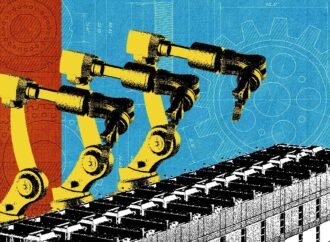
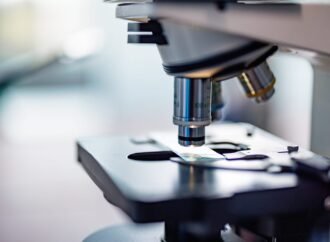
Imagine a factory where all the equipment is powered by AI, where robotic arms and assembly lines can “communicate” with their own shared language. Or picture a science lab, where microscopes can autonomously search for a certain type of molecule—all hours of the day, no humans necessary. That’s the idea behind Anthropic new Model Hardware