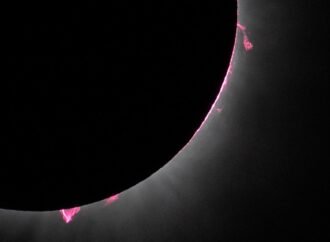
Solar prominences protruding from the Sun’s corona during a total solar eclipse in Dallas in 2024.Credit: NASA/Keegan Barber When the Moon blocks the Sun over Greenland, Iceland and Spain on 12 August, researchers will get roughly two minutes to study the solar corona, the Sun’s outermost layer, which is only visible to the naked eye
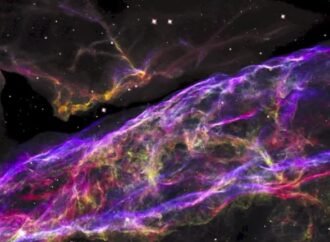
Remains of an exploded star, captured by the Hubble Space Telescope.Credit: NASA, ESA and F. Summers, G. Bacon, Z. Levay and L. Frattare (Viz 3D Team, STScI) The Hubble Space Telescope is a bold expression of human curiosity. Since its launch in 1990, it has done much more than simply expand humanity’s scientific reach: it