Taliban security personnel stand guard ahead of a public flogging of 27 women and men at a football stadium in Charikar city of Parwan province on December 8, 2022 in front of a large crowd. AFP/via Getty Images hide caption toggle caption AFP/via Getty Images We have previously reported on the Taliban’s position that public
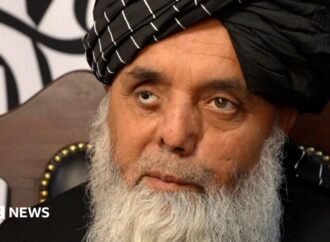
At the graceful foreign ministry compound in Kabul, Taliban Foreign Minister Amir Khan Muttaqi tries to put on a brave face. “There’s no doubt that we need some help,” he admits. “There is pressure due to their return but in the long run, it will benefit them as well as Afghanistan.” In the first years
His superior, Abdul Samad, shows us an unmarked graveyard, saying his father is buried here, killed fighting for the Taliban. The area is one of the most deprived in a country where the UN says three in four people cannot provide for their basic needs. Samad says the local population desperately need water, roads and
UN officials believe their presence in Afghanistan makes a difference, however limited. They point to progress on issues such as the treatment of prisoners, their detailed discussions on the harsh implementation of the morality code known as the Propagation of Virtue and Prevention of Vice, as well as efforts to improve humanitarian access. “Engagement is
Afghanistan is currently the only country in the world where girls are officially banned from secondary and higher education. Shakiba recounted that “15 August, when the government fell, was the worst and most painful day of my life. “Every year when this date comes I feel as if an old wound opens again and a
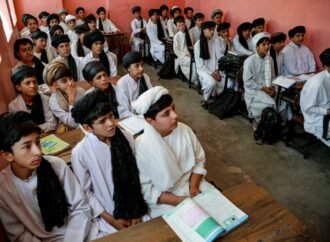
Afghan school boys wear Taliban-imposed uniforms of turbans and long tunics in a school in Herat. The government has put more focus on religious education since returning to power on August 15, 2021. Mohsen Karimi/AFP/via Getty Images hide caption toggle caption Mohsen Karimi/AFP/via Getty Images By Grade 11, Hashmat Mubariz had stopped attending school regularly.