France confirmed the death of the first person infected with the Shamonda virus, which is known to affect cattle, sheep, and goats and was previously considered non-transmissible to humans. The French government asserts that, based on current knowledge of this pathogen, there is no risk to the general public. It emphasized, however, that health authorities
AI agents trawling through genomic data spotted sequences of DNA (artist’s illustration) reminiscent of those in bacterial CRISPR immune systems. Credit: Kateryna Kon/SPL/Getty Sure, AI can parse petabytes of data. But how well can it pipette? Regardless of the answer, artificial intelligence titan Anthropic has launched a biology ‘wet lab’ where human scientists and AI
Thousands of protein pairs from disease-causing viruses, such as monkeypox virus, have been added to the protein-structure database AlphaFold.Credit: Kateryna Kon/SPL A database of predicted structures for nearly every known protein on Earth is being upgraded to better represent some of the least known and deadliest species: viruses. Researchers added more than 8,000 virus protein
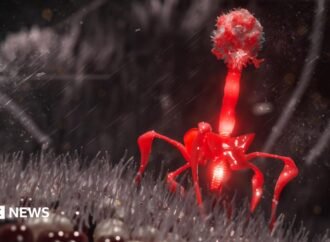
For the first time, an artificial intelligence system has created a series of previously unknown viruses capable of infecting and eliminating certain types of bacteria. This breakthrough opens up new possibilities for combating bacterial resistance. However, it also raises concerns about the potential misuse of this technology to design biological weapons. For several years now,
Epstein–Barr virus (coloured electron microscope image) is among several viruses in the body that can be reactivated by severe bouts of COVID-19.Credit: James Cavallini/Science Photo Library A severe bout of COVID-19 can wake up an army of dormant viruses hiding inside the body. That’s according to a study of more than 1,000 people hospitalized with
Viruses are not alive and it would take another significant leap for AI to generate living organisms. The genetic code of the phage is around 5,400 base pairs (letters) long. The smallest genome of a living cell is around 500,000 base pairs. The human genome is three billion base pairs. Hie says “it would probably