We live in an hyper-connected world, yet language remains one of the final friction points in global travel, business, and daily communication. Especially across the Asia-Pacific region, multilingual environments aren’t a niche edge case, they are our daily reality. While the market has recently been flooded with AI devices claiming to revolutionise note-taking, the real
We live in an hyper-connected world, yet language remains one of the final friction points in global travel, business, and daily communication. Especially across the Asia-Pacific region, multilingual environments aren’t a niche edge case, they are our daily reality. While the market has recently been flooded with AI devices claiming to revolutionise note-taking, the real frontier for wearable tech lies in breaking down human language barriers in real time. That’s where the newly launched Timekettle LiveTalk AI Translation Earbuds step in, taking aim at one of technology’s most ambitious goals: seamless, cross-cultural conversation.
For this deep dive, I really wanted to focus on the AI-translation capabilities of these earbuds. So here’s how the technology works, where it excels, and what the real-world experience is like when you take them out into the wild.
Unboxing
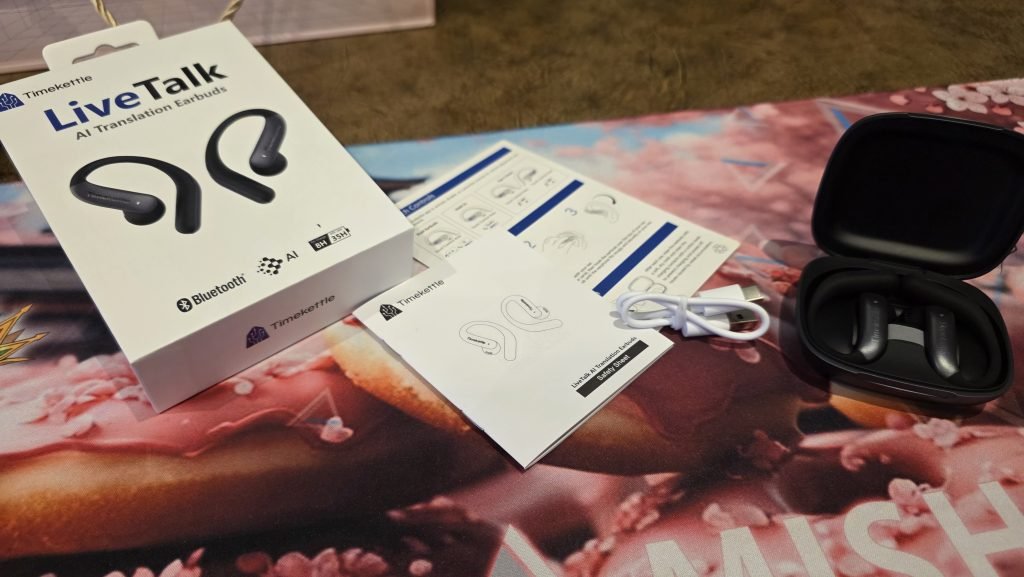
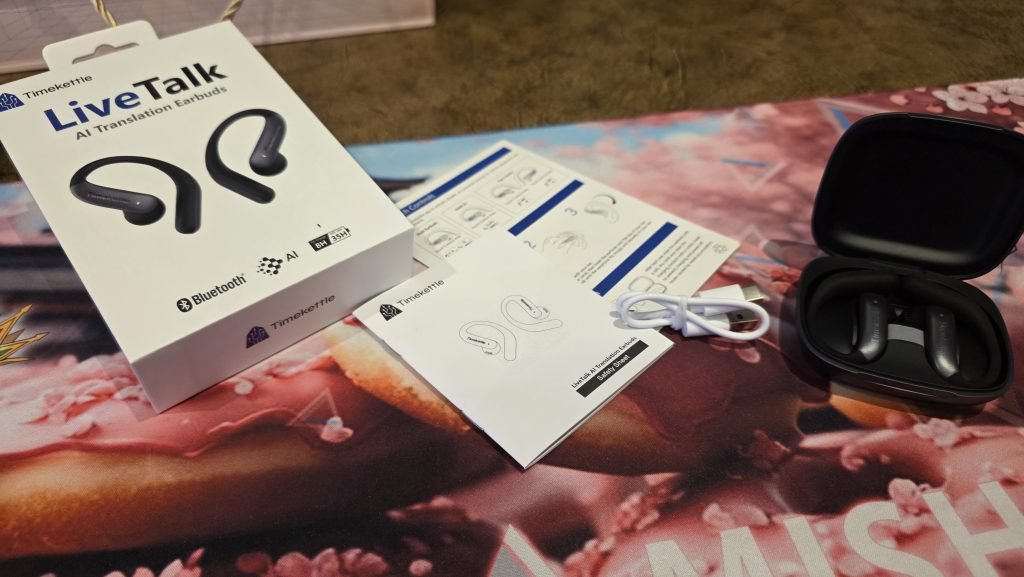
We live in a world where tech is constantly shrinking, but every now and then, a product lands on my desk that truly surprises me with its footprint. When I unboxed the Timekettle LiveTalk AI Translation Earbuds, my immediate reaction was how small it was. They are ridiculously easy to slip into a pocket or bag, or pop into my tech pouch. But more than just the compact case, it’s the shift in form factor and purpose that makes these so intriguing. The box comes with everything you need to get started on your multilingual journey. You’ll receive the earbuds, charging cable, and quick start guide. I like the diagrams on the quick start guide that show you how to get started. More on that below.
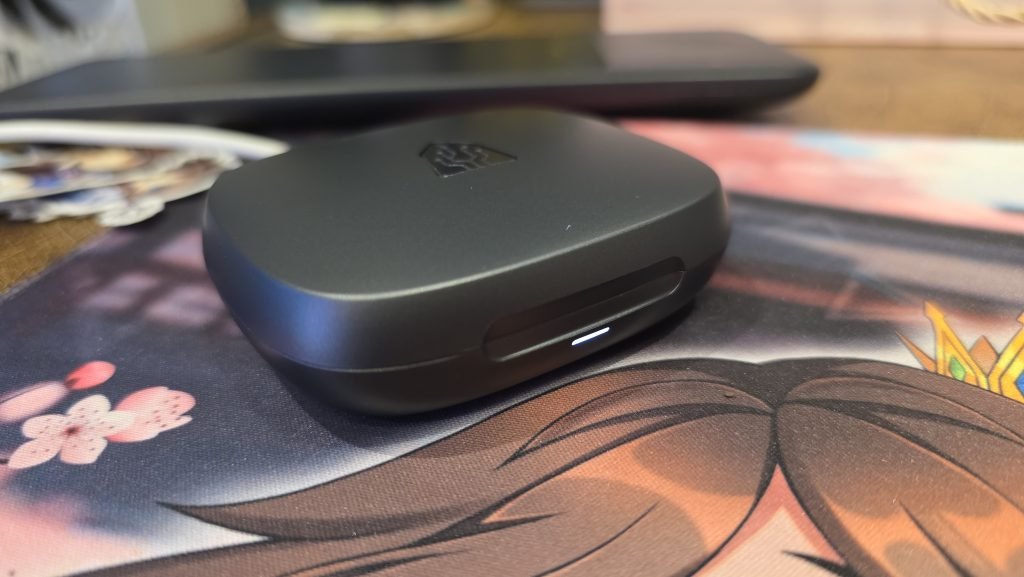
My one tiny design wish? The front logo on the case looks very cool, and it would have been even better if it lit up as a subtle status indicator!
Real-World need: Why multilingual AI matters
I was recently in Japan, and having real-time translation capabilities in your pocket is an absolute game-changer. It’s easy to forget when you live in an English-speaking country that a huge portion of the world speaks English as a second language, or not at all. Across our APAC region in particular, multilingual communication isn’t just a luxury; it’s a daily reality. Case in point: I was hosting a webinar the other day on multilingual AI voice tech, and I was literally the only person on the line who only spoke English. Everyone else was switching between Hindi, Chinese, Japanese, German, Mandarin, and more. Being able to bridge that language gap in real time isn’t just a cool party trick. It gives you a massive leg up whether you’re traveling, networking, or running global business meetings.
Design and comfort: Wear them all day and forget they’re there
Timekettle LiveTalk AI Translation Earbuds feature an open-ear design that wraps over your ear rather than shoving a silicone tip down your ear canal.
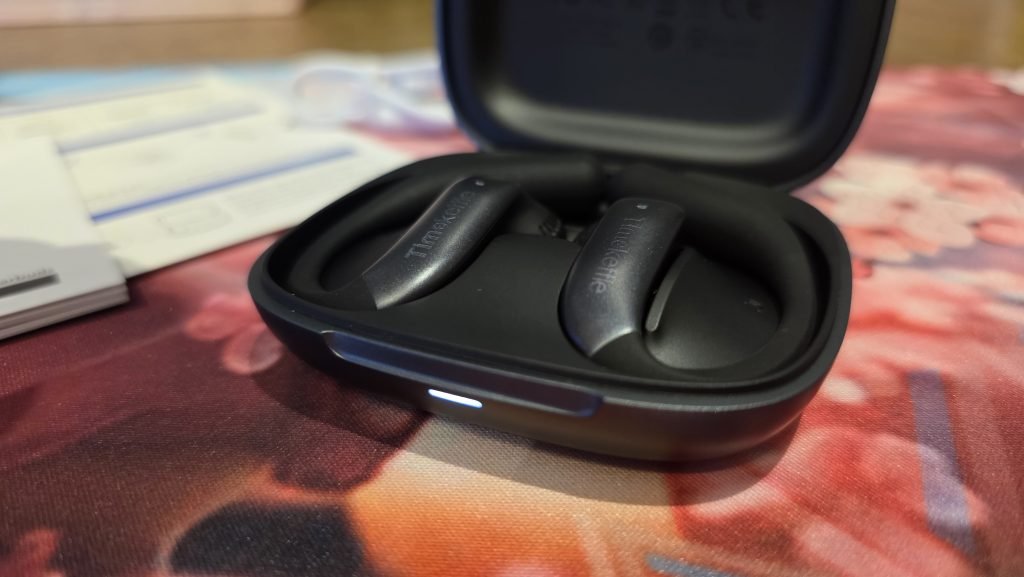
- The fit: If you haven’t worn open-ear buds like this before, don’t worry—the included quick-start diagram makes put-on instructions foolproof. Once they’re on, they are incredibly comfortable. Because the speaker sits just outside your ear canal, there’s no pressure buildup or annoying ear fatigue.
- Ambient awareness: Because your ears aren’t sealed off, you can hear everything happening around you naturally. That environmental awareness is critical when you’re navigating airport terminals, ordering food in foreign cities, or walking through busy streets. They’re so lightweight that I wore them for hours while working and completely forgot I had them on.
- Aesthetics: They are slightly more prominent on the side of your head than subtle micro-in-ear buds. Walking around an event or in another country, you might look a bit like an official event coordinator or production tech wired into a comms team. But they still manage to look sleek, techy, and unobtrusive. Plus, if you have longer hair, people won’t even notice you’re wearing them.

App setup and everyday utility
To use the Timekettle LiveTalk AI Translation Earbuds, you really need to download the official Timekettle app (make sure it’s the official app, not a generic third-party clone; the QR code inside the box takes you straight there).
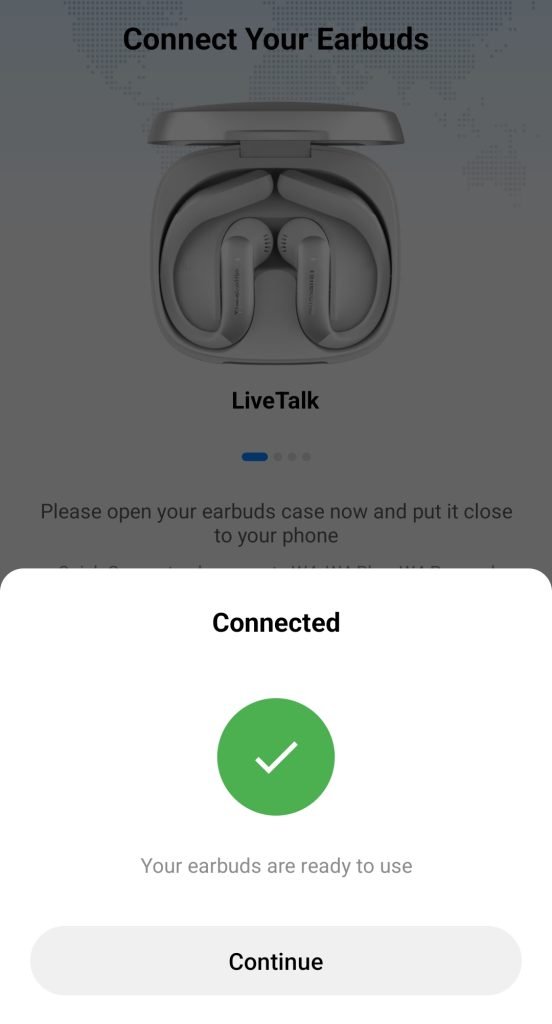
A couple of practical setup notes:
- Bluetooth pairing: The app prompt tells you to take the earbuds out to pair, but in my testing, they only connected smoothly while snug inside their case.
- Connection drops: If you leave them idle for a while, Bluetooth will drop out to save power. Pop the case open and closed, and you’re reconnected. A minor quirk, but easy enough to get used to.
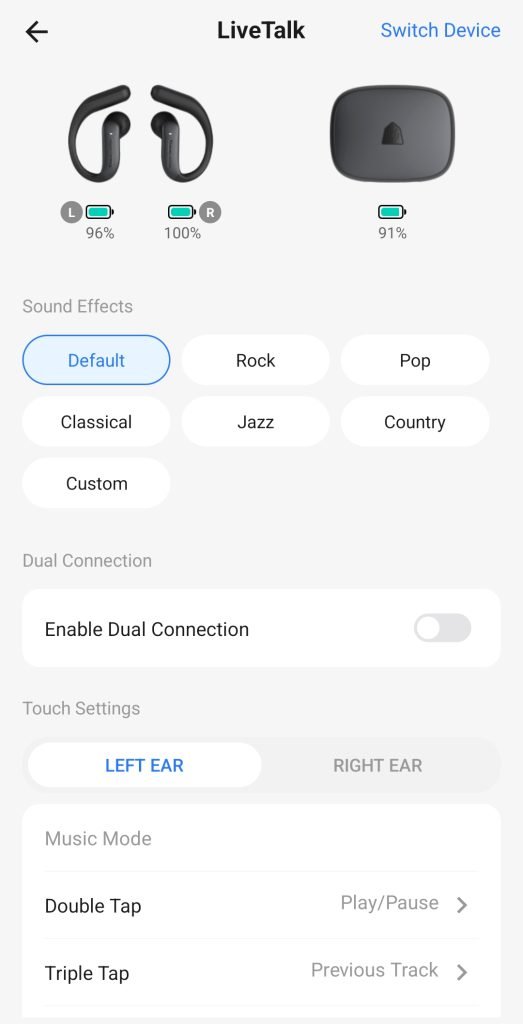
- Everyday earbuds: Beyond translation, they function as totally normal Bluetooth listening earbuds. In the app, you can also customise touch controls (like setting a double-tap to play/pause, skip tracks, or disabling touches altogether) and apply EQ settings independently or paired.
- Find My Earbuds: If you drop any of your earbuds down the couch cushions, or misplace it, you can trigger a loud sound directly from the earbud’s speaker to locate it. Super handy and no more lost earpieces.
- Battery management: The companion app is brilliant here. It breaks down the exact battery percentage for each individual earbud, gives you an estimated remaining run-time breakdown, and displays the case battery levels. Charging is straightforward over USB-C.
Deep Dive: The AI translation experience
Timekettle advertises support for 53 languages and 107 accents (plus regional English variations, which is fantastic given how different Australian, British, US, or Indian English accents sound to AI models).
An important technical distinction: the earbuds themselves aren’t processing the raw audio listening. Your smartphone mic and processor do the heavy lifting via the Timekettle app, streaming the translated audio output straight into your ears.
Translation modes
The Timekettle LiveTalk AI Translation Earbuds come with four key translation modes:
- Face-to-Face: You can split the earbuds, wearing one earbud yourself and handing the second to the person you’re speaking with. Alternatively, you wear both earbuds, and the other person listens/reads via your phone screen.
- Live Listening: This was my most-used mode. It passively picks up ambient audio around you and translates the spoken words into your ear in real time while outputting a live text transcript on screen.
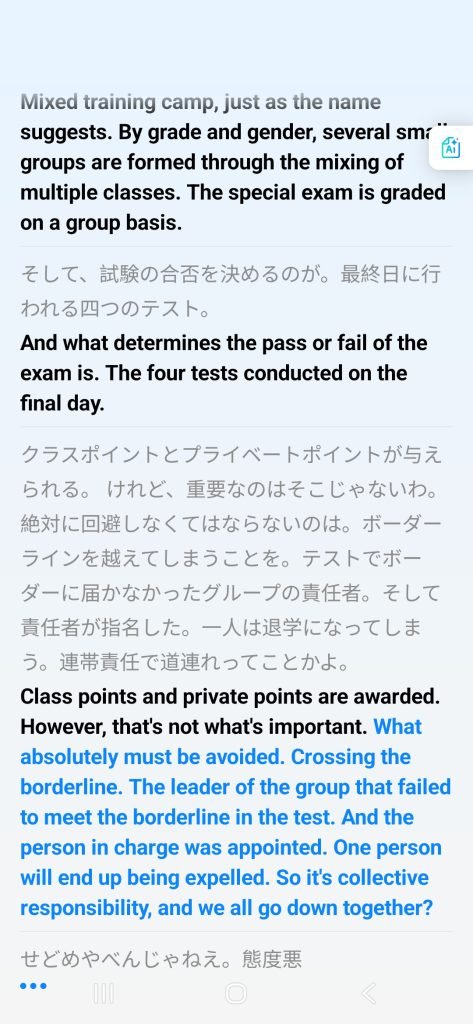
- Voice Call Translation: Lets you join video and voice calls, populating live translation subtitles inside the app.
- Multi-Media Translation: Designed for translating foreign YouTube videos, Netflix streams, podcasts, or foreign broadcasts.
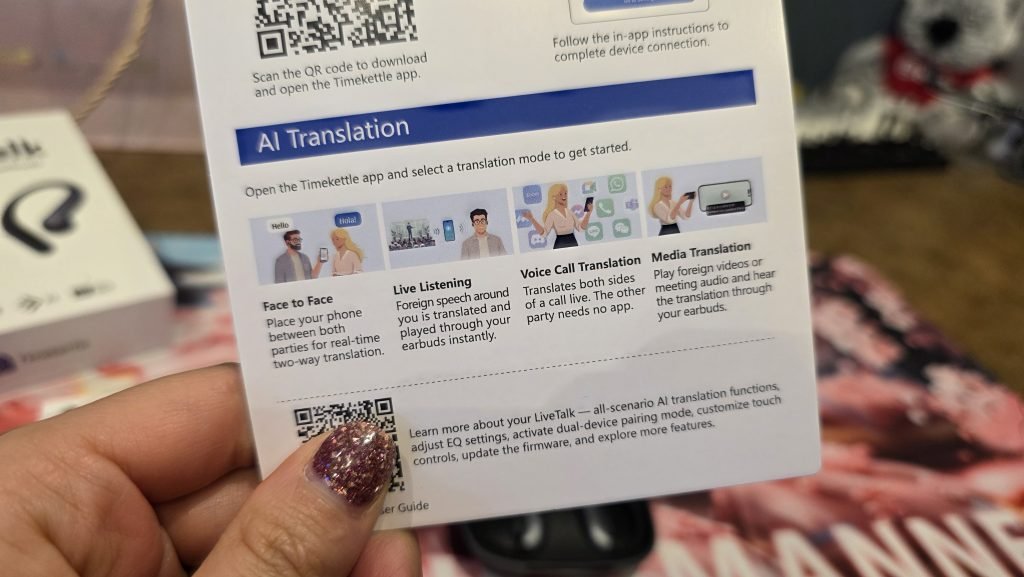
It’s worth noting that in all modes, you must manually select the input and output language pairs. The earbuds won’t auto-detect the language it hears on the fly.
How does it hold up in practice?
To test translation accuracy (since I only speak English and needed a control benchmark), I ran Japanese anime with native audio tracks and compared the real-time earbud translation against the verified English subtitles.
Here’s the reality of where the technology sits right now:
- Pacing is Everything: If someone is speaking at a slow-to-moderate, deliberate pace, the AI handles it remarkably well. However, if you are trying to follow rapid-fire, natural conversational speeds or fast dialogue in movies, the AI stream has to work overtime.
- The “Lag” Effect: Because the speaker engine tries to catch up with rapid conversation, sentences can occasionally skip or get compressed. You will consistently catch the gist and context of the conversation, even if you miss granular nuances. Listening to the synthetic fast-translated voice for extended periods can also be a bit of a cognitive drain when the conversation moves quickly.
- Live vs. Recorded Media: It performs exponentially better in real-life, face-to-face situations than on fast media. In person, you can let the other party know you’re using a translation tool, and people naturally adjust their speaking speed. This is naturally what would happen if you had a person translating for you; one party would speak a paragraph, and wait for the translator to relay the information. But trying to use it for raw, unedited foreign film scripts means you’ll probably only digest about half the dialogue.
Even with those pacing limits, perspective is key. Going from zero translation tools to having an instant, pocket-sized interpreter that translates 50+ languages straight to your ears is a massive technological leap forward. It doesn’t replace a $200/hr human interpreter, but for travel and global collaboration, it’s vastly more accessible.
Pricing plans and offline usage
Timekettle gives you 200 free translation minutes per month (just over 3 hours) out of the box, with a visual usage tracker right on the app home screen. If you need more headroom, you can purchase additional tiers:
- Booster Pack: $19.99 USD for an extra 600 minutes (10 hours).
- Pro Plan: $93.99 USD/year for an extra 300 minutes per month, plus the AI Translation Pack (adds meeting summaries, live key points, and personalised glossaries).
- Unlimited Plan: $149.99 USD/year with zero usage restrictions.
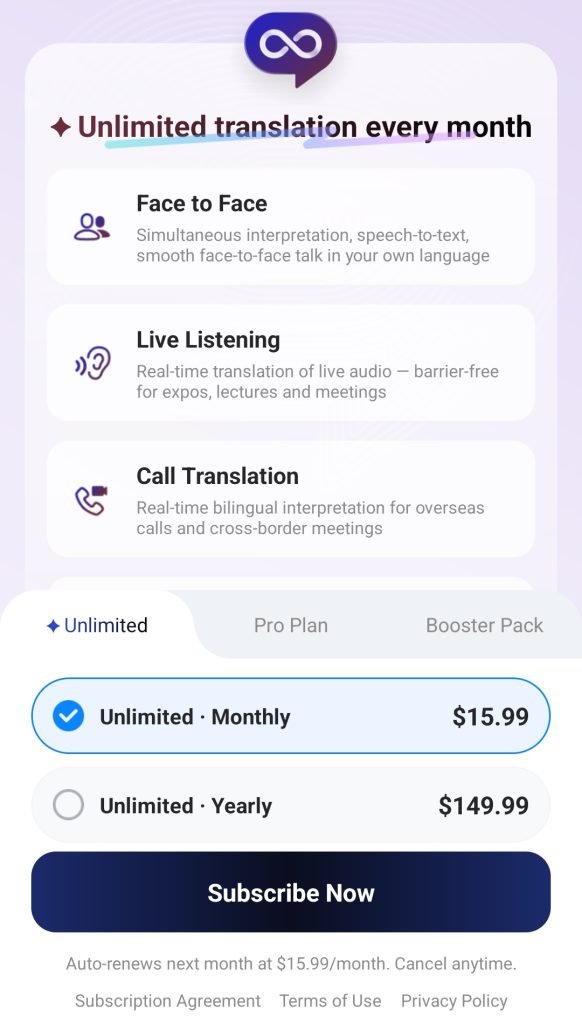
For travellers going off-grid, there’s also an Offline Translation Mode. You can download language packs in advance (much like Google Translate) to continue translating on flights or in remote areas without cellular signal.
The verdict
While other brand devices are positioning themselves purely as AI meeting note-takers, the Timekettle LiveTalk zeroes in on solving the actual human barrier: language.
It isn’t perfect—super-fast speakers will still test the limits of real-time AI processing—but as a travel companion and multilingual work tool, it’s a genuine game-changer. Combined with an ultra-comfortable open-ear design, solid app controls, and everyday earbud functionality, it’s one of the most practical pieces of travel tech you can drop $109 USD ($167.40 AUD) on right now (normally $129 USD or $198.12 AUD).
You can purchase it direct on the Timekettle website, and it’s available in Silver, Black, and Deep Sea Blue.
For more tech updates, stay tuned to our blog.