Raj Panjabi knows a thing or two about living with uncertainty. His family fled Liberia during the civil war, coming to the U.S. when he was 9. And he and his wife faced a crisis when their youngest child was diagnosed with heart failure. A physician, he served as malaria coordinator and then as global
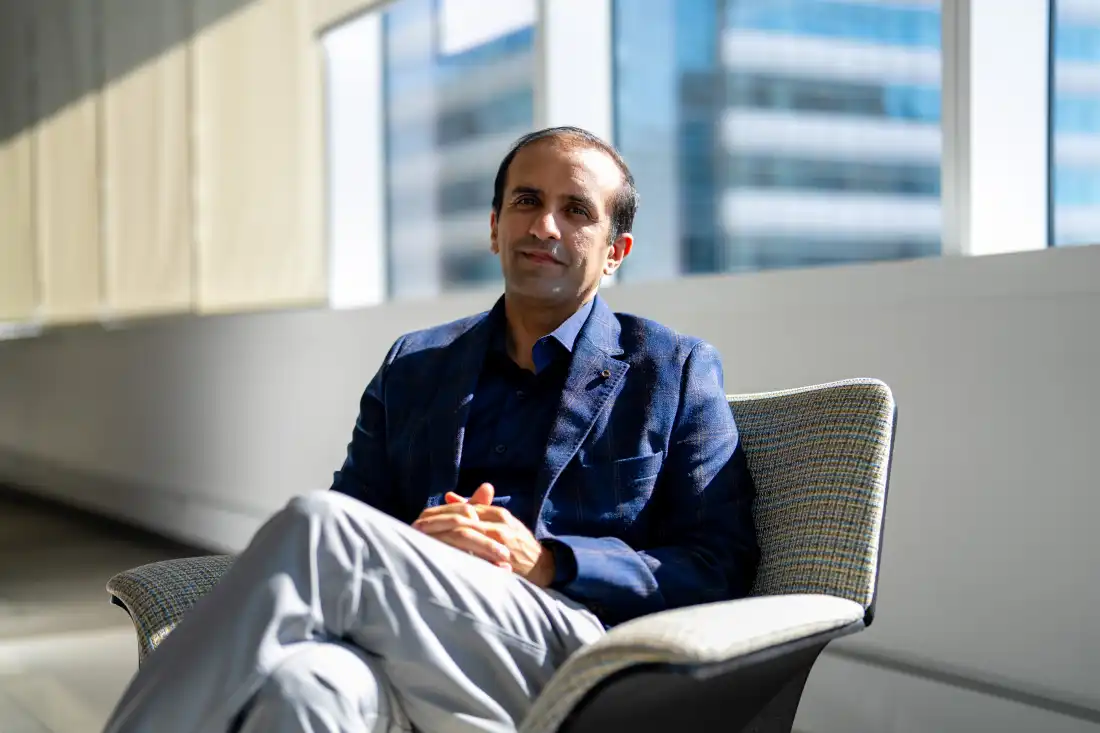
Raj Panjabi knows a thing or two about living with uncertainty. His family fled Liberia during the civil war, coming to the U.S. when he was 9. And he and his wife faced a crisis when their youngest child was diagnosed with heart failure. A physician, he served as malaria coordinator and then as global health security adviser in the Biden White House during the pandemic.
Ben de la Cruz/NPR
hide caption
Ben de la Cruz/NPR
TUESDAY VERSION
Dr. Raj Panjabi’s new book has a simple title: Safer: A Playbook.
Yes, a playbook like the kind sports managers use to firm up a winning strategy. But playbooks aren’t just for games.
“In the intensive care unit, we have a playbook when someone’s heart stops beating,” And when he was a White House health adviser during the COVID emergency, he says, “In the Situation Room, we had a playbook for pandemic preparedness.”
Then there was his own family’s situation — at age 1, his daughter was diagnosed with heart failure.
That experience inspired Panjabi to write a different kind of playbook. “I was frustrated that we didn’t have a playbook for crises that appear in our own living room.”
What he wrote is actually three books in one: The story of how he and his wife addressed their daughter’s life-threatening condition; an exploration of public health issues that beset the globe – and straightforward advice for anyone with a living-room crisis. The book’s chapter titles telegraph his philosophy: “Turn Denial Into Action.” “Don’t Go It Alone.” “Get Ready to Pivot.” “Embrace Uncertainty.”
Panjabi was born to Indian parents in Liberia; his family immigrated to the United States when he was 9. He became a physician and went on to found the award-winning humanitarian group Last Mile Health, which employs community workers to bring health information to people in remote areas.
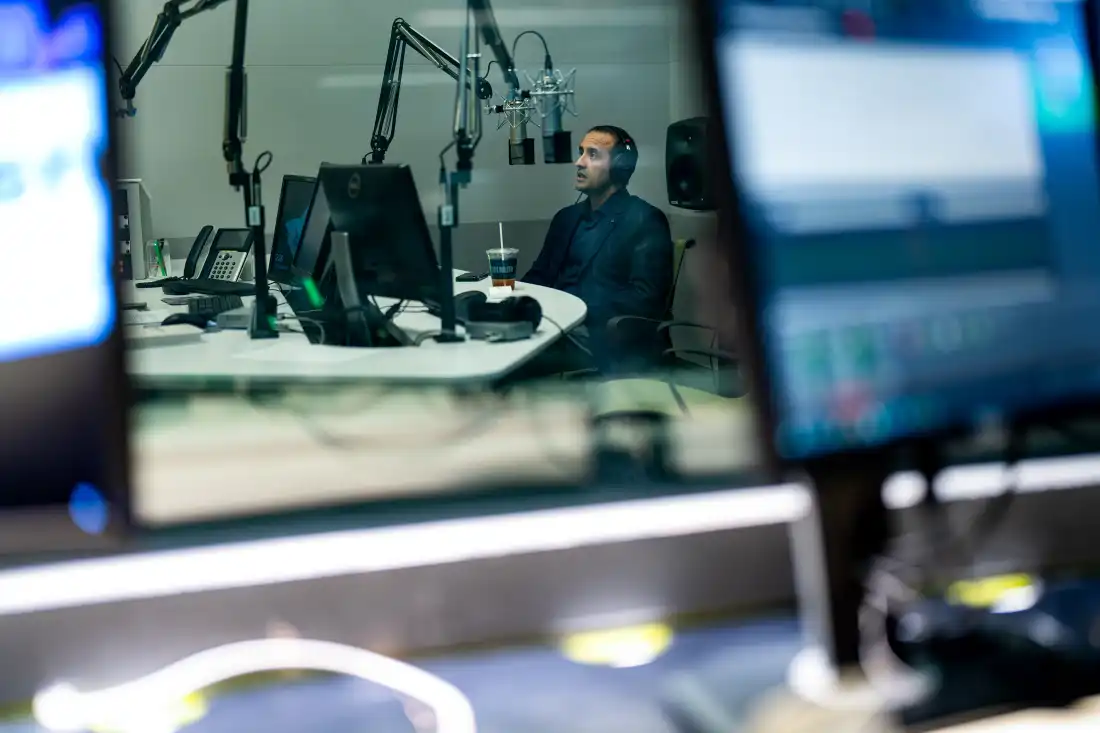
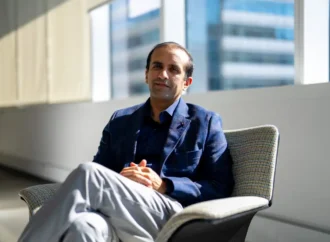
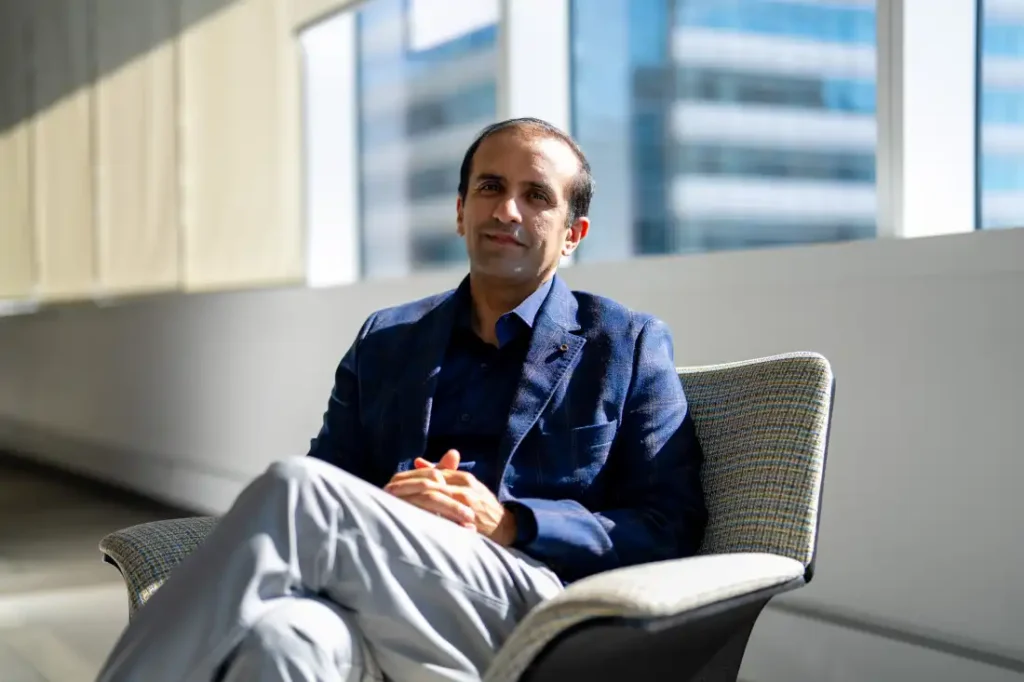
Raj Panjabi is interviewed at NPR headquarters in Washington, D.C., on Oct. 30.
Ben de la Cruz/NPR
hide caption
Ben de la Cruz/NPR
We interviewed Raj Panjabi at NPR headquarters on October 30. He had just flown in from meetings in Boston, wearing a sharp-looking sports jacket he’d bought at the airport — because his mother, who sells men’s clothing, is a tough critic of his fashion choices.
So one thing that happens in a crisis — and that a playbook can help address — is denial. You and your wife both dismissed early concerns about your daughter — thinking at first that her extremely low weight was because she was a picky eater.
I was wrought with the guilt of being a dad and missing this illness — and being a doctor and missing this illness in my own daughter. I thought it was a character flaw. What I learned is that it’s not. Denial is the first stage of almost every crisis. It could be a medical emergency, like in the case of my daughter. It could be job loss, that layoff you never thought would affect you.
And what I learned in researching the book — it turns out we have a hard time detecting slow moving threats until they reach a tipping point.
Psychologists call it normalcy bias — the idea that tomorrow will look a lot like yesterday. Until, of course, it doesn’t. The good news is that there are ways we can overcome that.
Such as …
In the case of a slow-moving crisis like my daughter’s illness, the very first thing you might do is set an if/then threshold. If I see a warning sign, I will act in X or Y way.
Your daughter is 9 now and has recovered. How do you deal with any lingering uncertainty about her heart health?
Every couple of years, she goes to the cardiologist and she gets an ultrasound of the heart. The trigger we’re looking for is whether the heart’s ability to squeeze is at a normal level or not. We’ll see that well before we see any major heart failure. Allowing a trigger to do the monitoring for you allows you to feel some agency and allows you to control what you can control.
Health crises can be very personal — but also societal. In the United States, measles — eradicated 36 years ago, is back because parents are opting not to vaccinate their kids. What’s the playbook for talking to those parents?
It’s much easier to ask a blame-oriented question when someone’s not protecting themselves or their community, such as “Why aren’t you following the guidelines?”
And you say in a family crisis or a crisis like the measles outbreak, it’s important to ask a different kind of question to move ahead.
When you meet face-to-face, you ask not a blame-oriented question but a barrier-oriented question. What’s in the way of you following the guidelines? And that starts to open up potential barriers that you can solve for.
Such as …
Often you start to hear some practical barriers — I can’t take time off work because I work multiple shifts in a day. I can’t find enough money to get a bus ticket to come to the clinic to get a vaccine.
You may also hear, “I heard that this vaccine might lead to a side effect.” Or, you know, in parts of the world I’ve worked in, people assume vaccines can lead to sterility or infertility.
What I’ve found Is in almost every scenario, if you meet face-to-face, if you ask a barrier- oriented question not a blame-oriented question, you start to understand people’s beliefs and their behaviors. And you don’t have to change someone’s beliefs for their behaviors to be more protective.
You stress that a bond of trust is essential in this type of situation.
One of the most important messages, as we have measles spreading in many parts of the country, is to ask: Where is trust still present? And what I found again and again is it’s not in Washington. It comes from your local faith leader, your local physician, your local healthcare provider, your local school. It turns out even in polling now, 80 to 90% of Americans still trust their healthcare provider. I argue in the book that our greatest protection is connection. If we build those relationships before a crisis, we’re more likely to weather it.
Arguably we are experiencing an artificial intelligence crisis now. Is it good … or will it doom us? You currently do work involving AI. What’s your take?
I do medical research now with scientists who are using AI to develop the next medicine to defeat cancer or the next vaccine to stop a supervirus. The same tools we’re using in our labs can be used by a terrorist to design a virus and make it more capable of evading our vaccines, [of] unleashing a super virus on humanity.
How do you address that dichotomy?
Psychologists have come up [a strategy] with when we face tremendous uncertainty — draw a circle on a piece of paper. Outside of that circle are actions you can’t control, such as whether or not a terrorist tomorrow decides they’re going to use this or not. But within the circle, I can control whether or not the scientists I work with are minimizing the risks of the way they use AI so that we can maximize its benefit for humanity.
And there is a simple point to keep in mind. You have to grow a virus in a lab. You have to have DNA to do it. AI has not yet been able to dissolve the barrier between the screen and the freezer, as it were. But that doesn’t give us permission to relax. We should be setting those warning signs, articulating them now and acting before that barrier gets dissolved.
I had to laugh at a note in your book’s closing comments. You mention making “legendary” peanut butter and jelly sandwiches to woo your wife-to-be. What made them legendary?
I had been rejected about three or four times by this young woman named Amisha Raja when I was a freshman at Chapel Hill. And I was a terrible cook. So I made peanut butter and jelly sandwiches, took her out for a lunch, surprised her. It was our first date. I don’t think the peanut butter and jelly sandwiches had a whole lot to do with her deciding to go on that date, but I’m grateful she did. Because 25 years later and then some were still together.
What’s your jelly of choice?
Oh, I am a big, big strawberry jam guy. And you gotta layer so it’s two thirds jelly, one third peanut butter.
That’s … sweet!
For stories about life in our changing world, subscribe to NPR’s Global Health newsletter.
{For more tech updates, stay tuned to our blog.|Keep following us for the latest insights.|Check back often for more exciting news!}