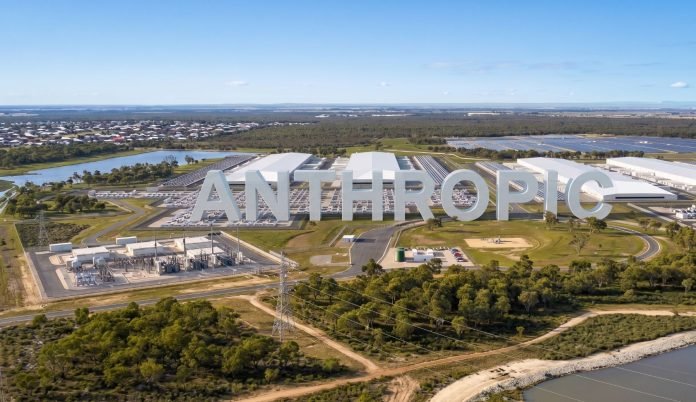
Anthropic has signed its first data centre lease in Australia, locking Claude into a proposed A$32 billion campus on cattle country west of Brisbane. Premier David Crisafulli announced the deal in Queensland Parliament on Wednesday. The site is Zerra DC’s Western Downs Digital Park, a 725.5 hectare feedlot block at Kogan, about 37 kilometres north-west
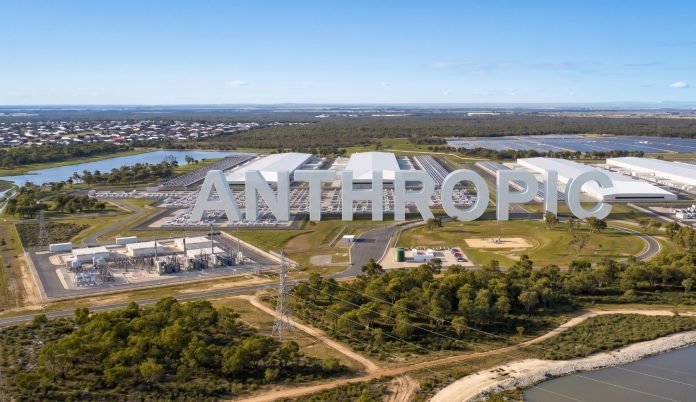
Anthropic has signed its first data centre lease in Australia, locking Claude into a proposed A$32 billion campus on cattle country west of Brisbane.
Premier David Crisafulli announced the deal in Queensland Parliament on Wednesday. The site is Zerra DC’s Western Downs Digital Park, a 725.5 hectare feedlot block at Kogan, about 37 kilometres north-west of Dalby and roughly 250 kilometres from Brisbane.
It’s important to understand this is not Anthropic pouring A$32 billion into Queensland on day one. Singapore-based Zerra DC is the developer.
Anthropic, the San Francisco company behind Claude, is the anchor tenant. The lease still needs Foreign Investment Review Board approval, and the development application is still sitting with Western Downs Regional Council after being lodged on 17 August 2026.
That caveat matters. A signed lease is a serious signal. It is not a finished building, and it is not Claude answering Australian queries from Dalby tomorrow.
The big build
The campus is designed as four single-storey data halls of about 36,000 square metres of data floor each, delivered in stages over roughly four years.
Zerra’s planning documents put IT capacity at 1.44 gigawatts across four 360 megawatt buildings. Peak draw on the grid is about 2.16 gigawatts once all four stages are running. That is the number behind the comparison to around 1.5 million average Australian households, and it would make this the largest data centre proposal in the country.
It is understood that Anthropic has documented a first-stage lease, with a path to more capacity if the park is approved and built, targeting 2027 for its first use.
That is an aggressive date given the application only went in last month and a four-stage build is measured in years, not weeks. Council, state referrals, Powerlink and FIRB all still have a say.
The two big components of Generative AI is training and inference, both which take compute and this datacenter will be focused on the later, meaning Claude will run here, but not be trained here.
Inference is the live work of answering a prompt. Training is the much heavier job of creating or updating the model.
Australia is still arguing over copyright rules for AI training data. This should have a positive impact on latency, meaning requests are faster for Australians using Anthropic models.
Why Queensland won the deal
Crisafulli has been selling Queensland as the state that can actually power a project this size.
The Western Downs site sits next to existing energy generation. Braemar’s gas-fired stations and substations are immediately south. Darling Downs Power Station and its solar farm sit to the south-west. APA’s Daandine plant is also nearby and the campus is planned to connect through the Braemar high-voltage network, with on-site batteries so the halls present a steadier load to the grid.
Queensland also won a political carve-out. Canberra wanted new AI data centres tied to additional renewable energy. Queensland and the Northern Territory pushed back, arguing the state’s government-owned generation and transmission mix should be allowed to include coal and gas. National Cabinet landed on a path that lets Queensland do that.
Queensland Premier in the Parliament.
Crisafulli reflected on his meeting with Anthropic, saying that during the trade talks, his mission was to outline why Queensland was the place to invest, with energy security, locations to invest and a streamlined approvals process to get it right.
“To have secured Anthropic’s first major investment in Australia is an endorsement for our state’s open for business approach, and the commonsense decision endorsed by the Prime Minister and National Cabinet to allow Queensland’s unique position in owning its power generation and transmission assets. This is a major win that will deliver more jobs, put more energy into Queensland’s grid and drive down power prices for Queenslanders.”
– David Crisafulli, Premier, Queensland.
The power demand is real
A 1.44 gigawatt IT campus is a significant amount of power, once fully built, it would be a material slice of Queensland’s daily electricity use.
Climate Council chief executive Amanda McKenzie put the sharpest numbers on it after the announcement, using Queensland’s current emissions factor and an 80% utilisation assumption.
“This single facility could use three times more power than the 1.4 million residents of Brisbane, pushing up expensive and harmful coal and gas generation and adding an extra 6.6 million tonnes of climate pollution a year. That’s like putting more than two million extra cars on the roads.
This is exactly why Australia needs clear national rules: Every new data centre in Australia must be required to bring enough new, additional clean energy to meet its demand. The rules must apply to projects already in the pipeline – or massive proposals like this one will slip through the cracks, leaving households and existing industries to compete with the world’s biggest tech companies for power.
Modelling shows this could push up wholesale power prices by at least 13 percent in Queensland.”
– Amanda McKenzie, Chief Executive Officer, Climate Council.
Those figures are the Climate Council’s modelling of the full campus on today’s grid mix, not a measured bill from a building that does not exist yet.
The first years are likely to run on nearby gas, while new wind and solar renewables are deployed to power the new generation. Some reporting says Anthropic will cover the cost of connecting to the grid and any network upgrades, and that the project will then go to market for a long-term power purchase agreement. Planning documents also allow early stages to draw on the gas plants sitting within a couple of kilometres. Both things can be true at once.
As we’ve covered previously, water concerns are overblown, with the planned datacenters to be primarily air-cooled, with closed-loop liquid cooling and no evaporative cooling towers.
Operational water use is put at about 16.5 kilolitres a day, with no town water within 15 kilometres and supply coming from tankers, recycling, an existing dam, rainwater and treated wastewater. That is a very different profile to the water-hungry campuses that have stirred fights in other markets.
Jobs, council and what “open for business” still has to prove
Developer figures attached to the application talk about around 1,500 construction jobs and around 1,400 ongoing roles at full operation. Western Downs Mayor Andrew Smith has been more cautious, describing discussions of about 1,000 jobs and stressing the application is still with the planning team.
A lease announcement in Parliament does not approve a 725 hectare industrial campus. Council still has to assess traffic, noise, visual impact, construction water and how a four-stage build sits next to feedlot land and gas infrastructure.
The upside is obvious if the project lands cleanly. Queensland has lagged New South Wales and Victoria in hyperscale data centres. An Anthropic hall in the Western Downs would put Claude on Australian soil, give the regions a genuine tech construction pipeline, and add a second major US model lab to the local infrastructure map after the broader AI-factory push already underway with other operators.
It also fits the pattern Anthropic has been running globally: lock capacity early with a developer, then grow into it. The company has already done large infrastructure deals in other markets. Australia is late to that queue. A first lease, even a conditional one, is how that changes.
What to watch next
Foreign Investment Review Board has to clear a foreign tenant on critical digital infrastructure. Western Downs Regional Council has to approve a project that is larger than anything the shire has seen.
And someone has to publish a power plan that shows new generation arriving on a timetable that matches the halls, not a hope that the existing gas fleet can carry the first years without lifting bills.
If those pieces hold, Australians should start getting faster, locally hosted Claude responses later in the decade, with the computing sitting in Queensland rather than California. If they slip, this stays a very expensive line on a map outside Dalby.
For more information, head to https://www.anthropic.com
.
Keep following us for the latest insights.