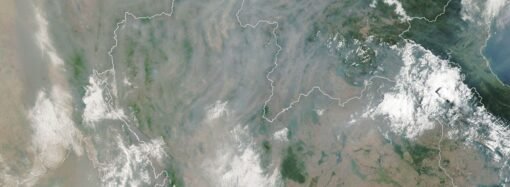
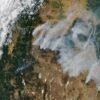
Smoke Shrouds Northern Thailand - NASA Science
- Air Quality, Earth Observatory, Human Dimensions, SCIENCE, Terra, Wildfires
- April 23, 2026

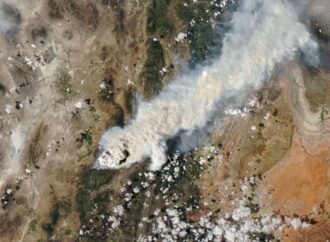
Scientists have long known that volcanoes can launch large quantities of particles into the stratosphere. In the past few decades, it has become clear that wildfires do this, too, by generating towering, smoke-infused pyrocumulonimbus (pyroCb) clouds. The largest pyroCbs are stunning weather-making features that generate massive thunderheads capable of unleashing lightning, hail, and heavy rain.
READ MORE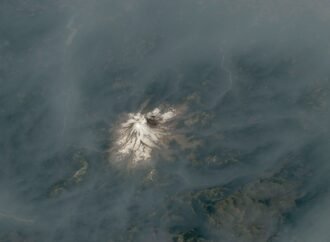
In a contrast of fire and ice, smoke from wildland fires mingled with several of the Cascade Range’s prominent, glaciated volcanoes in summer 2026. Astronauts on the International Space Station photographed the scene while orbiting over the U.S. West in late July and early August. Mount Hood, Oregon’s tallest peak at 11,249 feet (3,429 meters),
READ MORE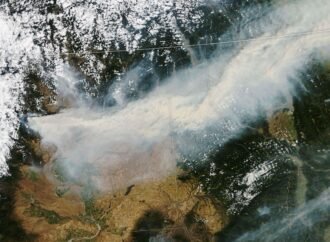
The start of August 2026 saw ongoing and new wildland fires burning in eastern Washington. West of Chelan, the Little Giant fire continued to produce heavy smoke, while a cluster of smaller fires farther east near Spokane affected tens of thousands of people. The smoke from these and other fires poured east-northeast across the state
READ MORE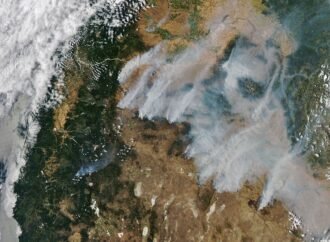
Dry storms that emerged over the Cascade Range on the night of July 15, 2026, struck Oregon and Washington with thousands of lightning strikes as they moved east across the states. By the next day, NASA satellites had begun detecting large numbers of wildfires across central and eastern Oregon. Although initially small, these fires intensified
READ MORE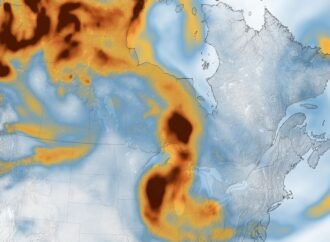
Wildfire activity in Canada increased in July 2026, a time of year when lightning ignition typically increases, according to a seasonal outlook published by several North American fire agencies. The fires caused plumes of smoke across the United States and Canada, affecting air quality in both countries. This animation tracks brown carbon, the organic aerosols
READ MORE
Landslides in Alaska. Air quality in Atlanta. Clouds of fire in the west. From the Arctic fringe to agricultural areas, NASA’s new class of Earth Venture suborbital missions is preparing to deliver science that will benefit communities in the United States and beyond. The six projects will mobilize hundreds of scientists and pilots from NASA,
READ MORE