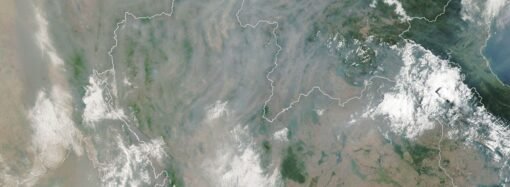
Smoke Shrouds Northern Thailand - NASA Science
- Air Quality, Earth Observatory, Human Dimensions, SCIENCE, Terra, Wildfires
- April 23, 2026

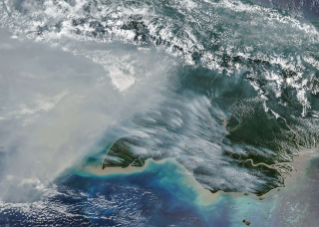
New Guinea, the world’s second-largest island, harbors an extraordinary variety of plant life across more than a dozen distinct ecoregions, including seasonally dry savannas, tropical rainforests, and lowland swamp forests. But in September and October 2026, as drought gripped New Guinea (sometimes called Papua) amid a strong El Niño, fires scorched the island and smoke
READ MORE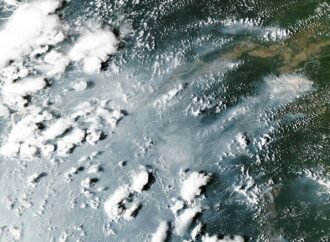
Unlike a tornado or thunderstorm that can deliver destruction in minutes, El Niño exerts its influence over many months. This year, a drought accompanying El Niño has left the Amazon rainforest primed to burn, and scientists say the region has entered the early stages of what they think will be a long and severe fire
READ MORE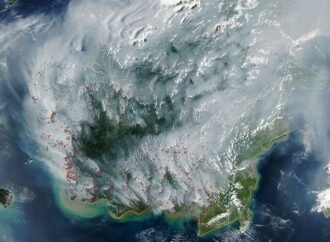
If there were an apex predator among fires, tropical peatland fires would be a top contender. These fires, which burn in dried wetland soils, are slow-burning, highly polluting, and notoriously difficult to extinguish because they smolder at low temperatures and often burn underground through expansive deposits of peat. By one estimate, peat fires generate three
READ MORE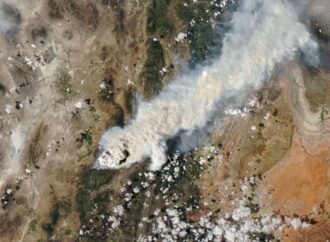
Scientists have long known that volcanoes can launch large quantities of particles into the stratosphere. In the past few decades, it has become clear that wildfires do this, too, by generating towering, smoke-infused pyrocumulonimbus (pyroCb) clouds. The largest pyroCbs are stunning weather-making features that generate massive thunderheads capable of unleashing lightning, hail, and heavy rain.
READ MORE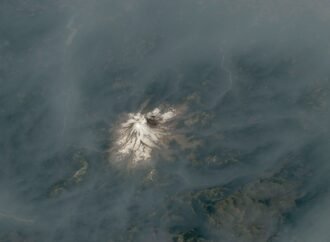
In a contrast of fire and ice, smoke from wildland fires mingled with several of the Cascade Range’s prominent, glaciated volcanoes in summer 2026. Astronauts on the International Space Station photographed the scene while orbiting over the U.S. West in late July and early August. Mount Hood, Oregon’s tallest peak at 11,249 feet (3,429 meters),
READ MORE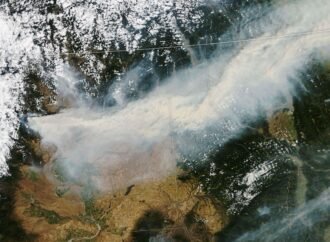
The start of August 2026 saw ongoing and new wildland fires burning in eastern Washington. West of Chelan, the Little Giant fire continued to produce heavy smoke, while a cluster of smaller fires farther east near Spokane affected tens of thousands of people. The smoke from these and other fires poured east-northeast across the state
READ MORE