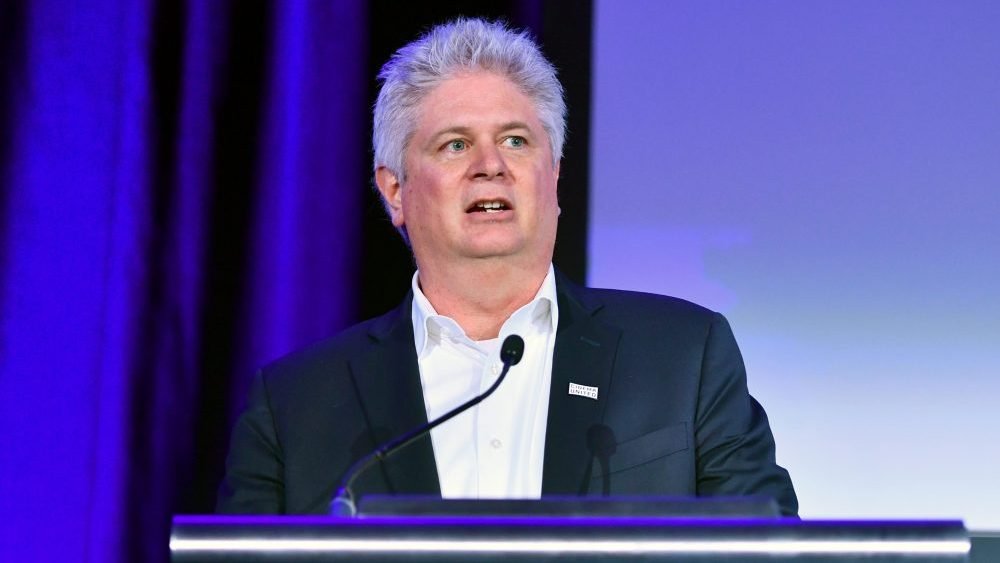
The head of Cinema United reiterates the lobbying organization’s opposition to Paramount Skydance’s proposed merger with Warner Bros., as well as the group’s support for litigation brought by state attorneys general that put the deal on hold. In a letter to movie theater owners on Wednesday, Michael O’Leary, CEO of Cinema United, argued that “this
The head of Cinema United reiterates the lobbying organization’s opposition to Paramount Skydance’s proposed merger with Warner Bros., as well as the group’s support for litigation brought by state attorneys general that put the deal on hold.
In a letter to movie theater owners on Wednesday, Michael O’Leary, CEO of Cinema United, argued that “this transaction will result in fewer movies, higher costs for you and your customers, and ultimately fewer theaters. The promises of support for movie theaters made in the media are high-level and unenforceable and as such do nothing to alleviate the damage.”
O’Leary went on to tell organization members that he had provided an affidavit outlining exhibitors’ concerns in support of the states’ successful motion for a temporary restraining order. The head of Cinema United expressed skepticism about Paramount’s promise to release 30 films annually after merging with Warner Bros. That’s far more than any other studio produces annually. He noted that the combined company will have a debt load of $80 billion, which could hamper those efforts.
“We will continue to argue against the cost of this highly leveraged transaction being passed on to movie theater owners and movie fans through increased costs,” O’Leary wrote. “We will continue to advocate for theaters of all sizes to have access not only to new films, but also to the considerable storehouse of classic films in the vast libraries of these two studios. These are not Hollywood problems, they are Main Street problems, and we are committed to making them relevant not only to this transaction, but to the long-term future of this vital industry.”
O’Leary said Cinema United’s executive board asked to speak with Paramount at CinemaCon, an annual convention for theater and studio owners held last spring, but was declined. He said he then met with Paramount in Washington, D.C. in June, where he outlined the organization’s reservations about the sale.
“We committed to each other to continue talking to see if we could align on enforceable commitments that would allay our concerns about the merger,” O’Leary wrote. “On July 1, after what Cinema United considered additional constructive discussions with Paramount, we provided them with a comprehensive list of our concerns to move the discussions forward. We have not heard from them since.”
In a statement, a Paramount spokesperson questioned O’Leary’s characterization.
“We met with Cinema United in Washington in June and mutually agreed to talk further to see if we could align enforceable commitments related to two different items that Cinema United requested. We provided enforceable commitments to Cinema United but then their attorneys introduced new lawsuits unrelated to the merger. Notably, Cinema United uses the same law firm that represents multiple clients opposing our merger. We would be happy to work with Cinema United or its members as they are our partners.”
O’Leary also turned to historical precedent to explain his opposition, noting that when the Walt Disney Company acquired much of 21st Century Fox in 2019, the number of films the companies produced was significantly reduced.
“Cinema United has not wavered on our list of concerns and will continue to push for meaningful and tangible safeguards to ensure that this transaction, the largest in Hollywood history, does not have the same negative impact on the global box office that it experienced post-Disney/Fox,” O’Leary wrote. “Too often, this transaction has been viewed as a Hollywood transaction, and the real-world impact – the Main Street impact – on businesses like yours has taken a backseat. Despite well-orchestrated media campaigns attempting to win the public relations battle, we have ensured that the potentially devastating impact the merger will have on film is not overlooked.”
On July 24, Paramount reached an agreement with a coalition of state attorneys general to postpone the Warner Bros. Discovery merger until after an antitrust trial. As part of that deal, Paramount agreed not to close the $111 billion transaction until five days after the trial or June 1, 2027, whichever comes first.
Despite opposition from Cinema United, some exhibitors have backed Paramount’s plans to buy Warner Bros. AMC, the world’s largest movie theater chain, has come out in favor of the transaction, arguing that Paramount and its chairman David Ellison are passionate supporters of the big screen and will invest in the sector.
“I greatly appreciate David Ellison’s track record of success and his passion for making films that will dazzle audiences around the world,” AMC CEO Adam Aron said in a statement last April. “In just the short time he has owned Paramount Pictures, he has already begun to build a great team around him and has already been increasing the number of films that are greenlit at Paramount.”
A Paramount spokesperson said.
For more tech updates, stay tuned to our blog.