Stewart Island/Rakiura is New Zealand’s third largest island, tiny compared to the country’s North Island and South Island. However, it is home to one of the largest populations of kiwi: the Stewart Island tokoeka. This flightless bird, a subspecies of the southern brown kiwi (Apterix australis)There are thousands on the island, dwarfing its human population
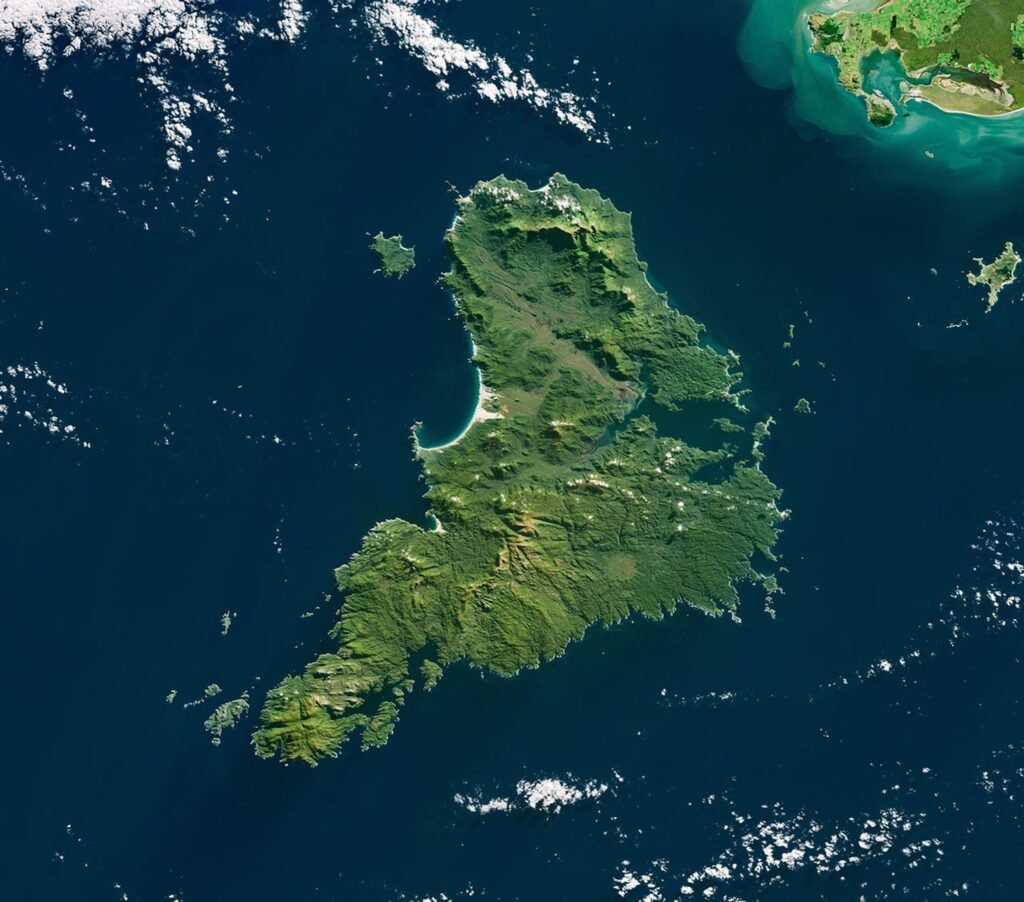
Stewart Island/Rakiura is New Zealand’s third largest island, tiny compared to the country’s North Island and South Island. However, it is home to one of the largest populations of kiwi: the Stewart Island tokoeka. This flightless bird, a subspecies of the southern brown kiwi (Apterix australis)There are thousands on the island, dwarfing its human population of approximately 500.
The national avian icon is just a portion of the natural riches of Stewart Island/Rakiura, a roughly triangular piece of land about 30 kilometers (19 miles) south of the South Island. Rakiura National Park covers about 85 percent of the bright green island. And as the Maori name, Rakiura, meaning “bright sky” suggests, it is a prime place to view the Aurora Australis.
In the northern half of the island, podocarp and hardwood forests with coniferous trees of ancient lineages cover the land. Other areas are covered in bushland and wetlands, as well as coastal dunes such as those bordering Mason Bay. A diversity of birds, including the kiwi, populate these relatively pristine ecosystems. The tall trees of the podocarp forests produce various fruits attractive to avian inhabitants, such as bellbirds, with their pure-toned calls, and the rare kākāpō, the world’s heaviest and only flightless species of parrot.
A notable haven for birds is found on Ulva Island, located within the inlet near Halfmoon Bay (Oban). Rats, which once fed on bird eggs and chicks there, were considered eradicated in 1997, and the island has remained virtually free of non-native predators. Conservationists have since embarked on a project on the much larger Stewart Island/Rakiura to eliminate rats, possums, feral cats and hedgehogs.
When night falls, the human inhabitants of Stewart Island/Rakiura can look to the sky for the opportunity to observe stars, auroras, nearby dwarf galaxies and other features of the southern hemisphere night sky. In 2019, the remote and sparsely inhabited island was designated an International Dark Sky Sanctuary.
Amateur astronomers there and elsewhere with good views of the night sky could search for objects of interest through Hubble’s Night Sky Challenge. In May, when this image was acquired, targets imaged by NASA’s Hubble Space Telescope that were also visible from Earth’s southern latitudes included a star cluster called Jewel Box and a peculiar elliptical galaxy known as Centauri A, which may have been the result of two galaxies colliding.
NASA Earth Observatory image by Michala Garrison, using Landsat data from the US Geological Survey. Photo and story by Lindsey Doermann.

- DarkSky International (January 3, 2019) Stewart Island / Rakiura. Accessed July 29, 2026.
- the guardian (2022, July 6) New Zealand will embark on the world’s largest eradication of wild predators. Accessed July 29, 2026.
- New Zealand Department of Conservation, Birds. Accessed July 29, 2026.
- New Zealand Department of Conservation, Podocarp and Hardwood Forests. Accessed July 29, 2026.
- New Zealand Department of Conservation, Stewart Island/Rakiura. Accessed July 29, 2026.
For more tech updates, stay tuned to our blog.