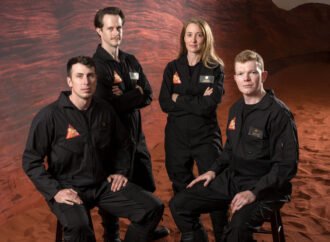
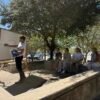
The four volunteers who lived and worked in a simulated NASA Mars mission for more than a year will exit their habitat on Saturday, Oct. 31, after 378 days of isolation in a facility at the agency’s Johnson Space Center in Houston. Health and performance data collected from the simulation can help NASA develop methods
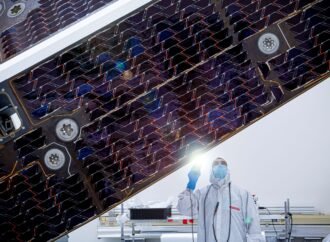
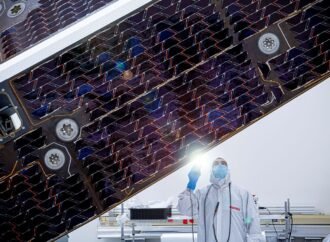
A technician inspects the large sunshade of NASA’s Near-Earth Object (NEO) Surveyor mission in this image released on Oct. 26, 2026. The sunshade structure, which stands 20 feet (6 meters) tall and measures 8 feet (2.4 meters) wide at its base, will keep the infrared space telescope cool as it searches for near-Earth asteroids and
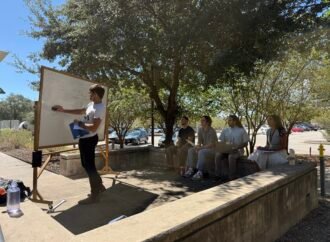
When Rice University student Malvika Bhardwaj asked her mentor Daniel Cohen, a Guidance, Navigation & Control (GN&C) engineer at NASA’s Johnson Space Center, whether he had time to keep teaching interns with his busy workload, he answered, “You decide what’s important.” In honor of National Mentoring Day on Oct. 27, Bhardwaj reflects on how Cohen’s
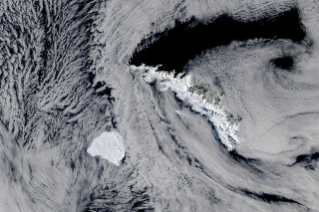
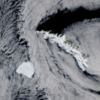
Some Antarctic icebergs linger close to home for decades, running aground near the ice shelves that spawned them or circling partway around the continent on coastal currents. Others, like Iceberg A-81, make a faster exit, heading north out of the Weddell Sea along a route well-traveled by the region’s bergs. Fast is relative, though. After
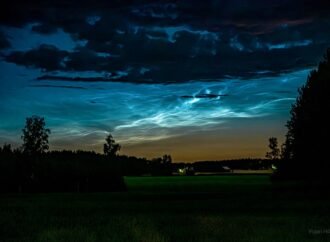
Explanation: Sometimes it’s night on the ground but day in the air. As the Earth rotates to eclipse the Sun, sunset rises upfrom the ground. Therefore, at sunset on the ground, sunlight still shines on clouds above. Under usual circumstances, a pretty sunset might be visible, but unusual noctilucent clouds float so high up they can be seen well after dark. Normally
The large sunshade of NASA’s Near-Earth Object (NEO) Surveyor mission is inspected by a technician at BAE Systems Space & Mission Systems in Boulder, Colorado, in late July. Built by Applied Aerospace in Stockton, California, the sunshade structure was outfitted with its solar cells by SolAero Technologies in Albuquerque, New Mexico, in January. Environmental testing