One of the most shameful episodes in Hollywood’s history is being examined in a new retrospective to screen at the Locarno Film Festival: Red & Black: Hollywood Left and the Blacklist. Speaking to Variety, the retrospective’s curator, Ehsan Khoshbakht, speaks about the inspiration for the program, which features the work of directors, writers and stars
One of the most shameful episodes in Hollywood’s history is being examined in a new retrospective to screen at the Locarno Film Festival: Red & Black: Hollywood Left and the Blacklist. Speaking to Variety, the retrospective’s curator, Ehsan Khoshbakht, speaks about the inspiration for the program, which features the work of directors, writers and stars such as John Garfield, Joseph Losey, Dalton Trumbo, Dorothy Parker, Richard Wright and Charles Chaplin.
What was your starting point for the retrospective?
I have often wondered why someone who could have lived a life of comfort would instead fight for the Republicans in the Spanish Civil War, as the screenwriter Alvah Bessie did. Or why filmmakers such as Joseph Losey and Cy Endfield at the height of their success would leave their families, and end up working in Mexico, England or Italy, often forbidden even to use their real names. Trying to understand that inner compulsion — not to name names — became the starting point.

‘España otra vez’ written by Alvah Bessie
Courtesy of Mercury Films
Did you see contemporary resonance in your program?
My reaction was to intolerance and hysteria in the arts. This is not a right-versus-left program. It’s about what happens when the media are abused and misused; when smear campaigns and fear-mongering prevail over rationality and dialogue. There were films such as “Salt of the Earth,” whose Mexican actress was forcibly removed by immigration officers in the middle of production and deported. The blacklist caused serious health problems, tore families apart, drove people to suicide, and prevented some potentially great films from ever being made. It was a plague.
So, it is a bitter irony that 80 years later, Dr. Fauci invoked the Fifth Amendment the other day. Is it ever going to stop? Every film in the program responds in some way to one of the ugly excesses of the world now, and to the destructive policies of the current administration in the U.S. I didn’t select the program according to that criterion. It is just a painful and frightening coincidence.
How did exile change the way the filmmakers worked?
They were forced to adapt to filmmaking modes and industries that were alien, smaller and less streamlined. This introduced what I see as a brilliantly eclectic combination of European style and taste with American sensibility and dynamism. Losey’s “Stranger on the Prowl,” with its unusual and effective blend of neorealism and the man-on-the-run theme, is one example among many. Jules Dassin explored his previously unexamined fascination with the psychosexual. Both filmmakers went on to contribute to a modern cinematic language that could not have developed in America. Others, like Bernard Vorhaus, simply crashed out.
‘Mission to Moscow’ by Michael Curtiz
Courtesy of BFI/Warner Bros.
What films are you particularly excited about?
I’m excited about some of the films for various reasons: some because they are key blacklist films that hadn’t been screened before, even in major retrospectives. For instance, the pro-Soviet and frankly embarrassing “Mission to Moscow,” which is a Hollywood film that depicts Stalin as a fair-minded, brilliant leader!
Then there are some films that haven’t been screened in this particular context, such as “España otra vez,” the first Spanish film made under the Franco dictatorship to deal explicitly with the Spanish Civil War from the point of view of the defeated side — the Republicans. It’s in the program because it was written by and starred one of the Hollywood Ten, Alvah Bessie.
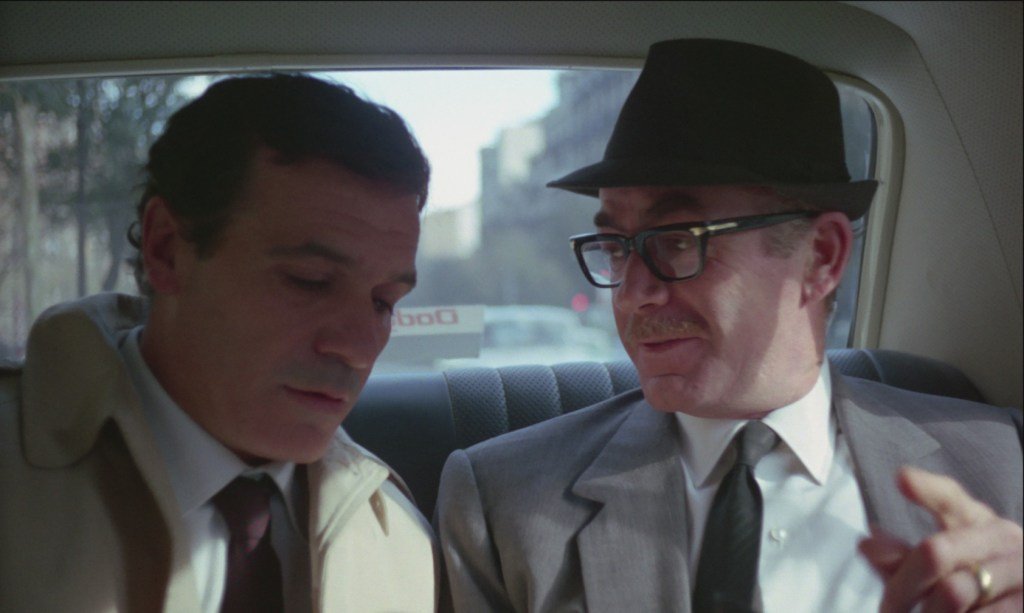
‘The Intimate Stranger’
Courtesy of BFI
Another super-rare film is “The Intimate Stranger,” by Joseph Losey. Perhaps, the most self-conscious meditation on the blacklist. This film was impossible to show for decades. Losey’s son, Gavrik, will be in Locarno to introduce it. There are nearly thirty 35mm prints in the program, and for some of them to be seen in original format is a chance of a lifetime.
The retrospective seems to hold a special place of esteem in Locarno among festival-goers.
Other contemporary festivals allocate their worst venues to classic films, if they show them at all. Locarno gives us their best venue, the superb GranRex. I cannot think of any other film festival in the world that would allow me to select 50 titles — mostly in 35mm prints — edit a book of newly commissioned essays by leading scholars from around the world, and produce a podcast. I think it matters to our director, Giona Nazzaro, to go deeper into the history of cinema. He’s an avid cinephile.
As for our partners, UCLA Film & TV Archive, Cinémathèque suisse and the BFI have all provided us with essential support.
This interview has been edited and condensed for clarity.
The 79th Locarno Film Festival runs over August 5-15.
For more tech updates, stay tuned to our blog.