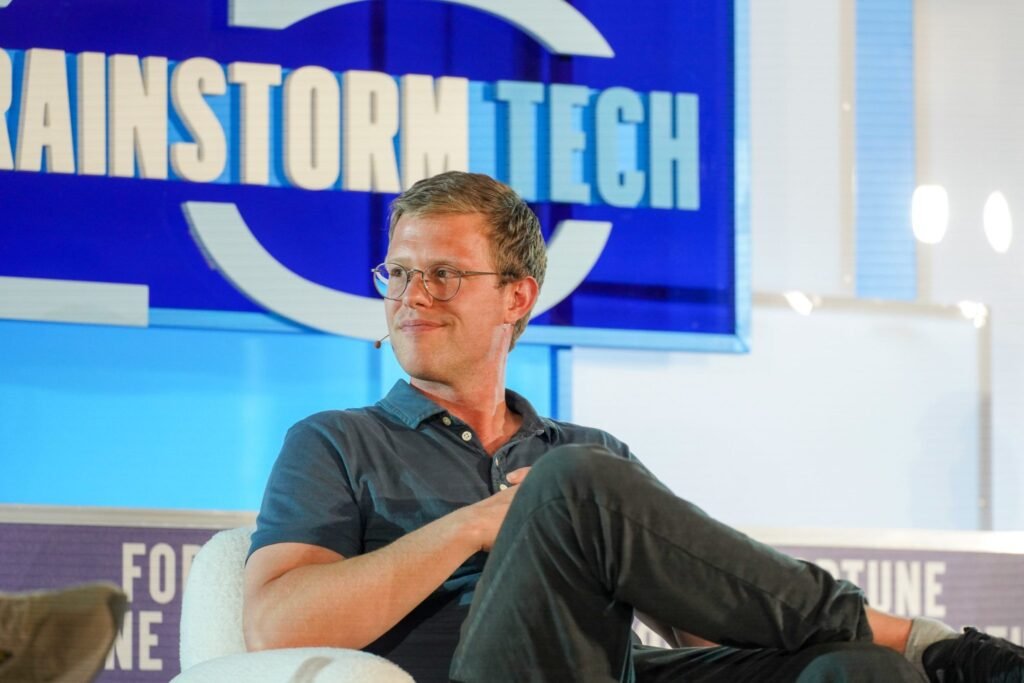
Whatnot, started in a Funko Pop-flooded rental house, is now a $20 billion company. The live commerce platform exclusively told Fortune it recently raised its $545 million Series G, almost doubling Whatnot’s valuation from $11.5 billion in its October 2025 round. It’s an unlikely story in all sorts of ways, from the tech giant’s previous
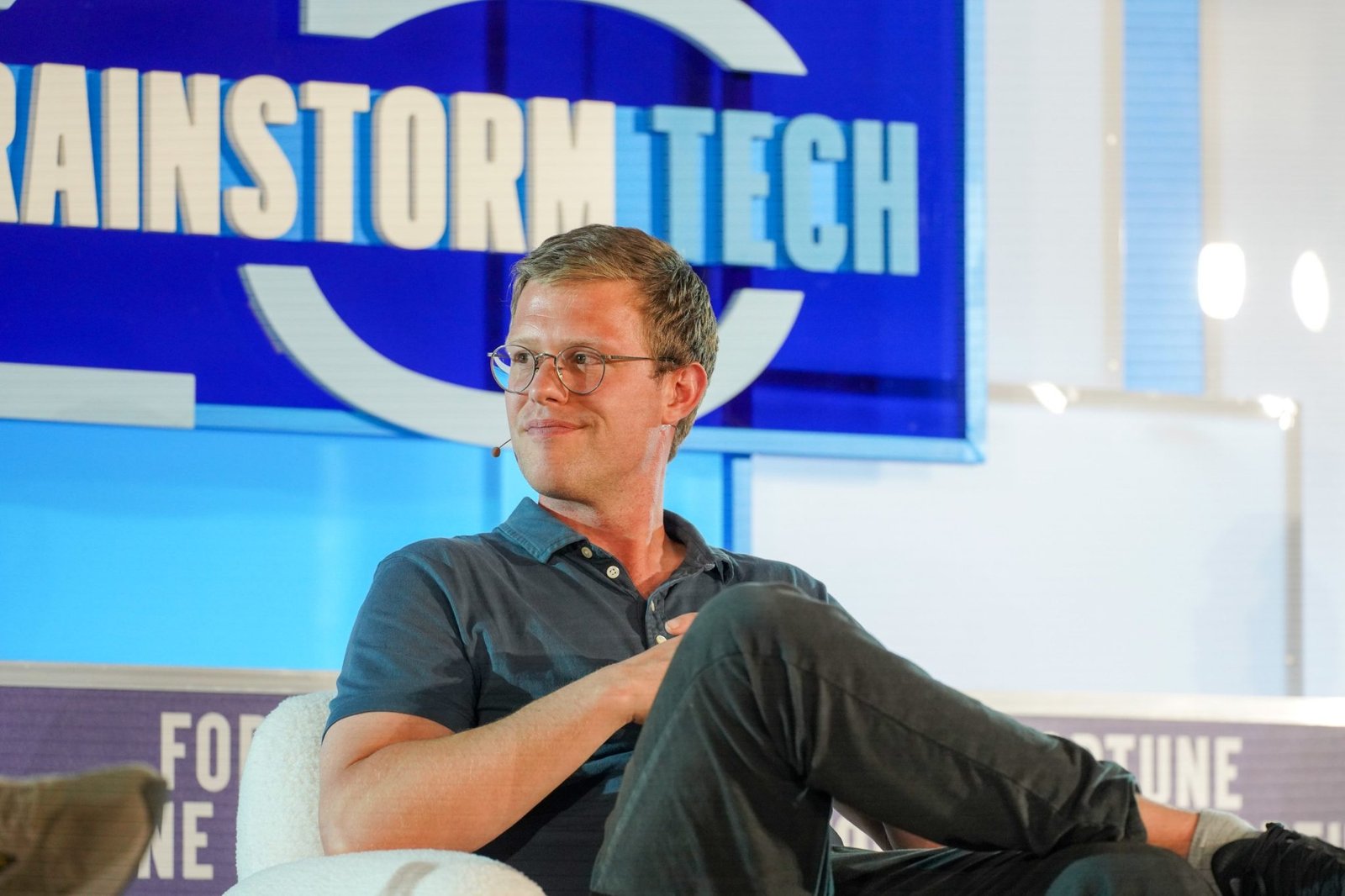
Whatnot, started in a Funko Pop-flooded rental house, is now a $20 billion company.
The live commerce platform exclusively told Fortune it recently raised its $545 million Series G, almost doubling Whatnot’s valuation from $11.5 billion in its October 2025 round. It’s an unlikely story in all sorts of ways, from the tech giant’s previous failed efforts to bring live selling to the U.S. to Whatnot’s own seemingly niche beginning. In a moment where it seems like every venture dollar is chasing OpenAI or Anthropic, Whatnot’s continuous growth is anomalous, and makes for interesting conversations with VCs.
“When you look at Silicon Valley it’s 99.99% AI right now,” said Grant LaFontaine, Whatnot CEO and cofounder. “There can be friction there, where you’ll talk to some firms and they’ll say: ‘No, all I do is AI, sorry.’ But there are people looking ahead, watching everyone chase the same ten AI deals. So, there are some people who say, ‘God, it’s nice to see a consumer company with network effects, strong growth, and a good operating team, because I can see value here.’”
This new round—led by ICONIQ, Lightspeed and Avra—includes investors old and new. New investors in the mix include Kleiner Perkins, Wellington Management, and others. Andreessen Horowitz, Bond, DST Global, and Greycroft, among others, are all returning. Y Combinator, an existing investor, is in along with new backer Standard Capital, the new firm of former YC partner Dalton Caldwell. Alphabet’s CapitalG is also back, having led three previous rounds in Whatnot dating back to its $150 million Series C, closed at a $1.5 billion valuation in 2021.
“The biggest change since our first investment in 2021 is the sheer scale and complexity of the business,” said CapitalG managing partner Laela Sturdy via email. “In 2021, Whatnot was in five categories, all collectibles and only in the U.S. Today Whatnot spans hundreds of categories across multiple countries.”
Sturdy’s very right: Whatnot’s categories span Pokémon cards to designer bags to fresh food. Fortune broke the news earlier this summer that Whatnot had crossed one billion orders, and the company has now raised about $1.5 billion since its 2019 beginnings.
But it hasn’t been all “up and to the right”: Whatnot recently faced concerns that the platform encourages gambling-like levels of excessive spending. (Whatnot says it bans all gambling-style activity—like raffles and lotteries—and enforces this through seller requirements and other controls.) It wasn’t easy in the early days, either: On the Term Sheet Podcast, LaFontaine recently told me that raising money was tough, because investors would look at Whatnot and think—live selling is hard, marketplaces rarely work, and that collectibles were a decisively limited market. There’s a lesson there, perhaps.
“Something people get wrong: The idea that you have to start with the most horizontal consumer platform because the TAM has to be X-Y-Z big,” said Yoonkee Sull, Iconiq general partner. “The reality is that oftentimes when you’re building these consumer businesses, you have to be extremely focused. [Whatnot] started with a community that could look small, but they’re very engaged and super passionate…. That gave them the opportunity to build a marketplace that would actually exhibit strong network effects.”
That’s the thing about marketplace businesses: The rare times they take off, they compound. LaFontaine’s relationship to Whatnot’s valuation, nevertheless, is loose. He frames valuation as a possible risk to employees and investors if mismanaged. “Whenever we do a fundraising round, we pull our own multiples back into a valuation range we feel we can, with relative confidence, grow into.”
Whatnot’s now reached the place where the question around what’s next, from a financial perspective, starts to grow louder: When will the company go public? “I’d probably prefer to stay private as long as we can,” said LaFontaine. “But the calculus changes, and we’ll be prepared to go public. That’s like the honest truth.”
See you Monday,
Allie Garfinkle
X: @agarfinks
Email: alexandra.garfinkle@fortune.com
Submit a deal for the Term Sheet newsletter here.
Joey Abrams curated the deals section of today’s newsletter. Subscribe here.
VENTURE CAPITAL
– Hadrian, a Torrance, Calif.-based developer and operator of AI-powered factories for aerospace and defense manufacturing, raised $1.37 billion in funding. WCM Investment Management, Washington Harbour Partners, Valor Equity Partners, 137 Ventures, and Baillie Gifford led the round.
– Yellow Card, an Atlanta, Ga.-based stablecoin payments-infrastructure provider, raised $40 million in funding from SC Ventures by Standard Chartered, Sony Innovation Fund, Polychain Capital, Blockchain Capital, and others.
– Naïve, a Palo Alto, Calif.-based AI lab, raised $28.5 million in Series A funding. Nexus Venture Partners led the round and was joined by Y Combinator, Zetta, Liquid 2, and angel investors.
– Malachyte, a New York City-based behavior intelligence company, raised $10 million in seed funding. Bessemer Venture Partners and Gradient Venture led the round and were joined by Harpoon Ventures.
PRIVATE EQUITY
– BNP, backed by Godspeed Capital, acquired U.S. Cost Incorporated, an Alpharetta, Ga.-based global cost management and project controls firm. Financial terms were not disclosed.
– Facility Grid, a portfolio company of Nexa Equity, acquired PingCx, a Farmingdale, N.Y.-based autonomous commissioning platform for building automation systems. Financial terms were not disclosed.
– M-One Capital agreed to acquire a majority stake in Shared Practices Group, a Scottsdale, Ariz.-based dental support organization. Financial terms were not disclosed.
– Reynolda Equity Partners acquired Southeastern Pond Management, a Calera, Alabama-based pond management company. Financial terms were not disclosed.
– TRP Infrastructure Services, a portfolio company of Arlington Capital Partners, acquired Interstate Barricades & Markings and Alamo Roadway Materials, both San Antonio-based traffic control and pavement marking suppliers; Traffic Control Products Co., a Pearl, Miss.-based traffic control products supplier; DIJ Construction, a Bertram, Texas-based construction company; and Batterson, a Houston, Texas-based pavement marking and traffic control company. Financial terms were not disclosed.
EXITS
– TPG acquired Smith + Howard, an Atlanta, Ga.-based assurance, tax, advisory and wealth management firm, from Broad Sky Partners. Financial terms were not disclosed.
– Veritas Capital agreed to acquire a majority stake in Saber Power Services, a Houston, Texas-based provider of electrical design, construction, testing, and maintenance services for critical power infrastructure, from Greenbelt Capital Management. Financial terms were not disclosed.
IPOs
– Braveheart Bio, a San Francisco-based biopharmaceutical company developing therapies for hypertrophic cardiomyopathy and other serious cardiovascular diseases, raised $383 million in an offering of 18.8 million shares priced at $18 on the Nasdaq.
PEOPLE
– Battery Ventures, a Boston, Mass.-based venture capital firm, promoted Brandon Gleklen to Partner.
– Paceline Equity Partners, a Dallas, Texas-based private equity firm, promoted Jonathan Rosen to partner.
Check back often for more exciting news!