
Get the Popular Science daily newsletter💡 Breakthroughs, discoveries, and DIY tips sent six days a week. There are quite a few animals considered “living fossils” in today’s world. Once thought extinct, the prehistoric coelacanth has continuously swam through Earth’s oceans since the time of the dinosaurs. Horseshoe crabs exist in fossil records dating back hundreds
There are quite a few animals considered “living fossils” in today’s world. Once thought extinct, the prehistoric coelacanth has continuously swam through Earth’s oceans since the time of the dinosaurs. Horseshoe crabs exist in fossil records dating back hundreds of millions of years. Even many sharks look virtually unchanged from their Cretaceous Era ancestors. But although Tanyka amnicola was last seen about 275 million years ago, it was already a living fossil in its own time.
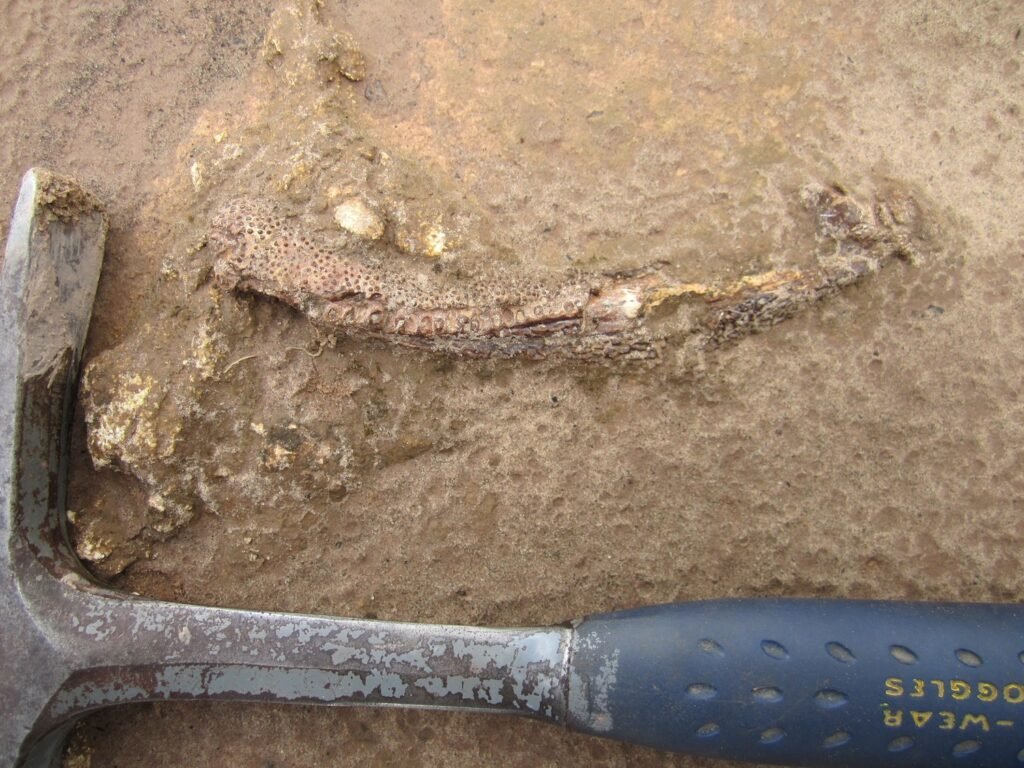
It was also an extremely strange creature. So strange, in fact, that paleontologists initially thought they were looking at an ancient aberration when they discovered the first jawbone of this salamander-esque creature in a dry riverbed near the Amazon rainforest in Brazil.
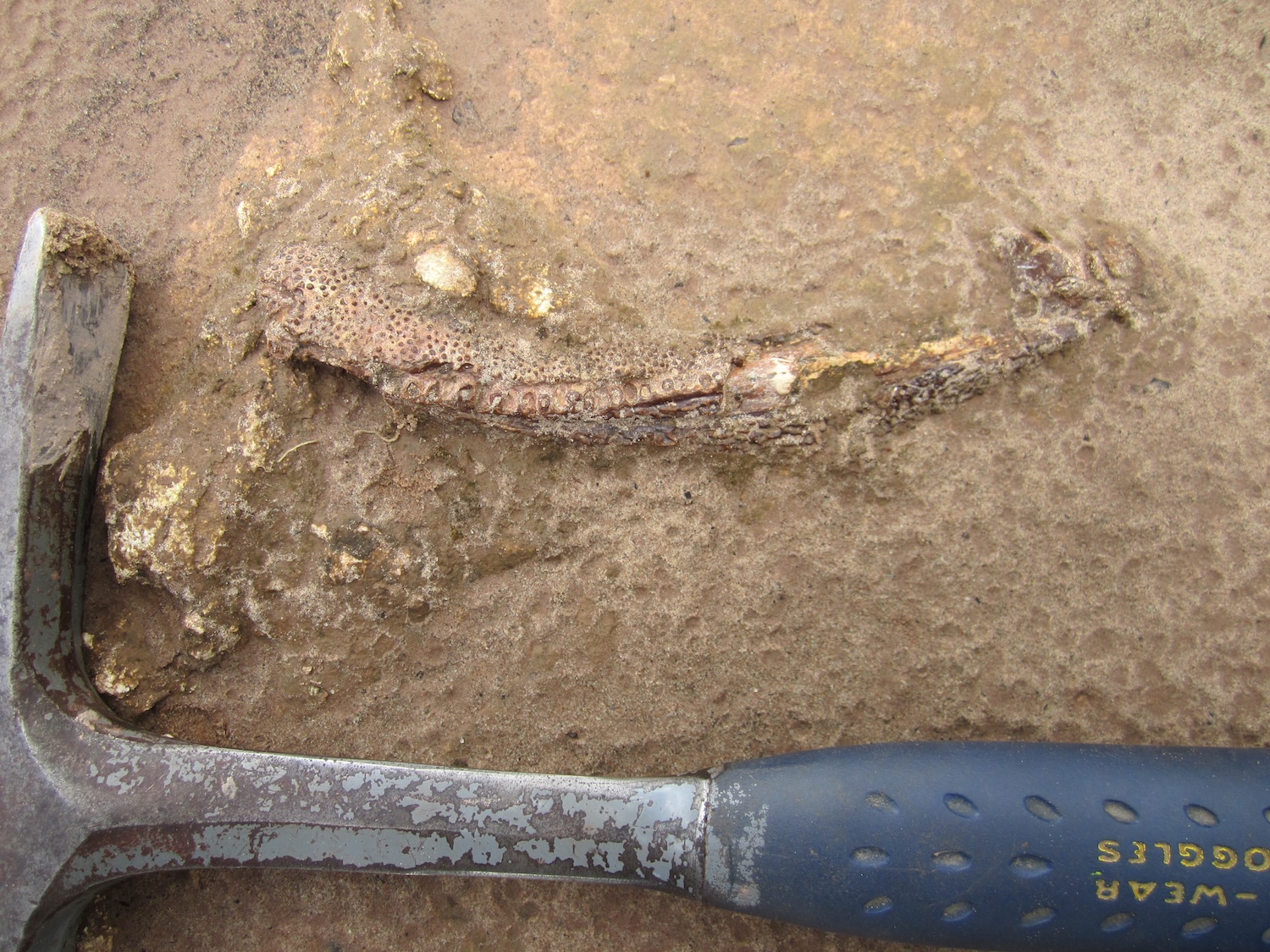
“The jaw has this weird twist that drove us crazy trying to figure it out. We were scratching our heads over this for years, wondering if it was some kind of deformation,” recalled Jason Pardo, a paleontologist at Chicago’s Field Museum.
As Pardo and his colleagues detail in a study published today in the journal Proceedings of the Royal Society B, Tanyka’s odd jaw was simply part of its evolutionary package. And they have eight other similar fossil specimens to prove it.
Tankya (“jaw” in the local Indigenous Guaraní language) was an incredibly early four-legged vertebrate, or tetrapod. Present-day examples of four-legged animals are found across birds, mammals, reptiles, and amphibians, but they all trace back to a single lineage called stem tetrapods. Eventually, stem tetrapods separated into two groups—one that laid eggs on land, and another that laid them in water. Tankya, however, firmly remained in the “stem tetrapod” camp.
“Tanyka is from an ancient lineage that we didn’t know survived to this time,” said Pardo.
He likens it to the present-day platypus. Almost every living mammal reproduces through live births, but the first examples laid eggs. The platypus retained its egg-laying abilities over millions of years, making a bit of a mammalian oddity.
And then there is Tanyka’s mouth. The bottom teeth didn’t face upward—they pointed to either side instead. Meanwhile, the section of jaw that faces the tongue in humans was oriented toward the roof of the mouth. These surfaces were also covered in tiny teeth known as denticles that turned the angled jaw into a grinding surface.
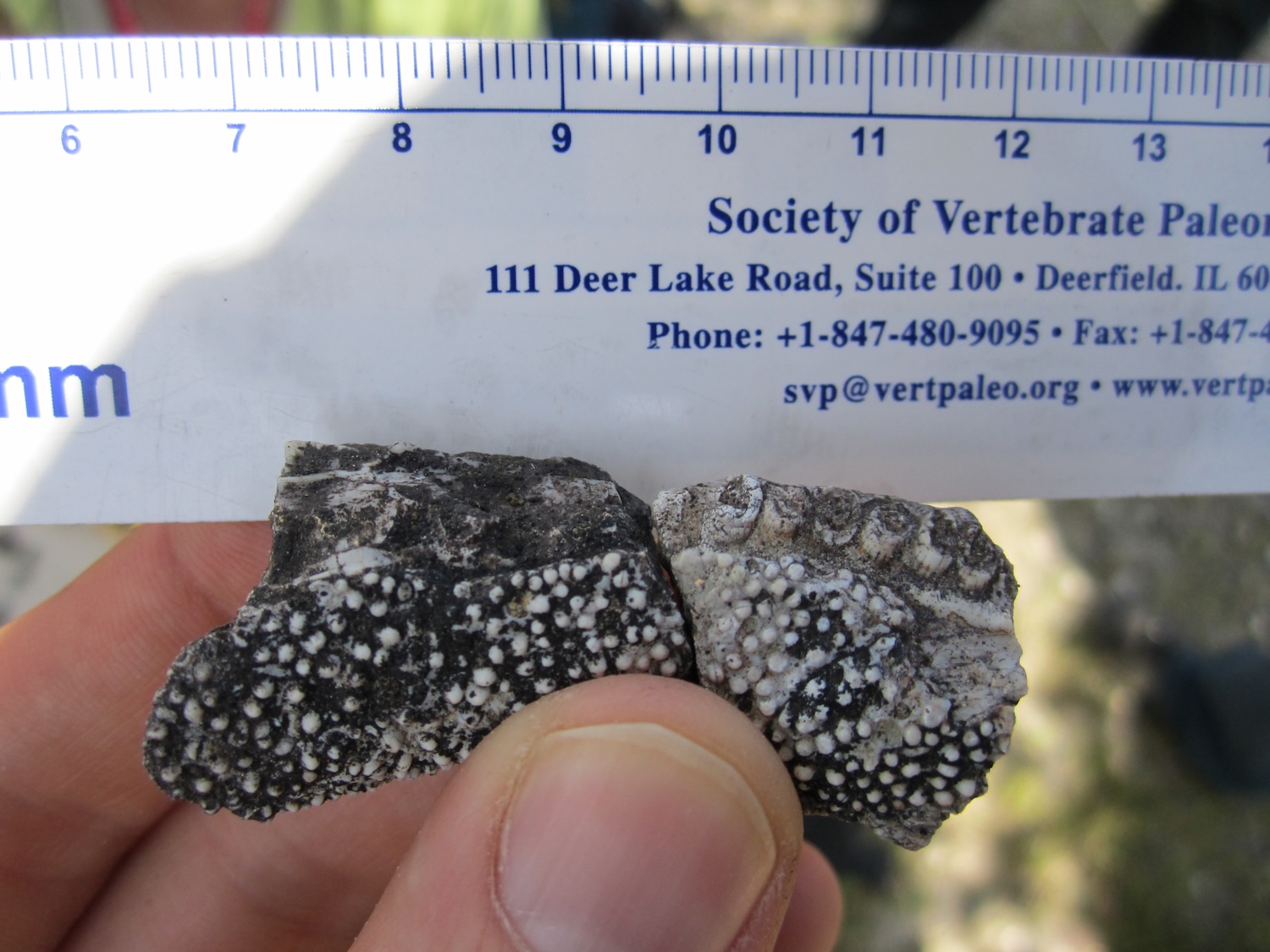
“Based on its teeth, we think that Tanyka was a herbivore, and that it ate plants at least some of the time,” said Juan Carlos Cisneros, a study co-author and paleontologist at Brazil’s Federal University of Piauí.
This only adds to the animal’s uniqueness, since the vast majority of stem tetrapods were strictly carnivorous.
“We expect the denticles on the lower jaw were rubbing up against similar teeth on the upper side of the mouth. The teeth would have been rasping against each other, in a way that’s going to create a relatively unique way of feeding,” added Pardo.
Based on these details, its closest evolutionary relatives, and its river habitat, the study’s authors believe Tanyka likely resembled a three-foot-long salamander sporting a lengthier snout. But at least for now, determining what it looked like is mostly guesswork.
“We found these jaws in isolation, and they’re really weird, and they’re very distinctive,” said Field Museum paleomammalogy curator and study co-author Ken Angielczyk. “But until we find one of those jaws attached to a skull or other bones that are definitively associated with the jaw, we can’t say for sure that the other bones we find near it belong to Tanyka.”
Until then, Tanyka’s jawbone alone is still more than enough to raise eyebrows.

2025 PopSci Best of What’s New

















Leave a Comment
Your email address will not be published. Required fields are marked with *