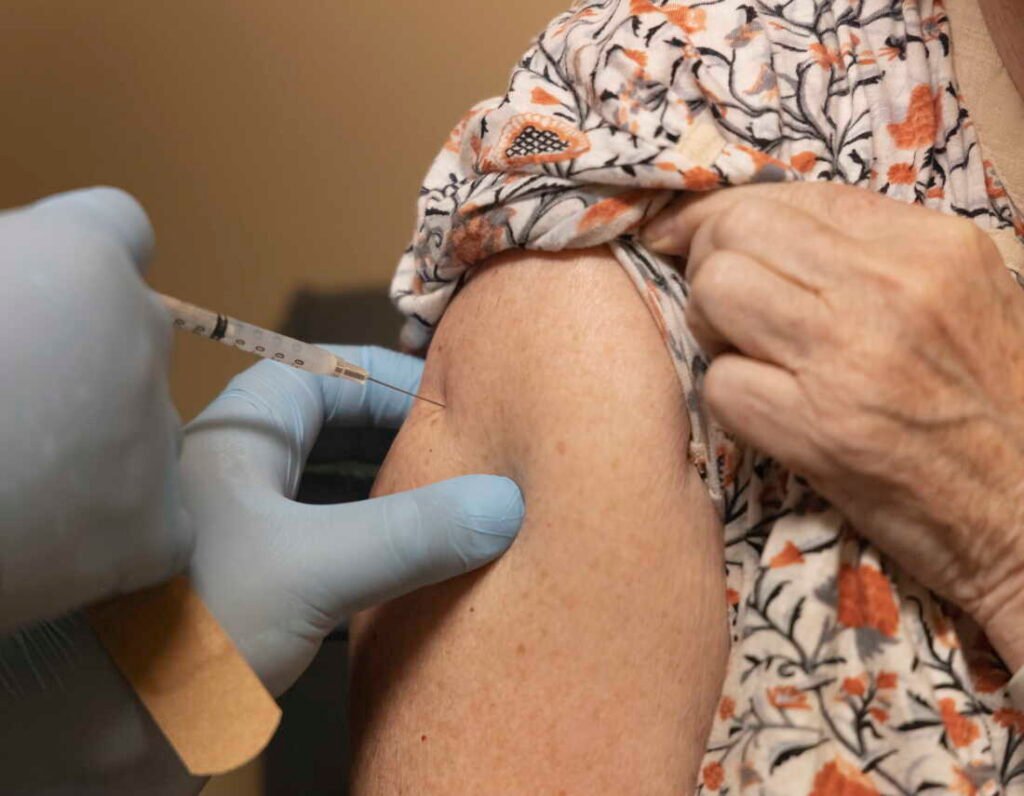
As respiratory disease season approaches, several medical groups are issuing new vaccination guidelines. Tetra Images/Getty Images hide caption toggle caption Tetra Images/Getty Images The latest COVID-19, flu and RSV vaccines remain very safe and highly effective for protecting people against severe complications from the potentially life-threatening respiratory viruses, according to independent analyses released Wednesday. As
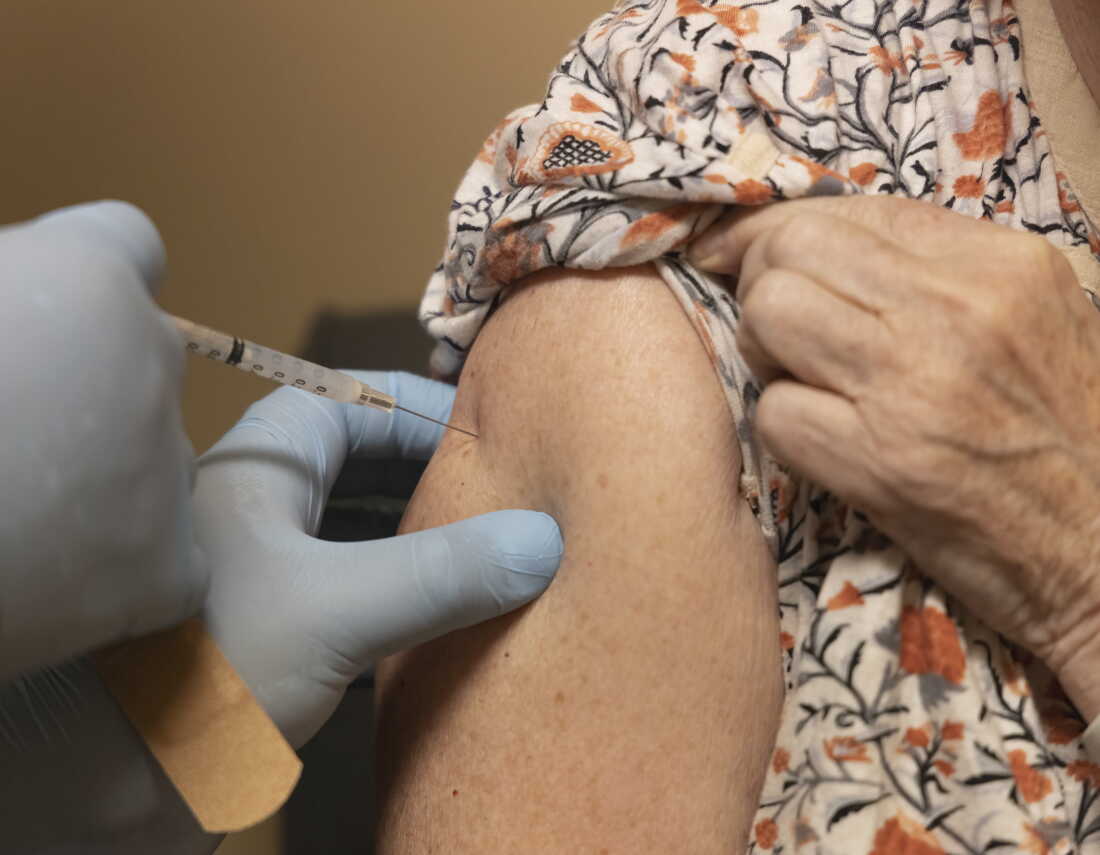
As respiratory disease season approaches, several medical groups are issuing new vaccination guidelines.
Tetra Images/Getty Images
hide caption
toggle caption
Tetra Images/Getty Images
The latest COVID-19, flu and RSV vaccines remain very safe and highly effective for protecting people against severe complications from the potentially life-threatening respiratory viruses, according to independent analyses released Wednesday.
As a result, the American Academy of Pediatrics, the American College of Obstetricians and Gynecologists, the American Academy of Family Physicians and the Infectious Diseases Society of America simultaneously issued guidelines recommending Americans continue to get immunized.
For stories on the science of healthy living, subscribe to NPR’s Health newsletter.
The advice aims to fill the void created by the failure of the Trump administration to issue updated recommendations for how Americans should use the vaccines to best protect themselves against these respiratory illnesses.
The groups continue to recommend the vaccines more broadly than the Trump administration. For example, they recommend routine COVID vaccines for healthy younger adults, young children and pregnant people. Current federal advice doesn’t recommend those groups routinely get vaccinated.
“Unfortunately today, the federal government is not fulfilling that responsibility in the way that it historically has. But the need for that work has not disappeared,” said Dr. Bruce Gellin of the Vaccine Integrity Project, an independent initiative based at the University of Minnesota, to counter questions being raised about vaccines by the Trump administration. “We cannot allow the breakdown of the federal process to create a vacuum in evidence-based vaccine guidance.”
The analyses of the COVID, RSV and flu immunizations come as the newest versions of the vaccines are starting to become available. Meanwhile, flu and COVID infections are on the rise, students are returning to school, and the fall and winter respiratory season is approaching.
“Americans are hearing conflicting messages about vaccines right now, and it’s understandable that people are asking whom they should trust,” Gelin told reporters at a briefing before the new research and updated guidelines were released publicly. “Americans should have access to the best available scientific evidence.”
Federal vaccine guidelines in limbo
In a typical year, the Centers for Disease Control and Prevention would have issued updated guidelines for how immunizations should be best used to fight the infections.
But the CDC’s process for issuing those guidelines was frozen by a lawsuit that blocked the Trump administration’s efforts to reduce the number of vaccines children routinely receive.
Health and Human Services Secretary Robert F. Kennedy Jr., a longtime vaccine critic, tried to cut the number of federally recommended routine vaccines, a move Trump recently tried to revive.
Trump and Kennedy claim children get too many vaccines at the same time and that those immunizations are linked to autism. Most doctors, public health authorities and infectious disease experts strongly dispute that, arguing that vaccines are very safe and highly effective.
“For decades, physicians like me have relied on federal vaccine recommendations because they were based on science and careful review,” Dr. Sandra Adamson Fryhofer, the American Medical Association’s president-elect, said at the briefing. “But with the massive changes at the federal level, trust is waning.”
Despite the litigation, many independent experts hoped the CDC would nevertheless issue some kind of advice before the next wave of respiratory infections. On Tuesday, the CDC extended the 2025 recommendations for the flu vaccines to this year. But so far, the administration has been silent on other vaccines. Neither the Department of Health and Human Services nor the CDC responded to NPR’s request for comment on the status of federal guidance.
“The problem is that silence at this point is complicit with trying to not make sure people know about the importance of vaccines,” Dr. Demetre Daskalakis, who resigned last year as director of the CDC’s National Center for Immunization and Respiratory Diseases to protest the agency’s policies under Trump, told NPR in an interview. “The bottom line is that this is dangerous.”
Insurance coverage for vaccines appears intact
In addition to providing guidance for doctors and patients, the CDC’s recommendations also influence whether insurance companies pay for the immunizations, pharmacists can administer them, and federal programs will supply them free.
The lack of federal guidance, conflicting messages and potential barriers to immunizations worry public health officials because vaccination rates are already falling, leading to resurgences of dangerous diseases like measles.
“It’s unprecedented that we’re in this situation,” Jennifer Kates, who studies vaccine policies at KFF, a nonpartisan health research group, told NPR in an interview. “It creates confusion about what the current status is. And vaccination rates have already been going down because it’s hard for people to get good information and understand who they should trust.”
That raises fears that even fewer people will get vaccinated, increasing the risk of sickness, hospitalization and death. Even though the annual summer and winter COVID surges have been getting milder, last year’s flu season was unusually severe. Both diseases still claim tens of thousands of lives in the U.S. each year.
Despite the absence of new guidelines this year, most people should still be able to get the immunizations for free because private insurers are pledging to continue covering them. Federal programs like Medicare will still pay for them and the Vaccines for Children Program, which provides vaccines for about half of U.S. children for free, is still expected to supply them.
In addition, most states have decoupled the ability of pharmacists to administer the shots from federal guidelines and are instead often relying on the recommendations of medical groups, such as those releasing guidance now.
“We’re anticipating that this year for the fall respiratory virus season for flu and for COVID there will be far less challenge than there was last year this time,” Brigid Groves of the American Pharmacists Association told NPR. “It should be business as usual. The vast majority of patients across the nation should be able to access these vaccinations with very little barriers, very little hiccup.”
Some pharmacists may, however, demand a prescription if they are in one of the handful of states that still require that.
A group effort to analyze vaccine data
For the new analyses, which were published in the journal JAMA, the Vaccine Integrity Project worked with the American Medical Association to review thousands of the latest studies of the vaccines. Those analyses helped the medical groups update their guidelines.
The federal government last year made it more difficult for some people to get the COVID vaccines by limiting the approvals to people who are at high risk for serious disease because they are age 65 or older or have other health problems. The administration also dropped the recommendation that all healthy young children and pregnant women routinely get vaccinated against COVID, even though they are at increased risk, too.
But in the updated independent recommendations, the American College of Obstetricians and Gynecologists continues to urge COVID vaccination for pregnant women, as well as those considering getting pregnant or breastfeeding.
“These vaccines not only protect mom’s health and reduce the risk of adverse outcomes during pregnancy, but they also protect the newborn when they are unable to get vaccinated,” Dr. Christina Davidson, ACOG’s chief medical officer, said during the briefing.
The American Academy of Pediatrics’ latest guidelines recommend COVID vaccination for:
- All infants and children ages 6 months through 23 months;
- Children ages 2 to 18 at risk for serious complications;
- Anyone ages 2 to 18 who isn’t at risk but whose parents or guardian wants them to get a shot.
“We are committed and continue to be committed to the health and the well-being of the children of this country,” Dr. Andrew Racine of the pediatrics academy said during the briefing. “Every recommendation that you are hearing today begins with one simple question: What best protects children from preventable disease and helps them to thrive? And what you are hearing from us today is an answer to that simple question.”
The pediatrics academy also broadened its recommendation for RSV immunization from just infants under 8 months born during or entering their first RSV season if their mothers weren’t vaccinated during pregnancy. It now also recommends immunization for infants and children ages 8 to 19 months with certain risks entering their second season. Anyone age 6 months and older should also get an annual flu shot starting at 6 months, the academy recommends.
The American Academy of Family Physicians’ latest guidelines recommend:
- All adults 19 years and older get one of the updated COVID vaccines, which received Food and Drug Administration approval Aug. 27;
- Adults ages 65 and older should get a second dose six months after the initial shot;
- Anyone age 6 months and older should also get a flu shot.
For the first time this year, people ages 50 and older will be able to get a new kind of flu shot that uses the same mRNA technology as the COVID vaccines. It may provide stronger protection than traditional flu shots, though it can cause more mild side effects.
“The bottom line is that vaccines are one of the country’s greatest success stories. They prevent serious illness and death,” Dr. Sarah Nosal, president of the American Academy of Family Physicians, said during the briefing. “Making sure families get recommended vaccines during respiratory illness season not only keeps individuals healthy, but also helps protect entire communities.”
The timing of when people should get a COVID or flu shot varies. Those at high risk for serious complications or planning to travel or attend large gatherings might consider getting their shots sooner, such as two weeks ahead of those events. Others may want to wait until later in the fall to ensure they have the strong protection during the winter holidays and when infections tend to peak.
“You’re going to get your most protection in those first few months after the vaccine,” the AMA’s Fryhofer says. “So if you have a big event, if you have to go to a wedding or you’re going on some fabulous trip or are going to a fabulous birthday party or just any birthday party or get-together, think about getting that vaccine a couple of weeks before that even so you can remain healthy and well.”
While the Vaccine Integrity Project’s efforts drew praise from medical groups, the lack of federal guidance is still likely to create confusion that will lead to some people forgoing vaccination.
“There is no substitute for the kind of clear, coherent messages and communication that the CDC has provided for decades. And in its absence, I expect that we will see more confusion, more uncertainty about how best to make use of vaccines as we approach this respiratory virus season,” said Jason Schwartz, who studies vaccine policies at Yale University.
{For more tech updates, stay tuned to our blog.|Keep following us for the latest insights.|Check back often for more exciting news!}