Neuroscientist Stefano Cataldi has realized that defending science through his policy and advocacy work has become just as important as doing bench research. Credit: Alissa de Chassey These days, Stefano Cataldi, a neuroscientist studying complex cognitive abilities at Columbia University in New York City, is considering something that, to him, was once unthinkable: giving up
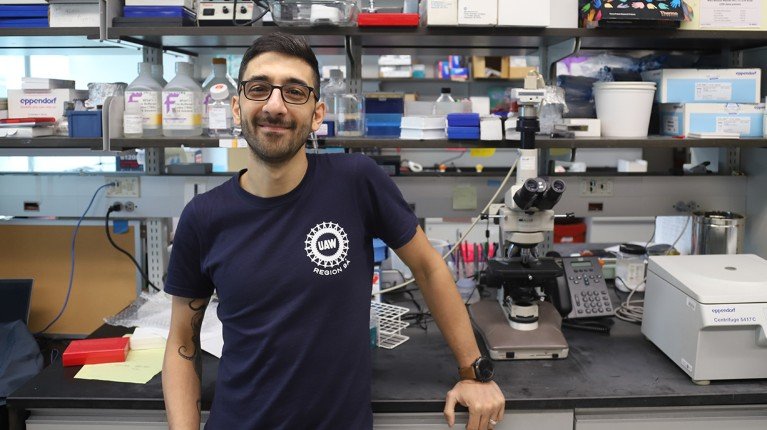
Neuroscientist Stefano Cataldi has realized that defending science through his policy and advocacy work has become just as important as doing bench research. Credit: Alissa de Chassey
These days, Stefano Cataldi, a neuroscientist studying complex cognitive abilities at Columbia University in New York City, is considering something that, to him, was once unthinkable: giving up his promising career as a researcher.
With the administration of US President Donald Trump increasing pressure on science, research funding becoming more uncertain and federal science agencies continuing to be battered by sweeping changes, Cataldi, who for years has been a science advocate, says it is his opinion that defending science has become just as important as doing research.
Cataldi is a delegate at the United Auto Workers (UAW) labour union, which represents many workers in higher education. He represents Columbia’s postdoctoral and associate research scientists, advocating for better working conditions and increased science funding.
Alongside that work, last year, he launched Science Careers and Opportunities in Policy and Education (SCOPE), a virtual programme sponsored by Cold Spring Harbor Laboratory in New York. It helps scientists to navigate science policy, education and communication through conferences, peer networking and a centralized collection of resources.
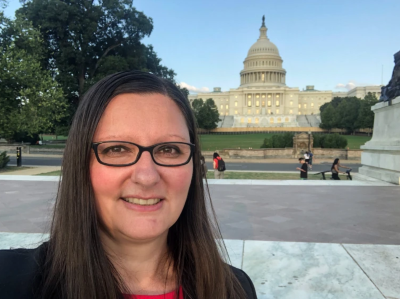
How I’m advocating in Congress for the next generation of US scientists
As an associate research scientist, Cataldi studies the role of the neurotransmitter serotonin in complex cognitive abilities, such as social interaction and aggression. But in the past year, Cataldi has devoted more time to working on SCOPE and UAW initiatives, driven by the growing attacks on science, the impact he has seen union organizing have on researchers’ working conditions and a desire to equip more scientists to engage with science policy.
Cataldi is now considering stepping away from the laboratory bench to focus fully on science advocacy. He tells Nature about the day-to-day realities of science advocacy, and why he wants to make it his full-time job.
What do you do with the Columbia postdoctoral workers’ union?
My role involves attending bargaining meetings with the university administration, to ensure that postdocs and research scientists can afford to live in the city. We negotiate over salaries, childcare and working conditions. During our first contract, which began in 2020, the union secured a minimum annual salary of US$60,000 for every postdoc, up from $47,000.
The union also coordinates campaigns on issues such as fair pay and protections for international researchers. For example, we negotiated a provision requiring the university to maintain a researcher’s employment for 60 days if they leave the country and are unable to return.
We also organize advocacy efforts with state legislators to push for increased public funding for scientific research. I spent several days this year in Albany, New York, and Washington DC, meeting with legislators, explaining my research and telling them why sustained funding for it is essential. Union members do this both at the federal and state level — sometimes by just knocking on office doors at capitol buildings and asking to speak to representatives.
What do you like best about that work?
It feels very meaningful when you can help someone with a specific issue. I remember one postdoc from the Middle East who managed to bring his family to the United States because the union’s work led to a salary raise and affordable childcare. With these benefits, he could afford to come. It was really encouraging and energizing.
What achievement from the union work are you most proud of?
It is the anti-bullying and power-based harassment guidelines that we worked on with the university and put into effect in 2022. This was a personal battle for me because I experienced harassment during my PhD programme, and I understand how powerless postdocs can feel in these situations.
Before this, there was no language in university policies to address bullying or power-based harassment. These new guidelines allow researchers to request a separate workspace or the presence of a third-party during lab meetings. Before, such protections were not guaranteed. Now, the university must act when a complaint is filed, and if it fails to follow the guidelines, researchers can file a grievance against the university.
Why are you now contemplating stepping back from research to focus more fully on science advocacy? And how will you approach that transition?
For me, the broader political environment since Trump’s second term started has made the fight for science feel more pressing than before. Science needs advocates right now to build government and public support so researchers can continue doing their best work. Fortunately, my lab group’s grants were not affected, but many people in my field have felt effects of the administration’s changes, and we worried that future grants could be targeted. Even the word ‘gender’ has been flagged in some US federal grant proposals as problematic.
Many colleagues, particularly those working on HIV research or public-health issues affecting minority communities, have seen their projects shut down and public data sets disappear. I couldn’t stand by and watch it happen, so I decided to act.
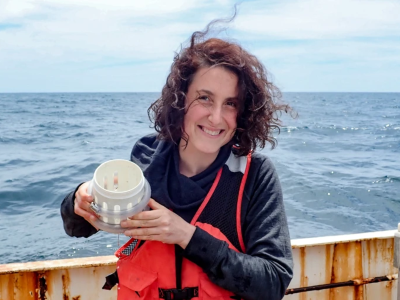
How one US scientist is adapting to life abroad after DOGE cuts
I simply don’t have enough time to be at my best doing all three jobs: bench research, union advocacy and running SCOPE. I’m being strategic about when to leave; I love working at the lab, and I’m going to step back only if I find the right opportunity — a position that changes people’s lives and supports science. It could be in scientific societies or at a private foundation. I just applied for a position at the Dana Foundation, a private philanthropy in New York City focused on advancing neuroscience, in which I would support grant distribution, strategy and external engagement.
I want to find the right fit, and I also need to keep a salary that allows me to support myself and my family.
For more tech updates, stay tuned to our blog.