Over two days in June, Emily Aguilar-Pine drove 2,500 kilometres from Bozeman, Montana, to Austin, Texas, with one of microbiology’s most coveted organisms in the back of her mother’s SUV. Inside some protective packaging, labelled ‘hopes and dreams’, was a small bottle containing about 30 millilitres of what looked like clear liquid, but that in
Over two days in June, Emily Aguilar-Pine drove 2,500 kilometres from Bozeman, Montana, to Austin, Texas, with one of microbiology’s most coveted organisms in the back of her mother’s SUV. Inside some protective packaging, labelled ‘hopes and dreams’, was a small bottle containing about 30 millilitres of what looked like clear liquid, but that in fact held a type of Asgard archaeon, single-celled organisms named after the realm of the Norse gods. At night, ‘Skadi’, short for what is provisionally called Skadiarchaeum cthulhuensis, hung out in the hotel room with Aguilar-Pine. “It was with me at all times,” she says.
The trickster microbes that are shaking up the tree of life
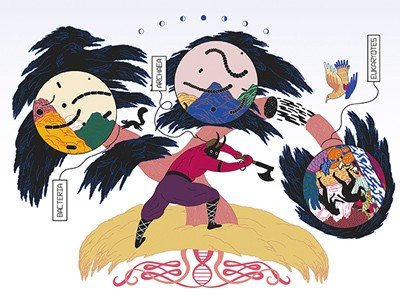
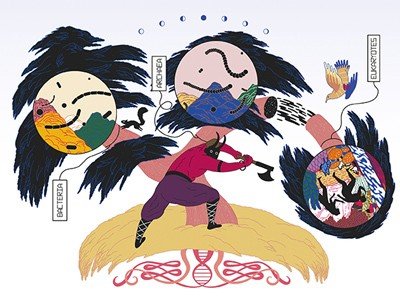
Researchers discovered Asgard archaea in 2015 from DNA in sediments plucked from the bottom of the North Atlantic1. The find changed scientists’ views on the origin of eukaryotes — the complex life forms that include everything from protists to plants, animals and fungi. Researchers knew that eukaryotes had emerged from prokaryotes, single-celled organisms that include bacteria and archaea, and the evidence strongly suggested a close relationship with archaea. But analysis of the Asgard genomes has since pointed to these archaea specifically as the ancestral line of all eukaryotes. Most researchers who study the issue now consider there to be only two domains of life on the planet; eukaryotes are but a branch of archaea and everything else is bacteria.
What’s known about Asgard archaea has come mostly from their DNA. Scientists have been sequencing all the genetic material that they can find in environmental samples and piecing together the microbial genomes within. Although hundreds of Asgard species have been identified in this way2 from a variety of ecosystems around the world, the microorganisms are present in such low abundance that it is difficult to isolate them for study. But researchers who have persisted are now establishing relatively stable cultures — with enough Asgard cells that they can be seen under a microscope.
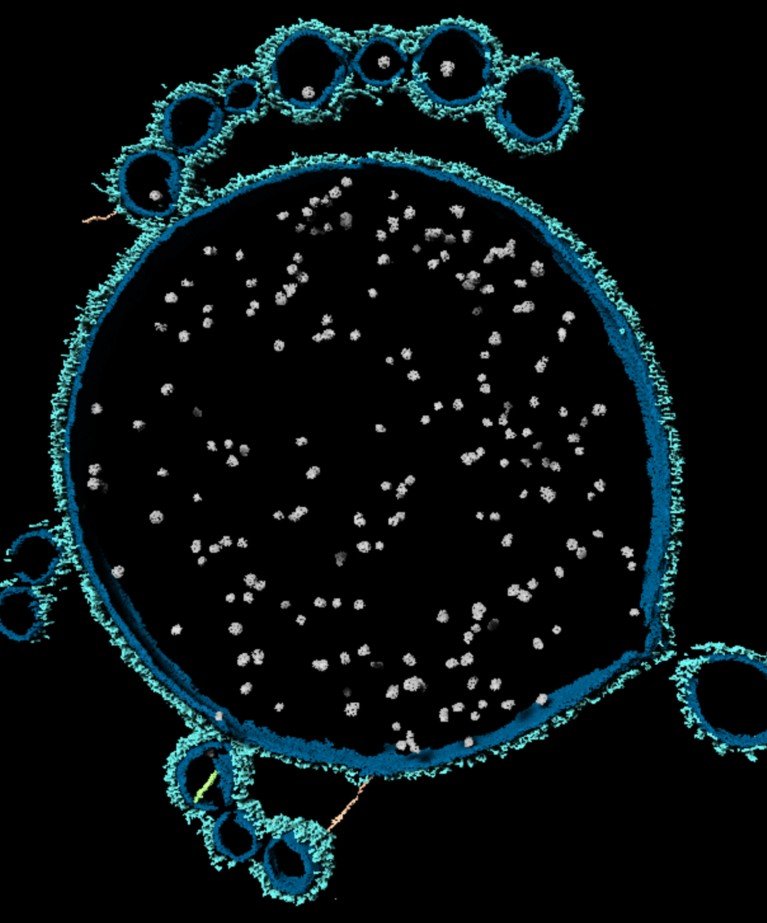
The Asgard Nerearchaeum marumarumayae.Credit: Dr Matthew D Johnson, Dr Bindusmita Paul and Associate Professor Debnath Ghosal
The first cultures were reported3,4 in 2020 and 2022, with four more announced5–7 since the start of 2025. There are at least a few more that have not yet appeared in the literature, including Skadi, which Aguilar-Pine learnt to care for from a PhD student, Stavros Trimmer, at Montana State University in Bozeman before taking samples back with her to the University of Texas at Austin. And researchers are working on more Asgard archaea, encouraging the fickle, slow-growing cells to proliferate, often over the course of several years. The pay-off is worth it, they say.
“Asgard are by far the coolest thing to happen to microbiology in the last 30 to 40 years,” says microbiologist Paul Carini at the University of Arizona in Tucson, whose laboratory is working with an unpublished culture that originated in an estuarine environment in Oregon. Scientists are now studying the surprising shapes, features and behaviours of these cells — and are turning up clues about what made the transition to complex life possible.
Not so simple
The defining features of eukaryotic cells — a membrane-bound nucleus and specialized organelles — might not leap out as extraordinary. But they opened vast new possibilities for how living things could evolve. By keeping their DNA separate from the rest of the cell, eukaryotic cells can protect it and better control how genes are expressed. Internal compartments allow cells to localize tasks and perform many jobs at once. And mitochondria, which power the cells, allow eukaryotes to produce large amounts of energy through aerobic respiration. Cells were able to get much bigger; organisms could become multicellular; and they could reproduce sexually.
The mysterious microbes that gave rise to complex life
It’s generally thought that the split between prokaryotes and eukaryotes happened around two billion years ago, when an ancient host archaeon — now recognized as a member of the Asgards — engulfed a free-living bacterium. That bacterium, which was in a mutually beneficial ‘endosymbiotic’ partnership with the archaeon, eventually evolved into the present-day mitochondrion. Earth’s environment was changing drastically at the time, with oxygen building up in the oceans and atmosphere. Life that could take advantage of it gained an edge.
But how the microbes involved in this monumental partnership found each other, which one contributed what to the relationship, and what physical processes led to the engulfment are big unknowns.
One idea is that, before the endosymbiotic event, the supposedly simple host cells must have had some of the capacities required for complex life. The discovery of Asgards has lent support to this idea1,8. Asgard genomes encode a wide variety of proteins once thought to be exclusive to eukaryotes. These ‘eukaryotic signature proteins’ have roles in the formation of a dynamic cytoskeleton, which gives cells structure and enables movement, as well as in the shuttling of proteins and lipids between cellular compartments and the building and remodelling of membranes.
Wild cells
By culturing the microbes, scientists can study what these proteins do in Asgard cells, including how they relate to the physical features that are now being observed (see ‘Oddball Asgards’).
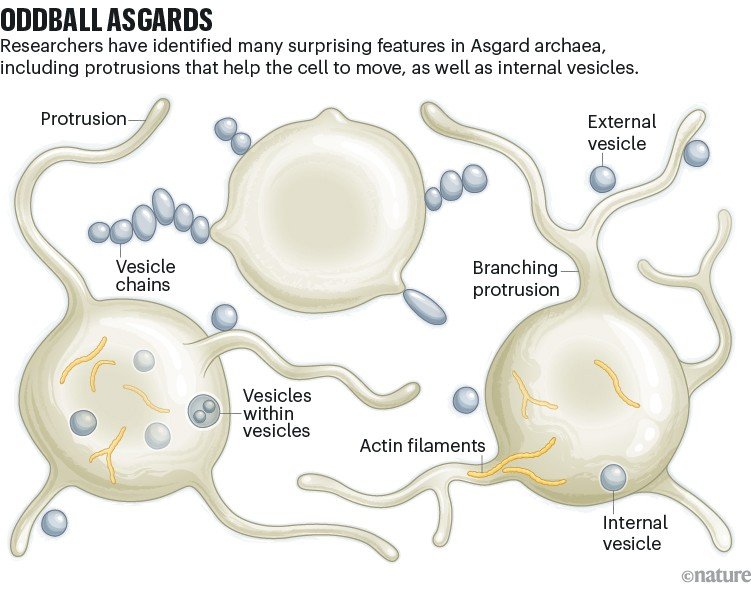
The most talked about of these features so far are the tiny protrusions that look like tentacles, or even antlers, jutting out from Asgards’ typically spherical bodies.
Microbiologists Hiroyuki Imachi and Masaru Nobu first saw the protrusions in an Asgard that they spent a dozen years growing in their lab at the Japan Agency for Marine-Earth Science and Technology in Yokosuka. When the project started, they didn’t know that they had an Asgard in their bioreactor; Asgard as a group had not yet been identified.
But in 2020, they were able to report the first successful culture of an Asgard archaeon, Promethearchaeum syntrophicum3. They described a “pure co-culture” that also contained a methane-producing partner — another archaeon — that they couldn’t grow P. syntrophicum without.
The paper highlighted the protrusions. “My initial reaction was funny,” Imachi says. “I wondered whether some material had contaminated the sample or whether it was an artefact of the observation process.” But the protrusions seem to be genuine and have been observed many times over.
A ‘lost world’ of early microbes thrived one billion years ago
The next published culture, from microbiologist Christa Schleper’s lab at the University of Vienna, took six years to grow from samples collected from shallow sediments off the coast of Slovenia. It included five microbial species, with an Asgard among the dominant ones. With advanced imaging techniques, the researchers, including microbiologist Martin Pilhofer at the Swiss Federal Institute of Technology (ETH) in Zurich, got a good look inside the Asgard cells. “I was completely shocked,” says Pilhofer. The cells had protrusions, and they lacked both the rigid protein shell often seen in archaea and bacteria and the double membrane or cell wall of eukaryotic cells. “These cells looked like nothing I had ever seen,” he says.
Their 2022 paper reported an Asgard provisionally called Lokiarchaeum ossiferum. (The names of cultured Asgards are often preceded by Candidatus in the literature to reflect that they are still ‘candidate’ names.) It has a cytoskeleton with filaments made up of actin-like proteins similar to those found in eukaryotes4. The researchers later reported the presence of microtubules9, another feature of eukaryote cytoskeletons. Both P. syntrophicum and L. ossiferum belong to the Loki group of Asgards, which takes its name from Loki’s Castle, the field of Atlantic hydrothermal vents where Asgards were first discovered.
The protrusions have become an iconic feature of Asgards, observed in almost every culture. What they do is not yet clear, however. “The cell invests a substantial amount of its resources in building and maintaining these structures, so they must serve some important biological functions,” Imachi says.
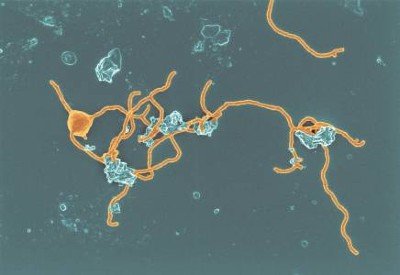
Some ideas are emerging. In a preprint posted in late 2025, Schleper and her colleagues used live microscopy to capture, for the first time, Asgard cells in motion. L. ossiferum and another cultured species from Imachi and Nobu’s team, Margulisarchaeum peptidophilum, seem to crawl by reshaping the cytoskeleton in their protrusions10. Inhibiting the actin-like proteins stopped cell movement.
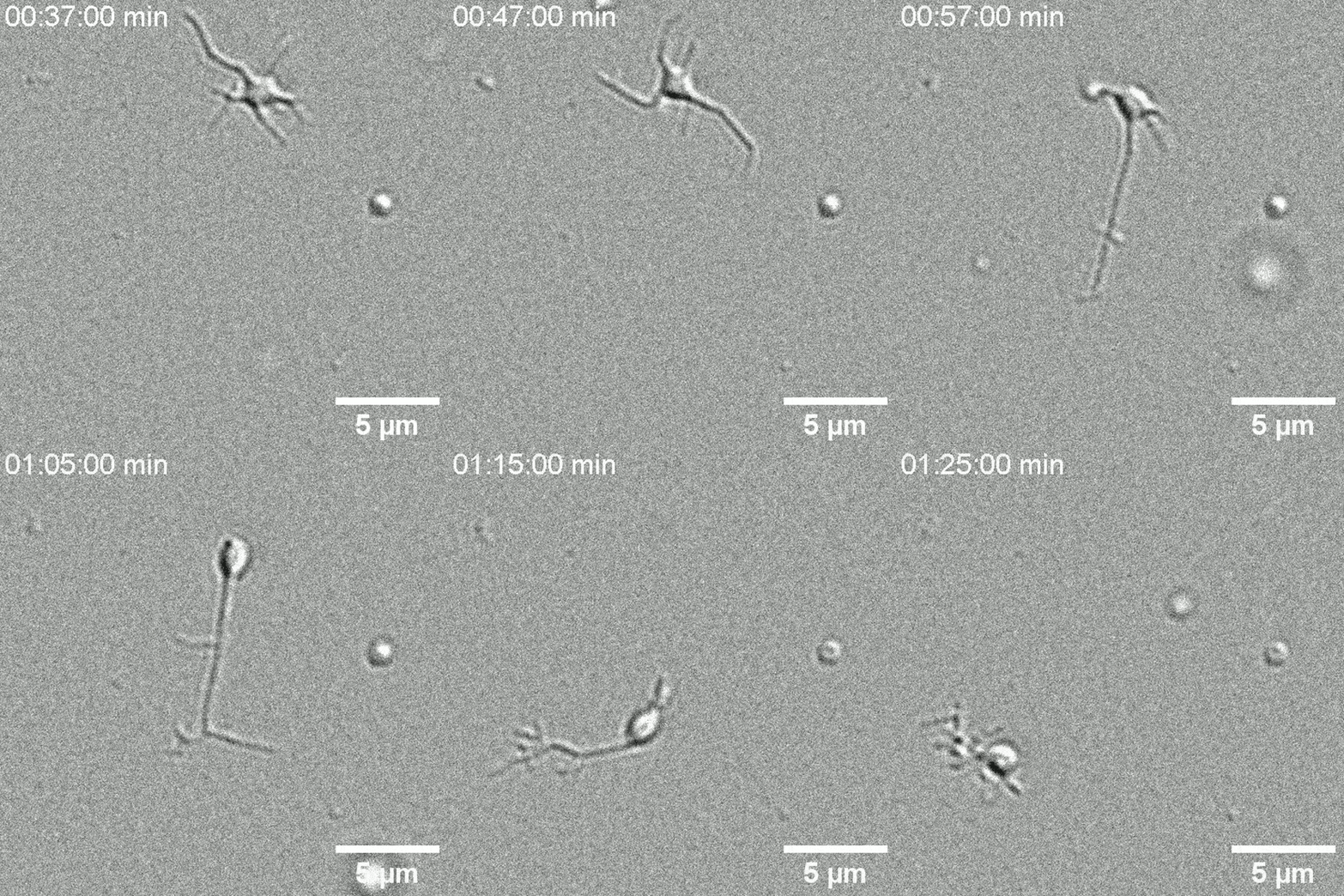
The Asgard archaeon Lokiarchaeum ossiferum uses protrusions to move around on a surface.Credit: Philipp Radler
In a paper on M. peptidophilum and another Asgard, Flexarchaeum multiprotrusionis, both of which took three years to cultivate, Imachi and Nobu report observing protrusions attaching to methane-producing partners through what Imachi describes as spikes on their surface, suggesting the protrusions might help to capture and retain partners7. This result and others raise the tantalizing possibility that Asgard protrusions could have been instrumental in the origin of eukaryotes.
“It is of course very exciting at the moment,” says Schleper. “Whenever I look at our cells, and we do more experiments, we get so surprised. We always find something that we did not even think of.”
Cell biologist Buzz Baum at the MRC Laboratory of Molecular Biology in Cambridge, UK, says the protrusions fit with a model of eukaryogenesis that he and his cousin, evolutionary biologist David Baum at University of Wisconsin–Madison, proposed in 2014. Dubbed the inside-out model11, it posits that an ancient archaeon would have used protrusions to share resources with other cells. Instead of the cell folding its membrane in to engulf a partner microbe, the protrusions would eventually surround the mitochondrial precursor and merge to trap it.
Scientists glimpse oddball microbe that could help explain rise of complex life
Another cultured Asgard, found in microbial mats in Shark Bay in Western Australia, has its own surprises. Microbial ecologist Brendan Burns at UNSW in Sydney, Australia, and his colleagues see chains of vesicles dangling on the outside of cell bodies in Nerearchaeum marumarumayae, which took five years to grow to high abundance5. They also see a long thin tube reaching out from a partner bacterium and touching the Asgard. “I couldn’t believe that I was seeing a physical interaction,” recalls structural biologist Debnath Ghosal at the University of Melbourne, Australia, whose team did the imaging work. “I’m getting goosebumps now thinking about it.” What, if anything, is being exchanged between the microbes is unknown.
For more tech updates, stay tuned to our blog.