
Pakistan’s Gateway to Global News, Tech Updates, and Emerging AI Trends.
Earth’s Moon
- Home
- Earth’s Moon

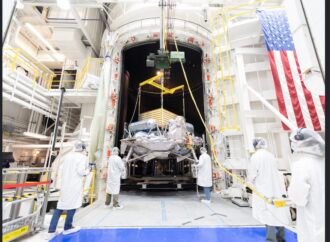
NASA JPL Testing Readies Voyager Technologies Lander for Moon Mission – NASA0
- Commercial Lunar Payload Services (CLPS), Earth's Moon, Jet Propulsion Laboratory, Missions, Moon Base, SCIENCE, Science / Health, Science Mission Directorate, scientists, Space, Space Communications & Navigation Program, Space Launch System (SLS), Space Telescope, space-x-ipo, SpaceX
- October 13, 2026
A commercial lander that will be at the forefront of NASA’s efforts to establish a Moon Base, humanity’s first lunar outpost, has passed a series of critical tests at the agency’s Jet Propulsion Laboratory in Southern California. The tests simulated the extreme temperatures and vacuum of space, as well as the intense shaking and ear-splitting
READ MORE
What’s Up: September 2026 Skywatching Tips from NASA0
- Earth's Moon, Neptune, Saturn, SCIENCE, Science / Health, Science Mission Directorate, scientists, Skywatching, Skywatching Tips, Space, Space Communications & Navigation Program, Space Launch System (SLS), Space Telescope, space-x-ipo, SpaceX, The Solar System, Venus
- September 1, 2026
Use the Moon to find Antares and the Teapot, spot brilliant Venus, welcome the equinox, and see the Harvest Moon near Saturn and Neptune. Sept. 14-20: Use the Moon to find Antares and the Teapot; dark skies may reveal the Milky Way center Sept 18: Venus reaches peak brilliance for this evening appearance Sept. 22:
READ MOREHuman-Related Microbes May Survive Moon’s South Pole, NASA Finds – NASA Science0
- Astrobiology, Earth's Moon, Goddard Space Flight Center, Human Spaceflight Mission Directorate, Humans in Space, International Space Station (ISS), ISS Research, Johnson Space Center, NASA Centers & Facilities, NASA Directorates, Planetary Geosciences & Geophysics, Planetary Science, Planetary Science Division, SCIENCE, Science / Health, Science & Research, Science Mission Directorate, scientists, Space, Space Communications & Navigation Program, Space Launch System (SLS), Space Telescope, space-x-ipo, SpaceX
- August 19, 2026
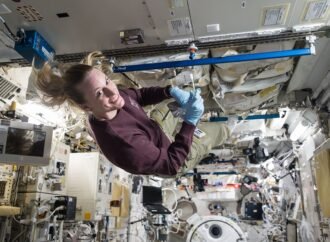
Lee esta historia en español aquí. Some of Earth’s microbes likely to hitch a ride to space with human explorers could survive in the shaded nooks and crannies of the Moon’s South Pole region, NASA scientists say. Published on Aug. 19, 2026, in Science Advances, these findings highlight a need to better understand microbial persistence
READ MORE

Human-Related Microbes May Survive Moon’s South Pole, NASA Finds - NASA Science
- Astrobiology, Earth's Moon, Goddard Space Flight Center, Human Spaceflight Mission Directorate, Humans in Space, International Space Station (ISS), ISS Research, Johnson Space Center, NASA Centers & Facilities, NASA Directorates, Planetary Geosciences & Geophysics, Planetary Science, Planetary Science Division, SCIENCE, Science / Health, Science & Research, Science Mission Directorate, scientists, Space, Space Communications & Navigation Program, Space Launch System (SLS), Space Telescope, space-x-ipo, SpaceX
- August 19, 2026

Latest Posts
-
NASA JPL Testing Readies Voyager Technologies Lander for Moon Mission - NASA
- Commercial Lunar Payload Services (CLPS), Earth's Moon, Jet Propulsion Laboratory, Missions, Moon Base, SCIENCE, Science / Health, Science Mission Directorate, scientists, Space, Space Communications & Navigation Program, Space Launch System (SLS), Space Telescope, space-x-ipo, SpaceX
- October 13, 2026
-
NASA’s Moon Orbiter Spots New, ‘Once-in-Century’ Moon Crater - NASA Science
- Asteroids, Craters, Earth's Moon, Goddard Space Flight Center, Lunar Reconnaissance Orbiter (LRO), Lunar Science, Missions, NASA Centers & Facilities, NASA Directorates, Planetary Environments & Atmospheres, Planetary Science, Planetary Science Division, SCIENCE, Science / Health, Science & Research, Science Mission Directorate, scientists, Space, Space Communications & Navigation Program, Space Launch System (SLS), Space Telescope, space-x-ipo, SpaceX, The Solar System
- September 16, 2026
Top Authors
-
matechpros@gmail.com
ADMINISTRATOR
-
OWS
ADMINISTRATOR

