The fall festival triple crown ended the way it always does, with a Toronto audience getting the last word. On Sunday, those words were in Spanish. “La Bola Negra,” the sprawling Netflix epic from Los Javis, took TIFF’s People’s Choice Award, capping three weeks in which Venice handed its Golden Lion to May el-Toukhy’s “Woman
The fall festival triple crown ended the way it always does, with a Toronto audience getting the last word. On Sunday, those words were in Spanish.
“La Bola Negra,” the sprawling Netflix epic from Los Javis, took TIFF’s People’s Choice Award, capping three weeks in which Venice handed its Golden Lion to May el-Toukhy’s “Woman Unknown” and Telluride did what Telluride does, launching contenders without ranking a single one. Three festivals, three very different kinds of potential voters. Put their verdicts side by side, and the shape of the 99th Academy Awards starts to come into focus.
Here are five things the festivals told us.

“Wild Horse Nine”
Searchlight Pictures
Venice and Telluride agreed on one thing, and that’s John Malkovich.
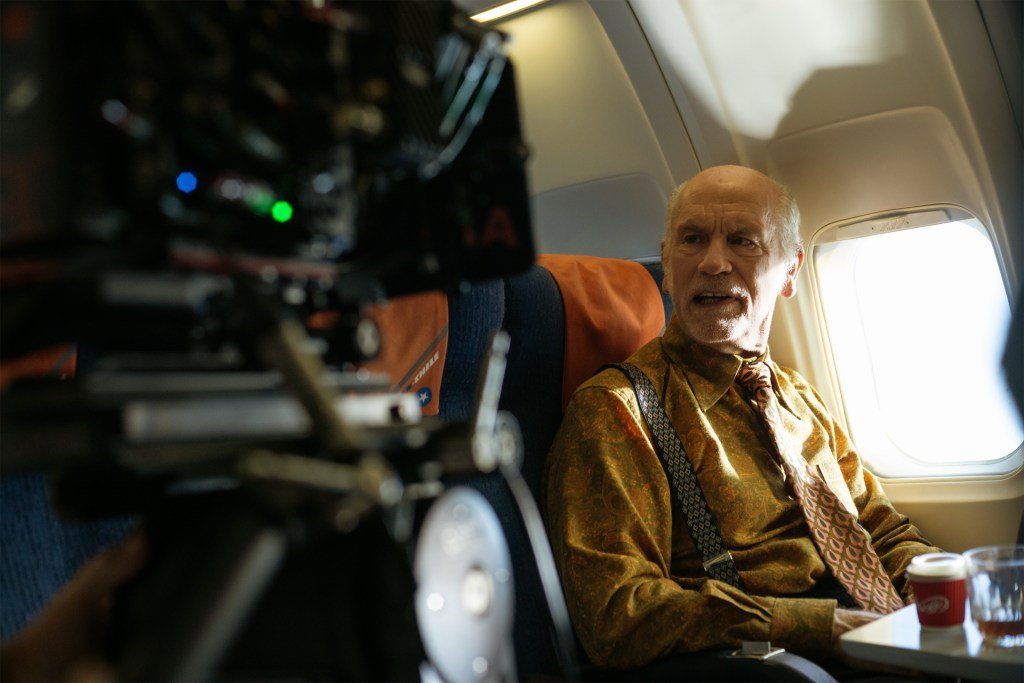
Martin McDonagh’s “Wild Horse Nine” premiered in competition on the Lido to a 13-minute standing ovation. The next day, Searchlight brought it to Telluride as the surprise patron screening, timed to John Malkovich’s Silver Medallion tribute. And nine days later, Venice closed the loop and handed him the Volpi Cup for best actor.
Malkovich plays a dying CIA agent sent to Easter Island in the tense days before Chile’s 1973 coup, and the performance is equal parts menace and, of all things, tenderness. He’s been nominated twice, for “Places in the Heart” and “In the Line of Fire and hasn’t been back since the Clinton administration. Between the prize, the tribute and the ovation, the Academy has been handed a narrative with a bow on it. Searchlight opens the film Nov. 6.
“La Bola Negra”
Carla Oset/Netflix
“La Bola Negra” is the international feature front-runner, and it’s playing well beyond the category.
The directing team known as Los Javis has everyone’s attention now.
Javier Calvo and Javier Ambrossi won best director at Cannes in May, carried the film to Telluride and then took Toronto’s top prize. Shot on 35mm and inspired by Federico García Lorca’s unfinished work of the same name, Spain’s Oscar selection moves among 1932, 1937 and 2017, following three generations of gay men across nearly a century of Spanish history.
A subtitled Netflix film that festivalgoers won’t stop talking about is exactly where you want to be heading into the international feature race. But People’s Choice changes the size of the conversation. Over the last decade, nine of 10 winners landed a best picture nomination, with only 2024’s “The Life of Chuck” missing. Two of them, “Green Book” and “Nomadland,” won the whole thing.
That gives Netflix, which has never won best picture, every reason to campaign across the board. And consider this — stars Guitarricadelafuente and Penélope Cruz weren’t even in Telluride to work the room, and the movie still had people talking.
“I Play Rocky”
Courtesy of TIFF
Toronto’s audience is signaling a wide-open and competitive best picture field.
We know the internet wants to call the race already for Christopher Nolan’s “The Odyssey,” and it’s definitely at the top of the heap for films that have screened and performed, but there’s six more months to go.
First, some housekeeping. Social media spent the weekend asking how “La Bola Negra” could win People’s Choice but not the International People’s Choice Award. TIFF officials tell Variety there’s no separate ballot, and the international prize isn’t limited to non-English-language films but to non-North American ones. “La Bola Negra” received the most votes overall, so the international honor went to the next highest non-North American film. That’s how a British drama, spoken in English and starring an Irish actor, ended up with it.
Behind “La Bola Negra” came Peter Farrelly’s “I Play Rocky” and Siân Heder’s “Being Heumann,” two crowd-pleasers with clean, sturdy narratives built to gain a legion of lovers during a long season. Heder knows how far that love can travel, after riding “CODA” from Sundance all the way to best picture.
Over the last decade, two of every three films finishing in Toronto’s top three went on to a best picture nomination. In 2019, all three (“Jojo Rabbit,” “Marriage Story” and “Parasite”) made the lineup and “Parasite” won. In 2020, only “Nomadland” did and it won, too.
That statistic can be a bit uncomfortable for two presumed heavyweights, “Wild Horse Nine” and “The Debut,” neither of which cracked the top three. But missing the podium isn’t fatal. In 2017, “The Shape of Water” was one of the most talked-about titles in Toronto, finished outside the top three and won best picture anyway. The same for 2016’s “Moonlight” from Barry Jenkins, who toppled the TIFF audience winner, “La La Land” at the Oscars. But on the other hand, the winner of the Cannes best director prize has never won the Oscar for directing. The last Cannes winner to convert to an Oscar nominee was Paweł Pawlikowski for “Cold War” (2018) and before that was Bennett Miller for “Foxcatcher” (2014).
Halle Bailey and Julianne Moore in “The Debut”
A24
The best actress race has a front-runner, and she already owns an Oscar.
Julianne Moore walked into Telluride as a name on the lineup. She walked out as the actress to beat.
In “The Debut,” Jesse Eisenberg’s third feature as a director, Moore plays Mona Friedman, a meek New Jersey homemaker who stumbles into a community theater musical and discovers she can’t stop. The role lets her be funny, fragile and completely unguarded, often in the same breath and she sells Eisenberg’s original songs like a woman who has waited her whole life for someone to ask.
The Telluride crowd applauded in the middle of the movie during a rehearsal scene opposite Paul Giamatti and again before the credits rolled. Festival audiences rarely do that even once.
The complication is “Still Alice.” Moore won best actress for it 11 years ago, and voters know exactly what she can do. That’s the double edge of chasing a second Oscar: the respect is already banked, and urgency is harder to manufacture. A24, which opens the film Dec. 11, will need to sell this as a Moore the Academy hasn’t seen before, not a victory lap.
Then there’s Venice. Mathilde Arcel won the Volpi Cup for “Woman Unknown,” the Danish postwar drama that also took the Golden Lion, a double the jury can only award unanimously. By her own account, it’s her first lead role and her first film festival. Arcel isn’t a name the Academy knows. Still, a performance attached to a Golden Lion demands a look, especially now that the prize makes “Woman Unknown” eligible for international feature under the Academy’s new rules.
Andrew Scott stars as Ian Charleson and Olivia Colman as Margaret Johnson in “Elsinore.”
Anthony Dickenson
The field is broad, and we shouldn’t expect “locks” any time soon.
There’s a lot of themes circling movies of the fall. Many are about the craft of acting, and the actors branch loves watching those. The actors branch is the Academy’s largest; it alone decides the four acting categories and it votes on best picture like everyone else. Hand actors a movie about their own work and history, and they lean in. That helps movies like “Elsinore” and “The Debut” down the line.
If you look at history, “All About Eve,” a movie about a Broadway star and the understudy coming for her crown, earned a then-record 14 nominations and won best picture. “Shakespeare in Love” beat “Saving Private Ryan.” “The Artist” won with a silent film star who can’t survive the talkies. “Birdman” won with a faded actor staking everything on a Broadway opening. “Black Swan,” “La La Land” and “Judy” handed Natalie Portman, Emma Stone and Renée Zellweger each their own individual Oscar statuettes. And only six months ago, Jessie Buckley won best actress for “Hamnet,” a film that builds to a crowd at the Globe Theatre watching Shakespeare’s “Hamlet.”
Obviously, the branch’s affection has limits as it tends to favor movies about the craft, not the business. Case in point: Damien Chazelle’s “Babylon” cast Margot Robbie and Brad Pitt as silent-era stars and came away with zero acting nominations.
In a time of mergers and AI, real people doing the real artistic work might just do the trick.
Moral of the story is that it’s still early, and anything can change between now and nomination voting in January.
For more tech updates, stay tuned to our blog.