
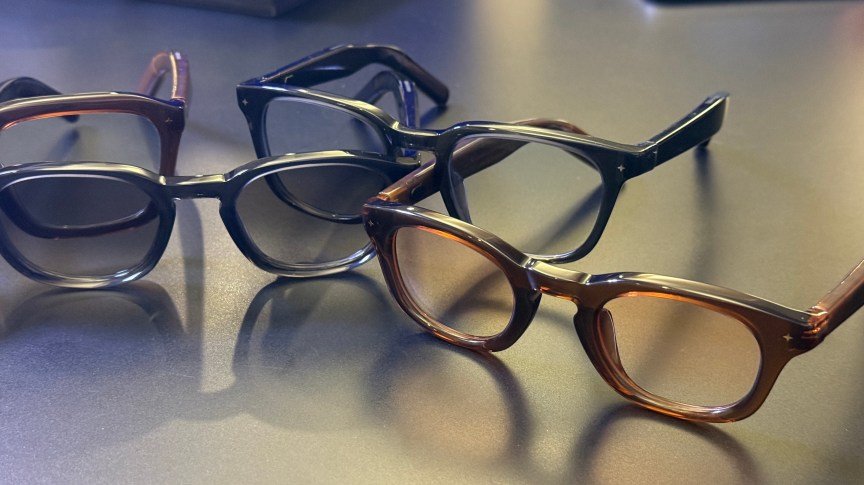
The multiple pairs of smart glasses prototypes I’m trying on are attractive, familiar and lightweight. They look normal, fit my face well and have no cameras. All they have on board is audio and microphone support. These Vonder smart glasses are all about listening to you as much as to others. And they can tell

The multiple pairs of smart glasses prototypes I’m trying on are attractive, familiar and lightweight. They look normal, fit my face well and have no cameras. All they have on board is audio and microphone support. These Vonder smart glasses are all about listening to you as much as to others. And they can tell the difference.
Meta announced its own camera-free audio glasses this week, but Vonder, a company founded by execs from display glasses maker Viture, along with Guillaume Hamon, the chief brand officer, goes further. I met with Hamon and David Jiang, Viture’s CEO and co-founder, in New York a few weeks ago to learn about their new $299 to $399 glasses, which fit a wide range of eye prescriptions but also require a monthly paid AI subscription.
Bone conduction inside
Viture’s tethered wearables are more like wearable monitors in glasses form with augmented-reality bells and whistles. Vonder has no displays and leans on extended battery life and a unique approach to audio technology, using bone conduction in the glasses to help with privacy to filter personal voice memos versus recording external voices in a room.
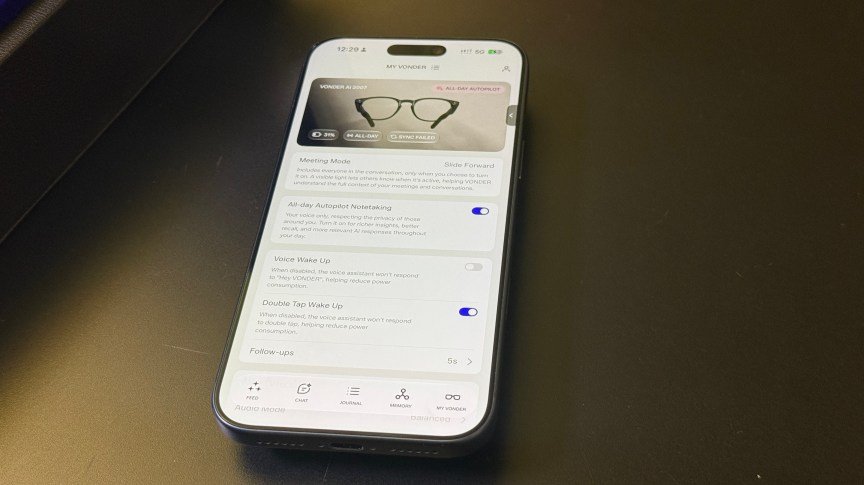
The onboard array of microphones can listen in on conversations and summarize them using AI, which then appears in a phone app or a web app. But the glasses don’t keep any audio recordings. Apple is doing something similar on its Apple Watches and iPhones later this year via Siri Recap. Meta, meanwhile, hasn’t gotten into the memory-recording audio space yet.

I found the bone conduction microphones in the glasses’ arms to be the most interesting feature, which can listen to your own voice even at a whisper. I hadn’t seen that idea before in the glasses I’ve worn. According to Jiang and Hamon, Vonder’s glasses can either record just your own voice for memos and personal notes or a conversation with others. The bone conduction microphones help differentiate between your voice and whoever you’re speaking to.
In conversation modes where the glasses are recording others, a small side LED light turns on after you press a recording button on the glasses’ arm. In personal modes, there’s no light.
A memory assistant, for a monthly subscription
“The idea of Vonder is fashion-forward glasses that allow you to basically reduce your cognitive load and rely on Vonder as a second memory, almost, so you can stay in the flow of your life, your conversations and rely on Vonder to keep track of what matters,” Hamon tells me.
These glasses aren’t designed as phone replacements. “It’s utopic, I think, at this current stage, to ask people to ditch the phone,” Jiang says. Jiang’s other company, Viture, also uses glasses (display-enabled ones) as phone accessories, not self-contained face computers.
It’s also utopian – some would say dystopian – to imagine AI platforms as true memory extensions. That was how I tried to live for a month with a pendant called Looki, and it didn’t go well. I don’t know how Vonder’s Personal Memory Graph, its cloud and phone app-based AI system that pulls from OpenAI, Gemini and Claude models, will actually work in practice. Vonder’s AI service won’t directly log into those other AI services; it’ll draw from their AI models instead, similar to how AI glasses services like Rokid’s work.
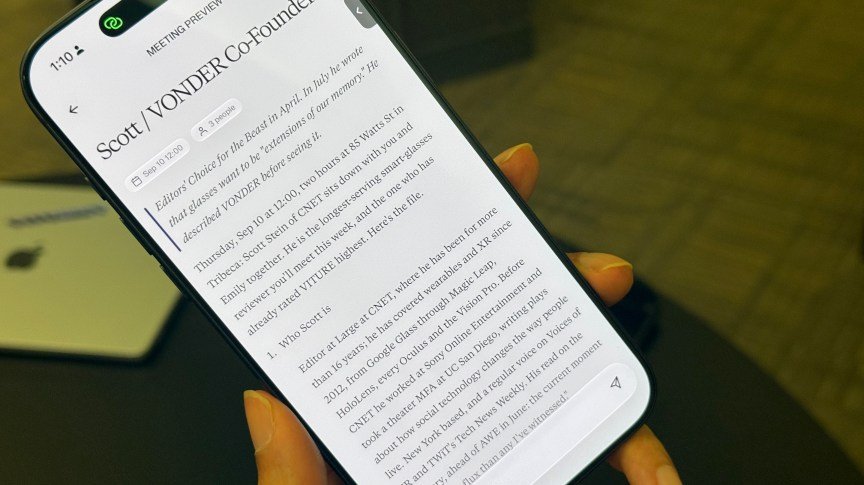
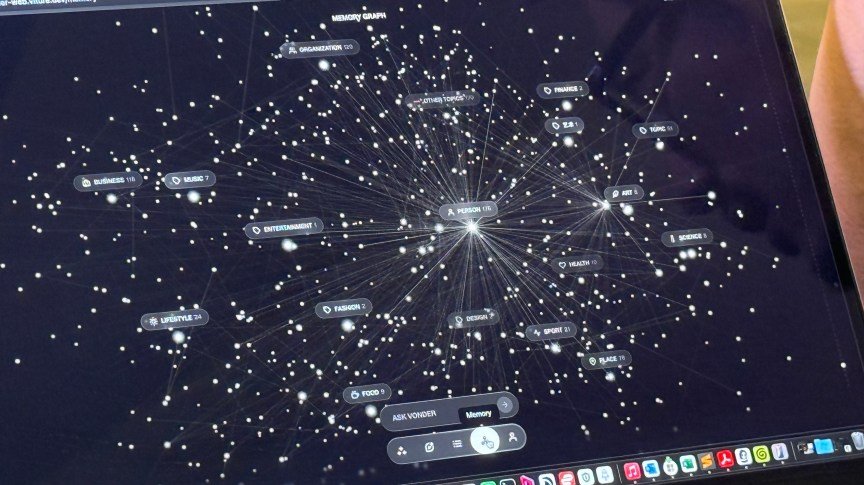
Vonder’s memory-mapping platform aims to be a safe place to store all your conversations and personal memos, creating a searchable mind map. Seeing an early preview of the software in a web browser, I was skeptical. Every company wants to be our collective memory now: How do we trust collecting those memories, though? Vonder’s pitch is also a subscription one: The required AI service is priced in tiers based on how much it’s used, from $5 to $30 a month. I don’t like the idea of subscription memories, not at all.
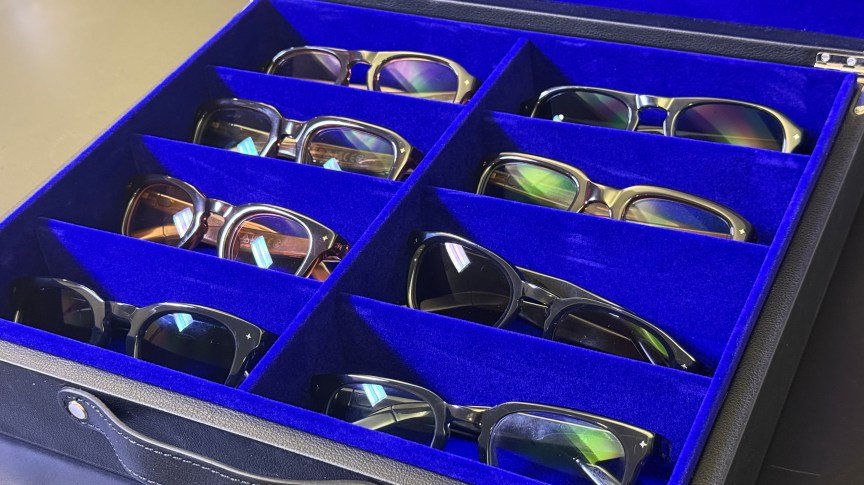
No cameras here
I do like how small Vonder’s glasses frames are, though, and how they’re styled. At 30 grams, they feel exactly like regular glasses and have flexible arms for a comfortable temple fit. They’re notably lighter than Meta’s smart glasses, which hover around 50 grams. They’re also lighter than the small Even Realities G2 glasses I wore earlier this year.
And Vonder’s leaning completely on audio at a time when the rest of the smart glasses industry may be seeing a similar pivot. With the ongoing backlash against smart glasses cameras, privacy features will be what Meta’s new glasses, and Google and Samsung’s, will be judged against. Meta’s already promising more private computing in the year ahead. How will Vonder measure up? And, with Meta now promising better battery life on its Ray-Ban Audio glasses, could audio-recording memory modes like these be on deck next? Or Apple, for that matter?
Vonder says its glasses will last over 16 hours on a single charge, even when recording continuously. They truly could be used all day. Apple’s promising all-day battery life in its upcoming Siri Recap recording mode, too. To do this, Vonder’s using a chipset also found in earbuds instead of a higher-end Qualcomm glasses-focused processor, making the glasses more power-efficient.
I won’t know more till I try a pair, but Vonder’s frames are the nicest-looking I’ve seen. Will the AI services be worth it, too? I expect a lot out of any device promising to extend my memory. I’m very protective about my memories, too, so we’ll see.

See full bio
Keep following us for the latest insights.