When it comes to drone technology, DJI has long been the global standard. Taking that accumulated expertise in autonomous navigation and applying it to spaces connected to everyday life makes perfect sense, which is exactly what the company has achieved with the DJI Romo 2. This machine is designed to genuinely free you from the
When it comes to drone technology, DJI has long been the global standard. Taking that accumulated expertise in autonomous navigation and applying it to spaces connected to everyday life makes perfect sense, which is exactly what the company has achieved with the DJI Romo 2. This machine is designed to genuinely free you from the burden of floor cleaning by leveraging the same advanced obstacle avoidance that protects expensive drones in the sky.
The target audience for the Romo 2 is anyone looking for a truly hands-off, intelligent home cleaning solution that does not just bump into things and get stuck. It is especially appealing to busy families and pet owners who deal with constant messes, as the robot uses AI to identify dirt types before cleaning. If you want a device that operates reliably in the background without needing a rescue mission every day, this aims to be the premium choice.
I have been testing the flagship DJI ROMO P2 (water tank version). After a quick unboxing, it is clear that DJI wants to stand out from the crowd by being clear. In a market filled with black boxes, DJI has followed up the original Romo with an updated design that builds on the transparent and light aesthetic, which I actually love, making it really distinct and unique from any others in the market.
Design
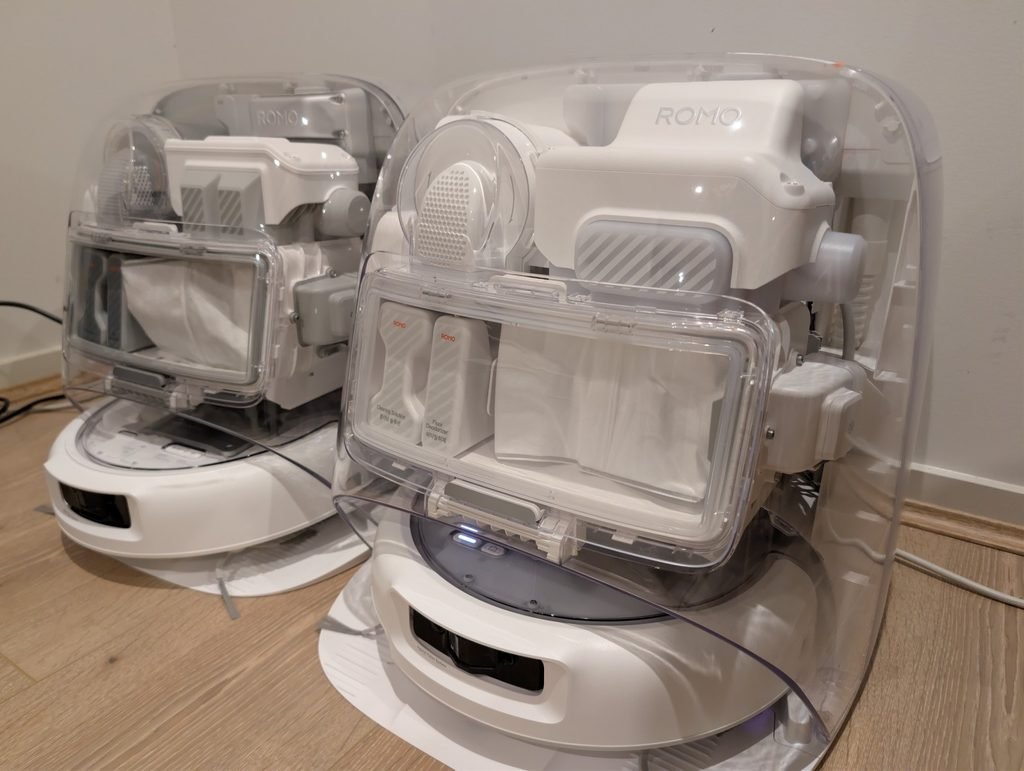
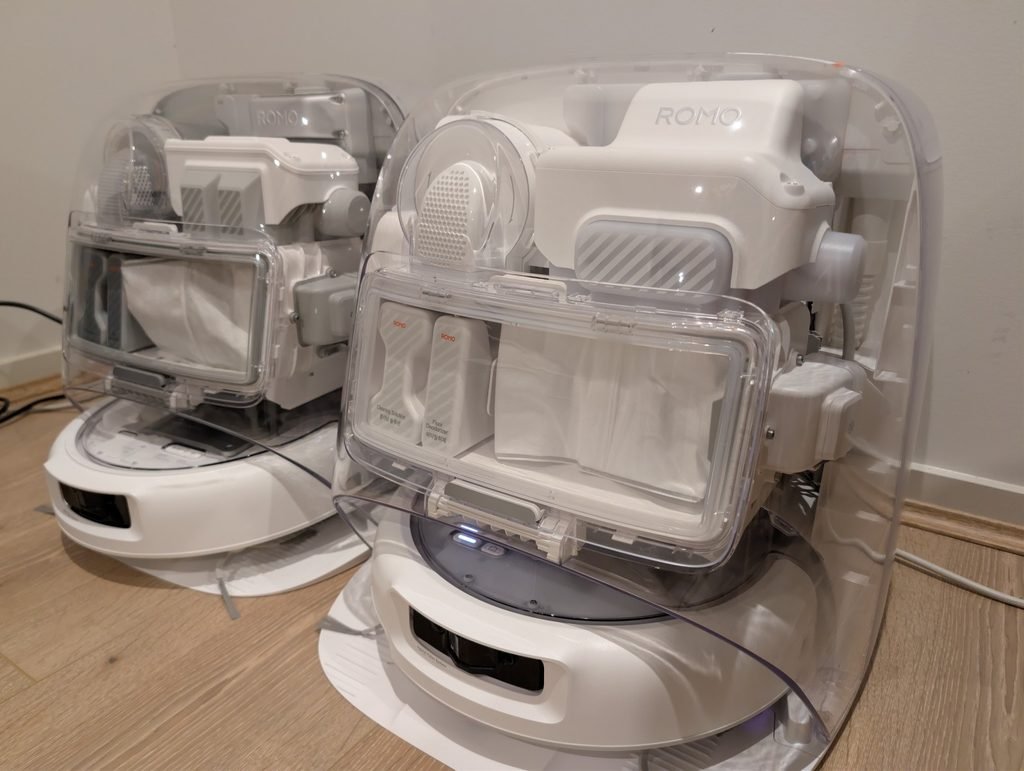
In the design department, the DJI Romo 2 makes a bold statement with its transparent aesthetic. This clear casing allows you to see the intricate internal engineering, reflecting the brand’s confidence that precision technology does not need to be hidden away.
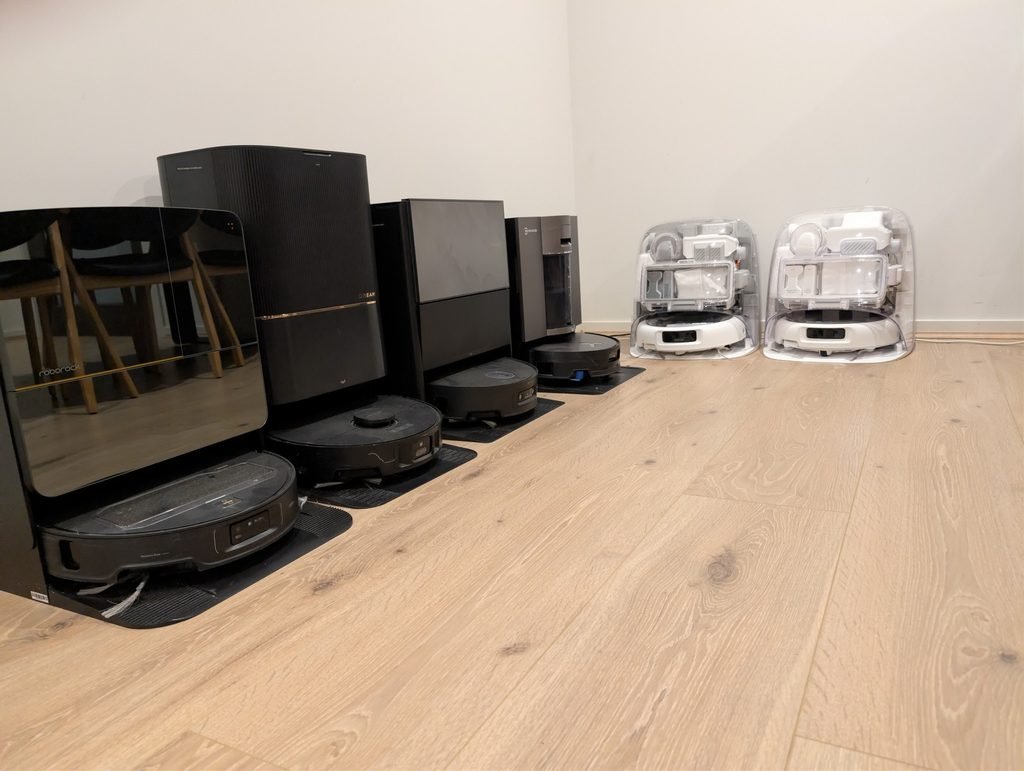
Placing the new Romo 2 next to the original first-generation model reveals exactly where the visual refinement went. While both share the transparent outer shell concept, the original unit featured darker slate grey internals, exposed utilitarian components, and contrasting dark filter assemblies. The Romo 2 cleans this up entirely.
The internal structural ducting, filter chamber, detergent cartridges, and perimeter framework have all been switched to a clean, crisp white finish. It turns what was an industrial aesthetic into an intentional, minimalist showpiece behind the clear poly shell.
A thoughtful design change from competitors is the placement of the dust detection indicator light. DJI positioned this light on the underside of the machine rather than facing outward at eye level. This human-centred touch ensures pets and family members are not bothered by glaring beams while the robot goes about its routine.
The self-cleaning base station matches the robot vacuum with its transparent front casing. It houses large clean and dirty water tanks along with a dual automatic dosing system for floor cleaning solution and deodoriser. The overall footprint is substantial, but it accommodates an integrated system designed to dramatically reduce hands-on maintenance thanks to dirt-resistant microcrystalline shield materials.
Performance
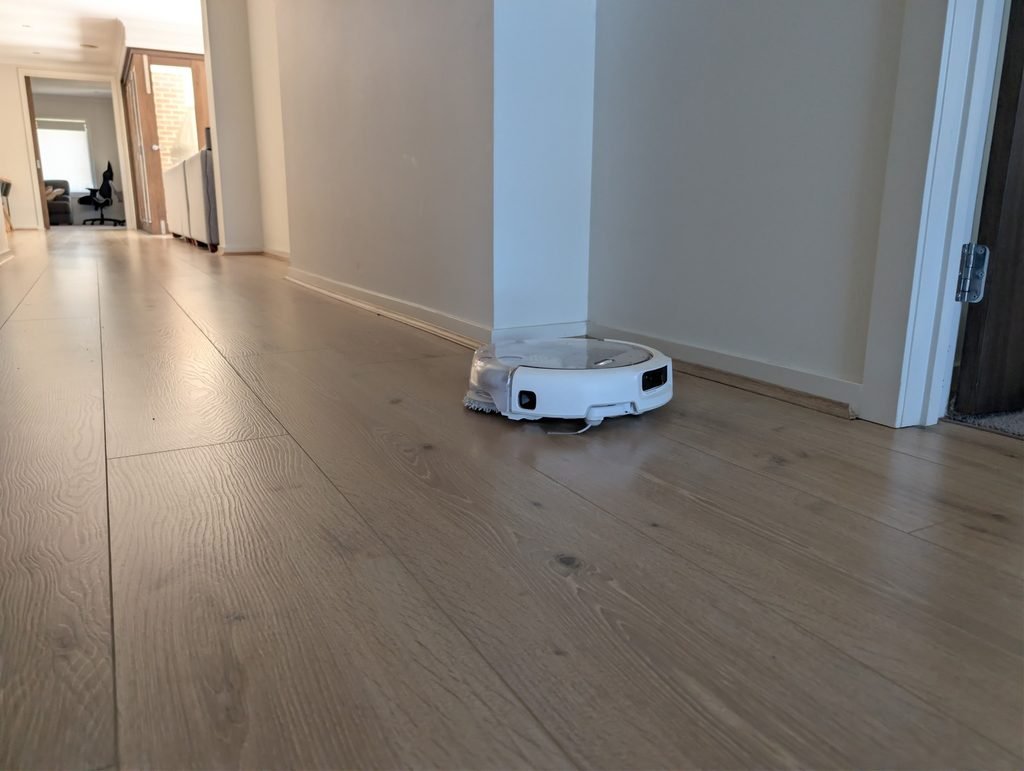
Performance is where the DJI Romo 2 truly excels, leveraging drone-grade millimetre-level obstacle sensing. The robot navigates around chair legs, scattered toys, and thin barriers with pinpoint accuracy, rarely needing manual rescue. The combination of 3D ToF sensors and RGB cameras works exceptionally well, detecting tricky transparent surfaces like glass doors and navigating around liquid spills to prevent spreading mess across the room.
Initial setup and map creation are standout strengths. The robot quickly scans the house, identifying distinct floor types to build an accurate virtual map with considerably less friction than many competing robots I have tested over the years. That floor recognition is crucial in practice: it automatically flags carpeted zones to keep the mopping pads disengaged, while giving you granular flexibility inside the DJI Home app.
That software control makes a big difference day to day. If you have timber floorboards, running wet mops daily is not ideal. I configured a schedule where the Romo 2 handles daily dry vacuum runs, followed by a dedicated combined vacuum and mop pass once a week. When life happens and a specific mess crops up, the ability to dive into the app, select a targeted zone, and send the robot to spot-clean that exact area is fast and responsive.
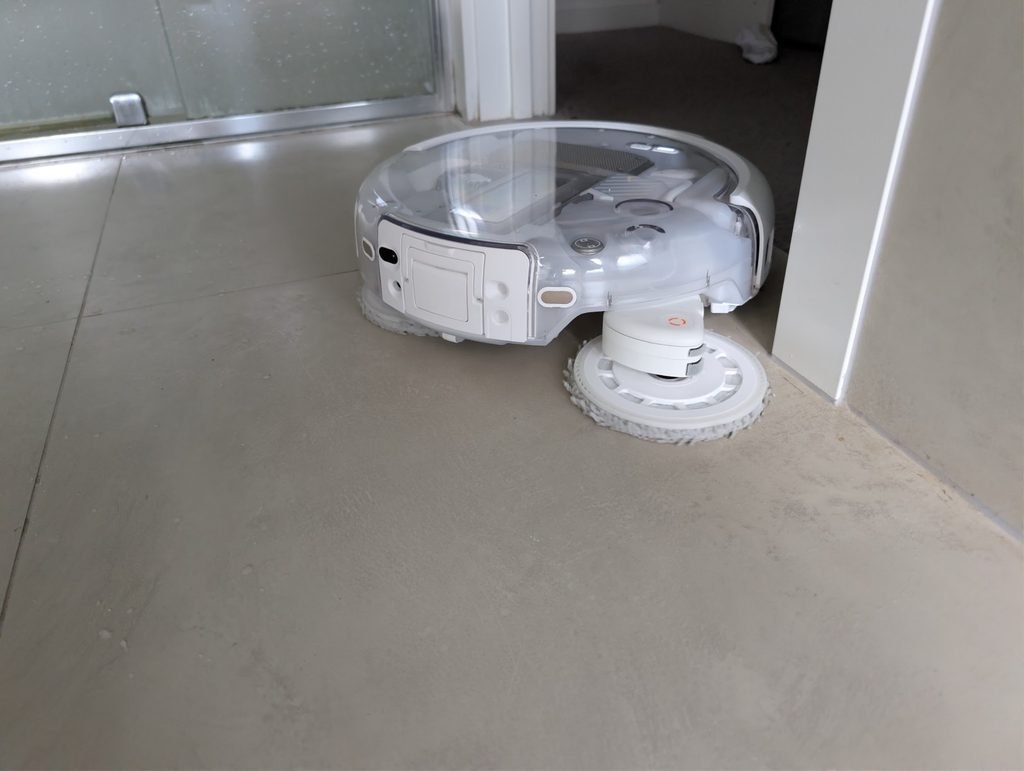
Corner cleaning tackles an age-old robotics headache: round robots cleaning rectangular rooms. DJI solved this with an extended 123-degree external swinging robotic arm that reaches 7.8 centimetres into tight 90-degree corners and 4.5 centimetres under low cabinet toe-kicks, sweeping out dust and debris that standard round chassis simply roll past.
With a massive 36,000 Pa of suction power, the Romo P2 effortlessly pulls heavy debris and settled dust from deep within carpets and hard floor grooves. The AI recognizes different surfaces, automatically dropping a pressure plate to form a semi-enclosed seal on carpets, which increases dust pickup by up to 30 percent. When dealing with hair, the DualSweep offset double side brushes and anti-tangling overlapping rollers channel strands directly into the suction path without wrapping around the ends.
The dynamic robotic legs provide impressive mechanical clearance. While standard robot vacuums stall at sliding door tracks, the Romo P2 proactively extends its legs to lift its chassis. It clears single vertical obstacles up to 4 centimetres and navigates stepped, dual-layer transitions up to 8.5 centimetres.
In terms of endurance, the exact battery duration is almost irrelevant if you automate your cleaning while away from the house. If a full-home cycle requires extra juice, the robot simply returns to base, recharges via its fast-charging architecture, and heads back out to finish the job. Setting the schedule to run mid-morning means that by the time you return home in the afternoon, the cleaning cycle is complete and the robot is docked.
Base Station and Automation
The dock acts as a fully automated maintenance hub. After each cycle, the base station flushes the mop pads with 80°C hot water to melt grease and dissolve dried dirt, followed by a 60°C sealed warm-air drying cycle to prevent mildew and odour buildup. An integrated UV light in the dust collection path sterilises debris during auto-emptying runs into the sealed dust bag.
Living with the dock day to day is straightforward. When the auto-empty suction kicks in, it definitely springs into life with noticeable acoustic presence as it pulls debris from the robot into the dock bag. Scheduling cleaning runs while you are out of the house solves this entirely.
The maintenance cycle easily fits into a weekly rhythm. The robot takes care of roughly 95 percent of the legwork during the week, meaning you only need to rinse and empty the water tanks over the weekend. A clear status LED on top of the dock provides a quick visual glance across the room whenever attention is required, backed up by prompt push notifications from the DJI Home app.
Features
The DJI Romo 2 is packed with intelligent features that elevate the daily cleaning experience. Here is a breakdown of the key capabilities that make this robot vacuum stand out from the competition.
AI-powered multi-scenario adaptation: The onboard AI detects different types of dirt and surfaces with high accuracy, automatically adjusting its cleaning strategy. It reduces speed for stubborn stains, applies more downward pressure for high-frequency scrubbing, and intelligently plans detour routes around liquid spills to avoid cross-contamination.
LiDAR-guided adaptive robotic arm: An extended 123-degree external swinging robotic arm reaches 7.8 centimetres further into tight right-angle corners and extends 4.5 centimetres deeper underneath floating cabinet toe-kicks. This ensures precise edge-hugging cleaning around table legs and walls to deliver a deep clean with no dead ends.
High-temperature self-cleaning base station: The base station uses high-pressure jets with 80°C hot water to soak and sanitize the mop pads, followed by 60°C warm-air dock drying and deodorisation. An integrated UV light sterilizes the dust collection path, while the dirt-resistant nanocrystal washboard prevents stains from penetrating, allowing for up to 365 days of use without manual dock scrubbing.
Millimetre-level obstacle sensing: Using proprietary drone algorithms and active light sources, the Romo 2 spots obstacles as thin as 2 millimetres. The underside dust-revealing fill light illuminates up to 2,000 square centimetres in low-light conditions, ensuring navigation under beds and furniture without glaring upward at occupants.
DualSweep anti-tangle design: A combination of overlapping double side brushes and a hybrid roller brush actively prevents hair from tangling. The rollers comb against each other during operation to smoothly channel pet hair and shedding directly into the dustbin without wrapping around the drive bearings.
Dynamic robotic legs: Mechanical suspension legs allow the vacuum to clear single vertical ledges up to 4 centimetres and navigate dual-step obstacles up to 8.5 centimetres. It senses raised sills in advance and proactively lifts, ensuring uninterrupted room-to-room cleaning across split-level joins and sliding door tracks.
Fast-charging architecture and Matter support: Equipped with 55W fast charging, the Romo 2 fully recharges in around 2.5 hours, keeping dock downtime low during large whole-home cleaning routines. Native Matter support also ensures straightforward integration across Apple Home, Google Home, and other smart home ecosystems alongside the DJI Home app.
Local data mode (coming soon via firmware update): For privacy-conscious users, DJI has confirmed that a dedicated offline mode will roll out in a future firmware update. Originating from security frameworks developed for DJI enterprise drones, this upcoming feature will lock map data, camera streams, and cleaning schedules strictly to local device hardware without routing through external cloud servers.
Issues and opportunities
While the DJI Romo 2 is an exceptionally capable machine, real-world living spaces reveal a few areas where software refinement could bridge the gap with its impressive hardware.
The primary hurdle remains the humble bathroom mat. On a few occasions during testing, the Romo 2 choked on thicker, fluffier bath mats, drawing them into the roller assembly. While one workaround is switching to ultra-low-profile mats or establishing digital no-go boundaries in the app, this highlights an interesting contradiction in capabilities: the hardware can proactively lift its chassis over substantial door ledges and rugs, yet the computer vision does not consistently recognise fluffy mats to engage that lift or route around them automatically. Relying on the user to remember the cleaning schedule and hang mats over the bath edge beforehand is an obvious candidate for an upcoming software update.
Similarly, while the obstacle avoidance easily circumvents people, pets, and larger toys, stray loose phone charging cables left on the floor can still end up pulled into the rollers rather than reliably flagged and avoided.
The aesthetic choices also bring natural trade-offs. The transparent casing looks immaculate straight out of the box, but high-gloss clear poly inevitably highlights fine dust, fingerprint smudges, and water spotting over weeks of active duty. A frosted or opaque variant would be a practical alternative for buyers wanting a more muted appliance footprint.
Finally, the base station is sizable, measuring over 40 centimetres across. While the large internal water reservoirs and automated chemical dosing justify the volume, allocating that much continuous floor real estate in a laundry or living space requires deliberate planning.
Price and availability
The DJI Romo 2 Series officially launched with Australian in September. The flagship DJI ROMO P2 (Water Tank Version) carries a recommended retail price of $2,899 AUD, with optional Clean More accessory bundles positioned at $2,999 AUD. The entry-tier companion model, the DJI ROMO A2, arrives at a lower price point for households that do not require the extended robotic climbing legs and extreme suction headroom.
The Romo 2 is available directly through the official DJI online store, as well as authorised Australian retailers including JB Hi-Fi and Harvey Norman.
Overall
Not that long ago, premium robot vacuums commanded between $1,000 and $1,500 AUD. Asking $2,899 AUD for the DJI Romo P2 represents a significant financial step up, but it reflects an equally dramatic leap in automation and sensor technology. Sophisticated multi-sensor arrays, dynamic suspension legs, swing-out corner arms, and self-washing base stations carry real engineering costs.
Whether that investment makes sense comes down to how much you value your personal time and the scale of your household cleaning demands. For a large, active family where floors require daily attention, the Romo 2 hands back multiple hours every week that would otherwise be spent pushing a vacuum or wringing out a mop.
Unlike a smartphone that you might upgrade every couple of years, an appliance like this is built to serve your home over three, four, or five years. Viewed through that longer lens, the daily cost of genuine set-and-forget floor maintenance looks far more compelling.
With its class-leading 36,000 Pa suction, thoughtful app controls, and 95 percent hands-off automation, the DJI Romo P2 proves that DJI’s autonomous navigation expertise translates just as brilliantly to the living room floor as it does to the skies.
Check back often for more exciting news!