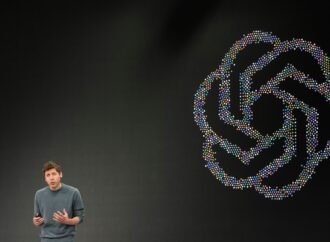
Yesterday, I spent the morning at OpenAI’s annual DevDay, where over 2,500 nerds discussed building software and marveled at the latest artificial intelligence models. The biggest reveal of the day was Dots, the company’s new, always-on agents that proactively help complete tasks and make autonomous decisions as they scour the web. After watching the sometimes
Yesterday, I spent the morning at OpenAI’s annual DevDay, where over 2,500 nerds discussed building software and marveled at the latest artificial intelligence models. The biggest reveal of the day was Dots, the company’s new, always-on agents that proactively help complete tasks and make autonomous decisions as they scour the web.
After watching the sometimes messy demos on stage and hearing CEO Sam Altman talk about his experiences using the agents, I was curious what it felt like to boss my own Dot around. I’ve spent most of September testing another cute, cuddly agent, Meta’s Muse, and I wanted to know how OpenAI’s user experience would compare.
I named mine “Toolie” and tweaked it to look like a pink frog. As midnight approached and my partner slept soundly nearby, I started whispering sweet nothings to Toolie. I called my personalized bot through ChatGPT, asking what tasks it was best at. “My strongest work is taking a messy, time-consuming task and turning it into something you can use,” it responded. OK, sure. Let’s get to work.
I asked Toolie to look through my ChatGPT history and flag three tasks that it could immediately get started on. The bot flagged an in-process data request that I needed to send a follow-up email for, and offered to draft a reply. Toolie also noted that my upcoming gay-cation was a bit underplanned, and suggested it could pick some better dinner spots. (More time for me to pack the Speedos!) Then, it offered to go through my reporting notes and refine pitch drafts before I took them to editors. This is my favorite part of the process, so I declined.
Early adopters in Silicon Valley are still obsessed with agents, from Instinct to OpenClaw to Google’s CC. But recent releases like Dots and Muse are pushing them even further mainstream. The chatbot is dead, at least as a hot form factor for developers. Now, everyone wants to build the next big agent—and they want it to dominate. The companies promise that their agents will simplify your life, automating all the boring, exhausting tasks you have no desire to do: booking doctor’s appointments, arranging carpools, sorting through bills.
For now, users will be able to access one Dot, but they’ll soon be able to use multiple Dots. At launch, the agents are only available for subscribers of OpenAI’s Pro plan, which starts at $100 per month. In comparison, Muse is free to use for anyone who wants to download the app or visit the website.
OpenAI leaders see the quality of Dots, powered by the GPT-6 Astra model, as a differentiating factor. “We’re starting out as a premium product. It uses a lot of compute,” Altman said during DevDay. While Dots are currently gated for paying subscribers, it may not always be that way. “You should, of course, expect us to do a mass-market thing for billions of people,” he said.
These CEOs seem to be taking careful notes on the larger cultural backlash against generative AI, and they may have found their secret weapon: cuteness. From the Labubu stylings of Muse to Dot’s two-eyed puffball, developers of always-on agents are leaning aggressively into adorable aesthetics as central to their branding. Previously, I’ve chatted with experts who said this approach could be disarming for users who may feel affectionate toward the anthropomorphized software.
Developers involved with this wave of personal agents are also leaning into texting-style experiences that feel familiar to a group chat. When I send a task request to Toolie or Muse, it often emoji-reacts—a thumbs up, a heart, really anything—to my messages to tell me that it’s getting to work.
For more tech updates, stay tuned to our blog.