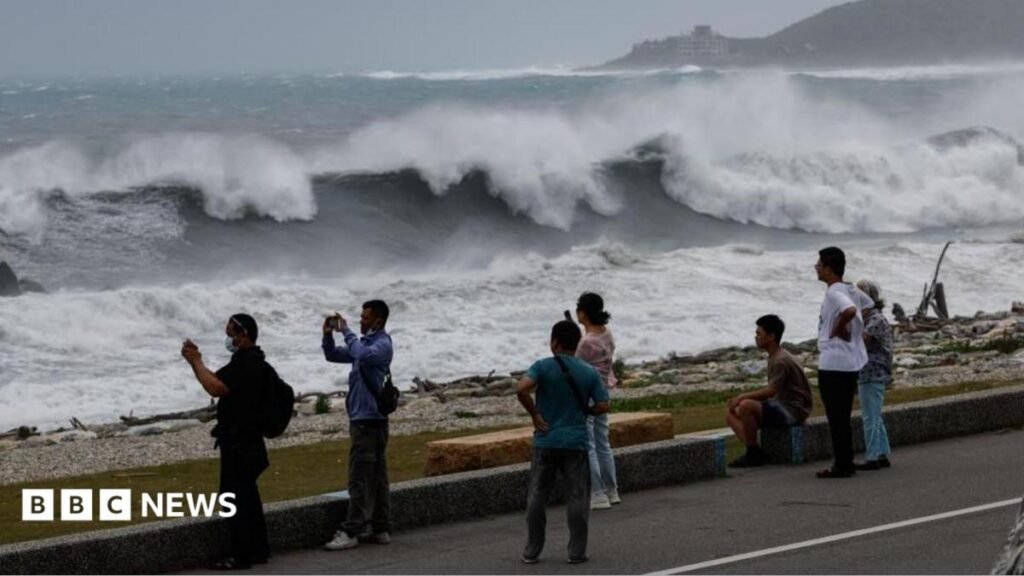
Landslides triggered by one of the strongest storms in decades have killed at least 15 people in the southern Philippines, as parts of East Asia brace for the approaching storm. Typhoon Bavi, which spans 1,000 kilometers (620 miles) at its widest point (about the width of France), is crossing the Pacific toward Taiwan. It is
Landslides triggered by one of the strongest storms in decades have killed at least 15 people in the southern Philippines, as parts of East Asia brace for the approaching storm.
Typhoon Bavi, which spans 1,000 kilometers (620 miles) at its widest point (about the width of France), is crossing the Pacific toward Taiwan.
It is expected to dump rain on northern and eastern Taiwan, and a chain of remote Japanese islands, before making landfall in southeastern China on Saturday.
Dozens of flights were canceled and schools suspended classes across the region. Supermarket shelves have been left bare as residents stock up on supplies ahead of the typhoon.
On the Philippine island of Mindanao, families were buried overnight by landslides and rescuers are still searching for the missing.
Moderate to heavy rain will continue to soak parts of the country throughout the weekend, officials say.
Taiwanese authorities have warned that Bavi could bring up to 1 meter (39 inches) of rain. According to the island’s Ministry of Defense, some 29,000 soldiers have been placed on alert to assist in relief efforts.
Bavi will be the largest storm, by size, to hit the island since 1987, Taiwan’s Central Meteorological Administration told Reuters.
Farmers across the region rushed to harvest or protect their crops as the weather held on Friday, while fishermen made sure to secure their boats tightly.
“Don’t be fooled by the pleasant and calm weather now. A storm like this could be the most terrifying,” fisherman Chen Ming-hui, 60, told Reuters.
Thousands of sandbags have been distributed to residents and shop owners in flood-prone areas.
Across the strait, China also warned of a “significant impact” from the typhoon that could move north after hitting the southeastern province of Fujian.
“Bavi’s large size and abundant energy mean its debris and outer rainbands could move from Jiangsu and Anhui provinces toward the Bohai Sea region,” said Ma Jun, director of the China Institute of Public and Environmental Affairs.
Northern provinces, which have “less experience” compared to the south in fighting typhoons, should “strengthen preparations,” he warned.
Some forecasts suggest Bavi could make landfall twice in China.
Check back often for more exciting news!