On Tuesday, Meta launched “Muse Image,” a new AI imaging feature that allows users to create original images, edit existing photos, and even generate personalized ads directly within their apps. But one capability has quickly become the center of controversy. Muse Image allows users to generate AI images using photos from public Instagram accounts. As
On Tuesday, Meta launched “Muse Image,” a new AI imaging feature that allows users to create original images, edit existing photos, and even generate personalized ads directly within their apps.
But one capability has quickly become the center of controversy.
Muse Image allows users to generate AI images using photos from public Instagram accounts. As long as a person’s profile is public, another user can tag that account and use their images as part of an AI-generated creation. (Only private accounts and accounts of users under 18 years of age are automatically excluded from this feature.)
A big concern is consent. Users may have no idea that strangers can embed their public photos into AI-generated images, and they don’t even receive a notification when someone reuses their public content. Additionally, making it easy to manipulate people’s images opens the door to misuse, harassment, impersonation, and editing of images without consent.
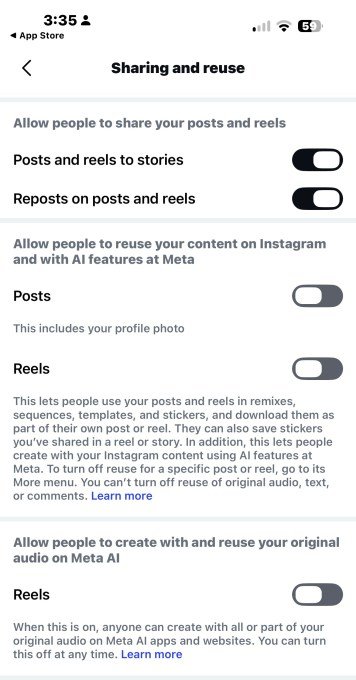
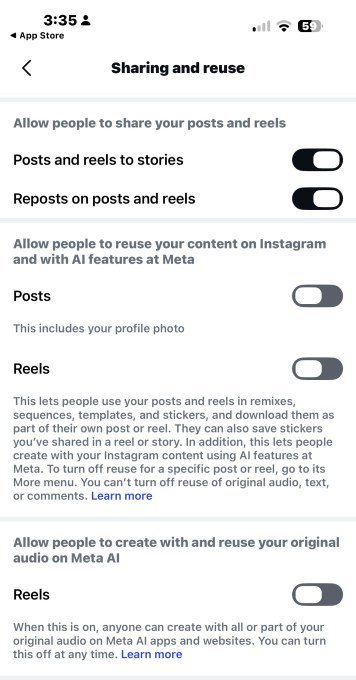
If you would like to opt out of this, here is how you can do so.
- Go to your profile and click on the three horizontal lines in the top right corner.
- Scroll down to “Share and Reuse.”
- Look for the option that says “Allow people to use your content on Instagram with AI features in Meta.”
- Turn off the setting for both posts and reels.
Muse Image comes at a time when artificial intelligence tools are increasingly integrated into social media platforms. As technology companies rush to implement new generative AI features, many experts argue that stronger privacy protections and greater transparency are needed so that users fully understand how their photos and personal data are used.
Public skepticism around AI is already high. According to a Pew Research Center survey, 35% of respondents said they are more worried than excited about the growing use of artificial intelligence.
Additionally, Meta’s track record on user privacy has also fueled skepticism around its latest AI feature.
In 2019, the US Federal Trade Commission (FTC) fined Facebook $5 billion and concluded that the platform had violated a 2012 consent order by misleading users about how much control they had over their personal information. This followed a high-profile scandal in which political consultancy Cambridge Analytica gained access to data on up to 87 million Facebook users through a personality quiz app. Facebook’s platform policies at the time allowed developers to collect information about those users’ friends without their knowledge or explicit consent.
When you buy through links in our articles, we may earn a small commission. This does not affect our editorial independence.
Keep following us for the latest insights.