Is a river alive? Robert Macfarlane Penguin (2026) Turn off your headlamp in the Los Cedros cloud forest in Ecuador and the darkness begins to shine. Fallen branches and tree stumps glow a soft silvery yellow, illuminated by webs of fungi beneath the forest floor. It is a fascinating opening to the work of writer
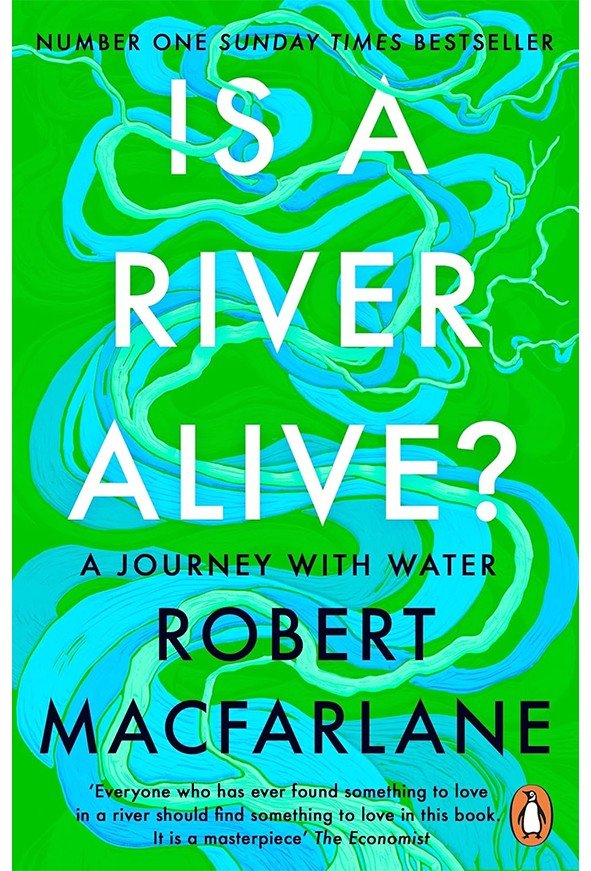
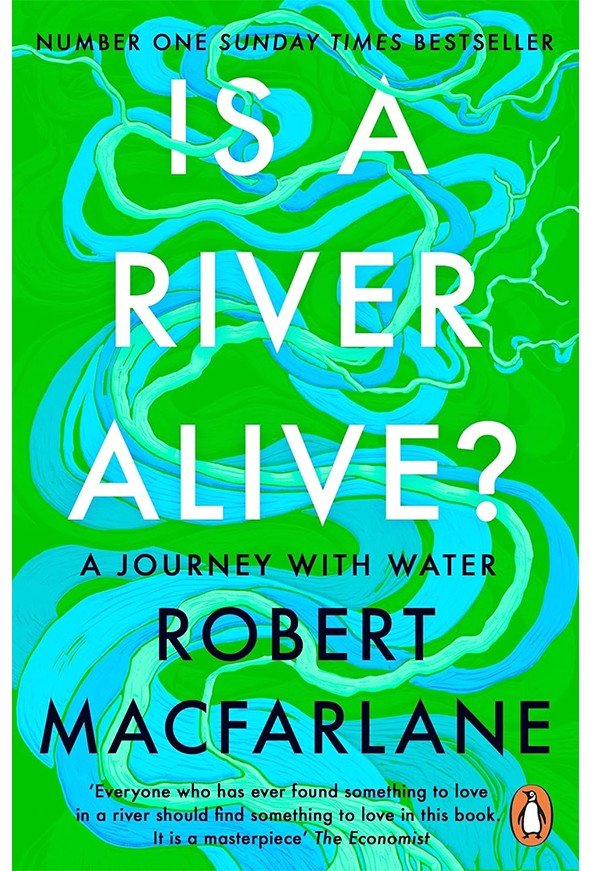
Is a river alive?
Robert Macfarlane Penguin (2026)
Turn off your headlamp in the Los Cedros cloud forest in Ecuador and the darkness begins to shine. Fallen branches and tree stumps glow a soft silvery yellow, illuminated by webs of fungi beneath the forest floor. It is a fascinating opening to the work of writer Robert Macfarlane. Is a river alive? – a slim, lyrical book that revisits an old question with new urgency. His answer is a clear and resounding yes.
Macfarlane follows three threatened rivers: the Los Cedros River in Ecuador’s cloud forest, under pressure from gold mining; the streams of Chennai, India, where the waters, originally teeming with birds, become polluted as they approach the city; and Mutehekau Shipu (the Magpie River) in Quebec, Canada, which has been granted legal personality by local governments.
I didn’t expect a book about water to bring my own vocation to life. I have spent my career as a space environmentalist arguing that Earth’s orbit is not a void but a fragile ecosystem: a shared commons that we are filling, fragmenting and abandoning, exactly as, as Macfarlane shows, we treat rivers. This book reinforced my belief that stewardship begins not with measurement, but with the decision to give life to something: to treat it as if it were a relative. – Moriba Jah
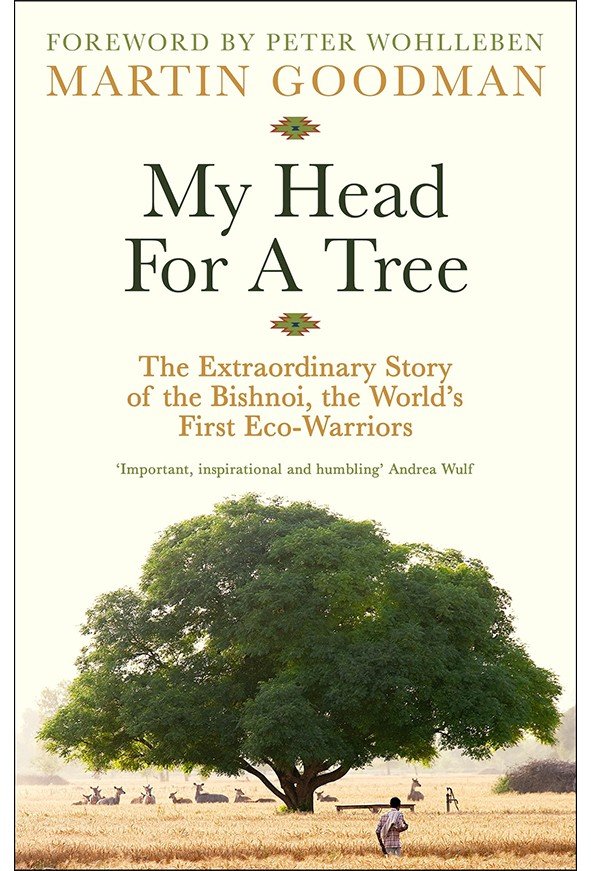
my head for a tree
Martin Goodman Profile (2025)
Would you give your life to save a tree? Probably not. But you might be surprised to know that there are people in India who would. This book begins in 1730, with a shocking account of members of the Bishnoi community hugging trees marked for felling and being murdered by soldiers of the Maharaja of Jodhpur. Their extraordinary sacrifice arises from the teachings of their guru, Jambhoji, whose 29 principles (many of them focused on living in harmony with nature) still guide the community.
The Bishnoi people invited writer Martin Goodman to tell their story, a privilege not taken lightly. It interweaves centuries-old episodes with current experiences, showing how the Bishnoi’s conservation ethic has endured.
Of course, there are tensions. As one community member puts it: “I work in agriculture. I have a gas pump. And I do social service. Service for animals and khejri trees.” It is a reminder that the Bishnoi’s relationship with nature is neither simple nor pure, but a combination of conservation and commitment.
What relevance does this chronicle of a community have in today’s world? Provides a ray of hope and inspiration to take action. – Seema Mundoli
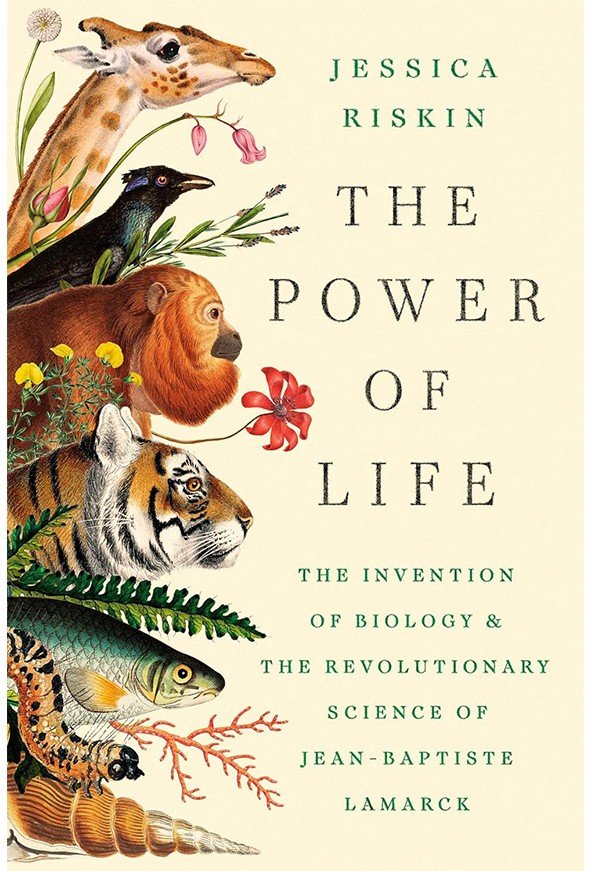
The power of life
Jessica Riskin river head (2026)
There is a story that many of us learned in school: that Jean-Baptiste Lamarck, the French Enlightenment naturalist who preceded Charles Darwin with a theory of evolution through heredity, was a misguided thinker who believed that giraffes stretched their necks into existence by reaching for higher and higher leaves on savannah trees.
Although Lamarck was one of the first to use the term biology, the central dogma of the field is the repudiation of his evolutionary ideas in favor of the Darwinian model: genetic information flows only from DNA to RNA, and from there to the proteins that make up our body. In other words, a person’s behavior cannot have any effect on the genetic makeup of his descendants. If all of this sounds good, get ready for Riskin to turn your world upside down.
In this entertaining and richly researched book, she not only gives us a long-awaited biography of a towering figure; It also sheds light on the ideological battles that smuggled eugenics and Christian doctrine into the heart of evolutionary theory.
His argument, and Lamarck’s, is quietly radical: that life is not merely shaped by external forces, but actively and continually participates in its own creation. Experiments with artificial intelligence have put me on their side. — Blaise Agüera y Arcas
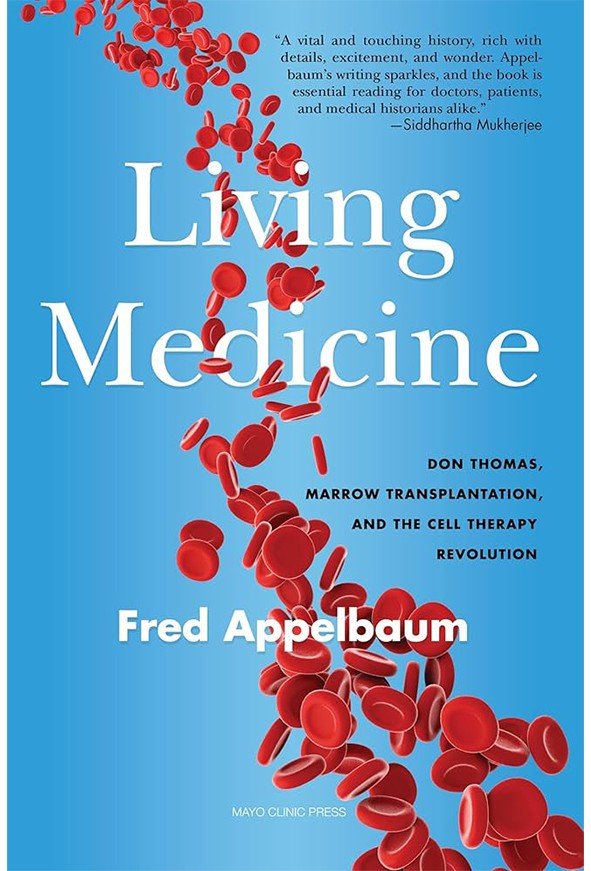
living medicine
Fred Appelbaum Mayo Clinic Press (2023)
Each year, about 22,000 people in the United States receive bone marrow transplants to treat cancer or genetic diseases. Physician Fred Appelbaum’s magnificent book tells the gripping story of how this once-impossible procedure became standard care.
It is a compelling read that weaves together three narrative threads. First, the decades-long effort led by Don Thomas and his team at the University of Washington in Seattle and then the nearby Fred Hutchinson Cancer Center — a 20-year journey marked by many more failures and deaths than successes before the breakthrough emerged. Thomas won a share of the 1990 Nobel Prize in Medicine. Second, a clear and illuminating description of the immune system and how hard-earned scientific knowledge made transplants viable. Third, a moving tribute to the many doctors, nurses and researchers whose skill and compassion gave us this miracle of medicine.
More than a story of a medical breakthrough, it is also a study in persistence, demonstrating how progress in medicine is rarely linear, but rather based on decades of trial and error. It leaves you with a renewed appreciation for both the fragility of the human body and the extraordinary ingenuity required to heal it.
Appelbaum is a distinguished physician-scientist. This book demonstrates that he is an equally accomplished storyteller. – Fyodor Urnov
The era of scale
Dwarkesh Patel and Gavin Leech Stripe (2025)
Sometimes, The era of scale It seems like science fiction; However, the book is a compilation of conversations that have already occurred. Writer and podcaster Dwarkesh Patel and consultant Gavin Leech have brought together interviews with leading AI thinkers in an oral history, organized around topics such as AI safety and timelines for achieving artificial general intelligence (AGI).
These conversations capture a phenomenon we still don’t fully understand. The fact that an AI model improves as more data and computing power is added (the law of scaling) is, if you think about it, nothing remarkable. The real surprise is that systems based on a single goal, predicting the next token in a sequence, can have such varied capabilities: proving mathematical theorems, debugging code, or composing sonnets. A decade ago, I would have bet against the idea that intelligence should be so compressible and could be achieved by implementing a simple rule at scale.
Read it today and the book will allow you to rate interviewees’ predictions about AI progress. Some already seem too conservative: by many measures, we have already crossed over to AGI. However, deeper questions remain open. What is really happening behind the scaling phenomenon and how should the scientific community and society anticipate what will come next if it continues to be true? -Eddy Keming Chen
Global higher education in times of upheaval
Simon Marginson Bloomsbury Academic (2026)
Each year, seven million students cross national borders to pursue educational programs. A quarter of published research articles have authors in multiple countries. These collaborations are, argues academic Simon Marginson, essential to determining how knowledge is produced and what universities are for.
Marginson identifies two connected forces that are reshaping higher education. The first, sovereign individualism, is the reduction of higher education to private economic profit: a decades-long project that, he argues, has stripped universities of their contributions to collective life and treated knowledge as a commodity. The second, sovereign nationalism, operates on a global scale: the treatment of cross-border students as cash cows or security threats and the deliberate fracturing of research collaboration in the name of the national interest.
The book analyzes the changing geography of science. Between 2003 and 2022, the proportion of articles indexed in the Scopus database that were produced in non-Western countries doubled, from around 28% to 55% of the global total. Marginson welcomes the change as part of a move toward a more plural knowledge system.
Against sovereign individualism and sovereign nationalism, he advocates treating higher education as a common good, sustained by interdependence. – Maia Chankseliani
The water pact
Abraham Verghese Grove (2023)
This sweeping novel, set in South India between 1900 and 1977, follows the story of several generations of a Malayali Christian family as the country moves from colonial rule to independence. Physician and author Abraham Verghese depicts his world in rich sensory detail, drawing on local language and customs.
At its core is a disturbing and unexplained medical condition: across generations, seemingly healthy family members are prone to drowning, often without warning, giving rise to the belief that the family is cursed by water. This fear shapes marriages, everyday life, and even the places people dare to go.
It’s a richly layered book, part family saga and part medical mystery. Verghese sees writing as a way to see beyond the symptoms, capture the whole person, and shape the stories and emotions surrounding the illness.
His first book, which I read almost 30 years ago, was my own country (1994), a memoir of caring for people with AIDS in Tennessee in the early days of the disease, before treatment options were available. It was so moving that I bought ten copies to give to friends and colleagues. The water pact It’s hard to leave. It’s long, but it’s the kind of book you don’t want to end. – Heidi J. Larson
Recipe: Ice Cream
Alastair McAlpine Macmillan Bread South Africa (2024)
Check back often for more exciting news!