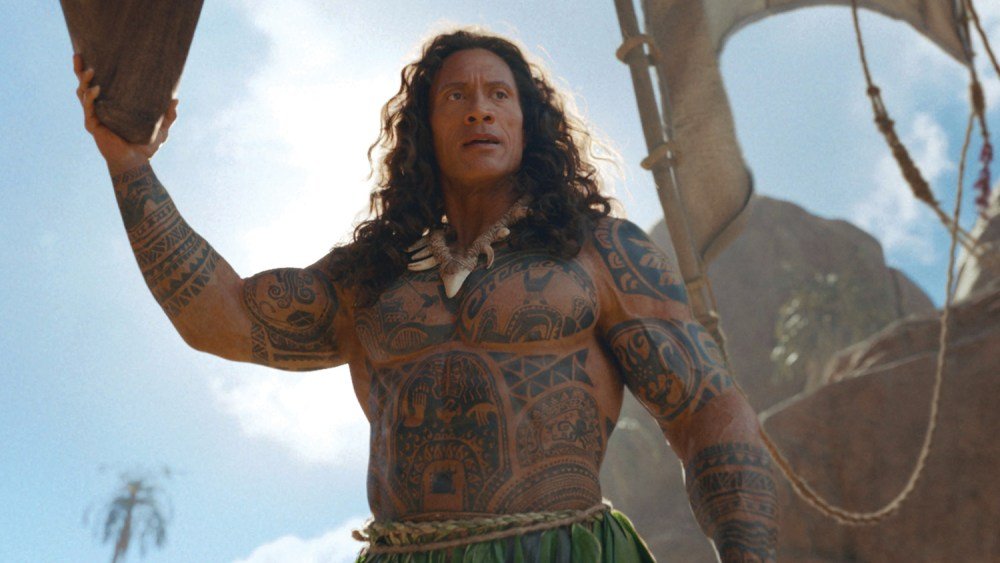
In “Moana,” the Polynesian heroine sings about the gravitational pull she feels upon returning to the water. Disney, the studio behind the 2016 live-action remake of the animated musical, might have done well to ignore the urge to return to the sea… at least this soon. Arriving a decade after the original and just two
In “Moana,” the Polynesian heroine sings about the gravitational pull she feels upon returning to the water. Disney, the studio behind the 2016 live-action remake of the animated musical, might have done well to ignore the urge to return to the sea… at least this soon.
Arriving a decade after the original and just two years after the animated sequel, “Moana” opened well below expectations with $43 million in North America and $95 million worldwide. It’s a terrible start for a film that cost a staggering $250 million to produce and roughly $120 million more to promote. Unless ticket sales can recover, “Moana” could be an expensive lesson as Disney runs out of properties to revisit.
“Disney’s strategy depends on whether audiences see the remake as an event or a duplicate,” says analyst Jeff Bock of Exhibitor Relations. “This was the last thing. People wanted ‘Moana 3,’ not a remake of the original.”
The studio, which pioneered the modern trend of live-action remakes, has already overhauled much of its animated library, having reinvented or spun off “Cinderella,” “The Lion King,” “Aladdin,” “Mulan,” “Dumbo,” “The Little Mermaid,” “Beauty and the Beast” and “Lady and the Tramp.” With not much left in the vault to plunder, Disney has begun updating this century’s properties, with “Moana” being the latest to get the real-life treatment.
Last year, the live-action film “Lilo & Stitch,” adapted from the 2002 animated film, became a billion-dollar hit. So it’s not that audiences are tired of these remakes. But they won’t go to theaters just because Disney is dusting off a favorite and giving it a CG makeover, especially when the original is available to watch on Disney+.
“The bottom line for Disney has to be: How long does it take for an animated film to become a classic? As we just saw, it’s not about how successful the last film in the series is,” says David A. Gross, who runs the film consulting firm FranchiseRe. “It takes time to be a classic, not just a hit.”
Although it is too early to label “Moana” a classic, the property is very popular with families. The 2016 animated film is the most-watched film on Disney+ and the sequel grossed more than $1 billion at the box office. However, the goodwill didn’t translate into the remake: “Moana” was released on par with the 2025 bomb “Snow White.”
Critics derided the live-action “Moana” movie as a shot-for-shot retread of the first one. However, audiences were satisfied with the film, which has a solid “A-” grade in CinemaScore exit polls. The studio hopes favorable word of mouth will help the film stay at the box office. That happened with Disney’s 2024 “Lion King” prequel, “Mufasa,” which opened with a slight $35 million but ultimately climbed to $722 million worldwide. However, that movie came out around Christmas and had pretty much free rein on the big screen throughout January and February. Meanwhile, “Moana” has competition from Disney and Pixar’s “Toy Story 5” and Universal and Illumination’s “Minions & Monsters.” And although “The Odyssey” is aimed at older moviegoers, it will occupy the entire footprint of large premium formats starting Thursday.
“The opening weekend is important, but ‘Moana’ will focus on long-term gameplay,” says Paul Dergarabedian, head of market trends at Rentrak. “That means we don’t want to see a 60-70% drop on the second weekend.”
In the case of “Moana”, a decade could There has been enough time to awaken nostalgia. The problem is that the new ocean adventure premiered very close to “Moana 2,” which premiered on Thanksgiving Day 2024. That wasn’t always the plan. “Moana 2” was originally commissioned as a television show, with development beginning simultaneously with the live-action remake. When Disney turned the series into a theatrical sequel, the studio delayed the revival by a year to separate the projects. Still, moviegoers haven’t had much time to miss movies like Moana, Maui and Hei Hei.
The triumph of “Lilo & Stitch” and the failure of “Moana” suggest there is an art to the timing of these revivals. According to Gross, Disney has waited an average of 27 years before revisiting an animated film. That distance has produced some of the studio’s biggest hits, including 2017’s “Beauty and the Beast” and 2019’s “The Lion King” and “Aladdin,” each of which surpassed $1 billion worldwide. The kids who grew up with those movies from the late ’90s and early ’00s were old enough to take their own kids to the movies.
“During that time, the remakes added a whole new audience,” Gross says. “It has been a very successful strategy.”
There is a possibility of waiting too long to return. The remakes of “Snow White” (1937) and “Dumbo” (1941) missed the mark because those properties no longer have the same cultural relevance.
Although a live-action “Frozen” seems inevitable, “Tangled” is the only remake currently filming. Disney suspended that production after the failure of “Snow White,” but revived it after “Lilo & Stitch” achieved success just a few months later. The original Rapunzel movie came out in 2010, putting the “Tangled” reboot in the nostalgia sweet spot. In the future, Disney is expected to prioritize a live-action sequel to “Lilo & Stitch” and spin-offs about the stepsisters of “Cinderella” and Gaston, the muscular villain of “Beauty and the Beast.”
“Disney will continue to make them. For every one that doesn’t do well, there will be a ‘Lilo & Stitch’ that sets the world on fire,” Dergarabedian says. “The studio just has to keep the budgets under control.”
With a gigantic budget, “Moana” will need at least $600 million to break even. (Theatre owners keep about half of the box office revenue.) With a box office journey similar to that of “Snow White,” which left the big screen with $205 million worldwide against a budget of $250 million, “Moana” could lose more than $100 million in theaters. Compare that with the very The profitable “Lilo & Stitch,” which cost a modest $100 million without any major stars to command mega-pays. For “Moana,” Dwayne Johnson, reprising his role as the demigod Maui, received nearly $30 million as a producer and star and typically negotiates generous bonuses. Production on “Moana” was delayed by the 2023 labor strikes, which added a few million to the budget.
Disney justifies these prices because movies like “Moana” generate more than just box office dollars. These tentpoles spawn lucrative consumer product lines, theme park attractions, and Disney+ rewatches. “Moana” has driven more than 22 million toy sales since 2016, inspired attractions at more than 40 Disney theme parks and helped drive 26 billion music streams, including 4.8 billion for “How Far I’ll Go.”
So “Moana” won’t be sailing off into the sunset anytime soon. A third animated film is reportedly in the works and has the potential to become a hit. But Disney may want to take more time between trips to Motunui Island.
Check back often for more exciting news!