It turns out that even San Francisco Mayor Daniel Lurie, who once declared that the city should be a testbed for emerging technology, has its limits. Especially when that emerging technology creates a huge traffic jam that lasts for hours and leaves thousands of people paralyzed. Mayor Lurie has asked state regulators to tighten rules
It turns out that even San Francisco Mayor Daniel Lurie, who once declared that the city should be a testbed for emerging technology, has its limits. Especially when that emerging technology creates a huge traffic jam that lasts for hours and leaves thousands of people paralyzed.
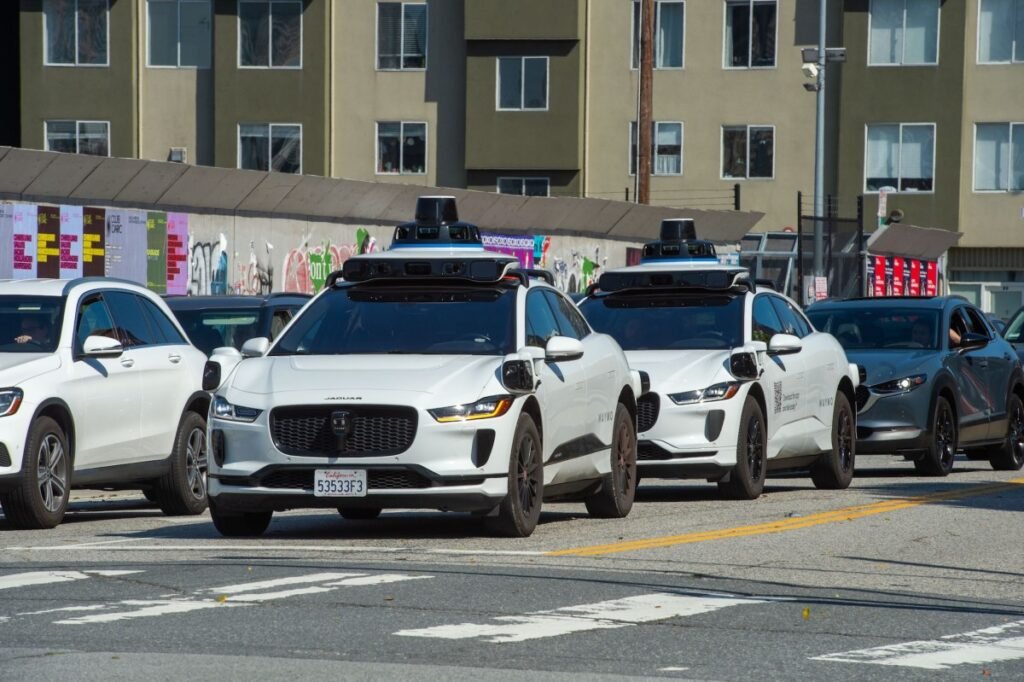
Mayor Lurie has asked state regulators to tighten rules for autonomous vehicles nearly two weeks after Waymo robotaxis became immobile in heavy Fourth of July traffic, losing power and blocking key streets, further exacerbating the gridlock. The traffic jam, which trapped municipal ferries, became a citywide problem affecting thousands of people.
In his letter to the state Department of Transportation, which was seen by TechCrunch, Lurie pointed to two events: a widespread power outage in December and the Golden Gate Bridge fireworks show on July 4 that drew 100,000 spectators, both of which caused dozens of Waymo vehicles to become stranded and paralyze traffic. The San Francisco Chronicle was the first to report on the letter.
The events, he said in the letter, “demonstrated that California’s current regulatory framework does not adequately address how autonomous vehicles operate during major incidents, planned or unplanned. California’s challenge now is not only whether autonomous vehicles can operate safely under normal conditions, but also whether they can operate reliably during extraordinary incidents.”
Lurie said autonomous vehicle manufacturers should be able to demonstrate four “core operational capabilities” and called on the California Department of Transportation to set state standards to avoid future problems like the July 4 traffic jam incident.
Under Lurie’s vision, companies would need to immediately remove or relocate robotaxis from active travel lanes to keep people moving, and they would need to be able to adapt in real time, adjusting their routes, service area, and pickup and drop-off locations. Companies would also have to share real-time operations data with local agencies, including service interruptions, locations of immobile robotaxis and recovery efforts, as well as demonstrate through testing that they can handle large influxes of people and traffic.
TechCrunch has contacted Waymo for comment. The article will be updated once the company responds.
Any company that wants to operate a robotaxi service in California must successfully pass two implementation testing and permitting processes, one administered by the state Department of Motor Vehicles and the other by the Public Utilities Commission. The existing regulatory framework in California is stricter than that of other states such as Texas and Arizona, but that has not deterred companies from trying to operate there.
San Francisco and the broader area stretching south to Silicon Valley have long been a test bed for autonomous vehicle technology. Six companies, including Nuro, Waymo and Zoox, have driverless testing permits, allowing vehicles to drive without a human safety operator behind the wheel.
But the area has also become the launch point for commercial services, requiring other permits from the DMV and CPUC.
Waymo is the largest, with approximately 1,000 robotaxis operating in the Bay Area today. But there are many others testing or ready to launch commercial operations, including Amazon-owned Zoox, as well as a premium robotaxi service that will be operated by Uber. Tesla has a branded robotaxi service but does not use driverless vehicles nor does it have the permits to do so. Instead, Tesla has a charter transportation permit, allowing its own drivers to pick up and drop off passengers throughout San Francisco in vehicles equipped with its advanced driver assistance system instead of fully autonomous software.
Waymo’s scale has made it a focal point for regulators in San Francisco and beyond. The company now operates in 11 cities and has said it runs more than 500,000 paid rides each week. In San Francisco, Lurie noted that Waymo had agreed to restrict its Fourth of July service near the boardwalk and had even assigned a representative to the city’s emergency center. But that wasn’t enough to keep the Waymos out of the heavy traffic outside that district.
Lurie said these voluntary actions are no longer enough, a reflection of how large Waymo’s fleet has become. He said the four proposed requirements “will not undermine autonomous vehicles; they will strengthen them.”
When you buy through links in our articles, we may earn a small commission. This does not affect our editorial independence.
For more tech updates, stay tuned to our blog.