There’s no doubt that international carmakers like Tesla are taking massive strides in the self-driving tech space. Just last week, Tesla embarked on a tour of Japan with its new Cybercab, and this week the vehicle arrived in Sydney. The Cybercab is a model without a steering wheel, pedals or mirrors that’s set to kick
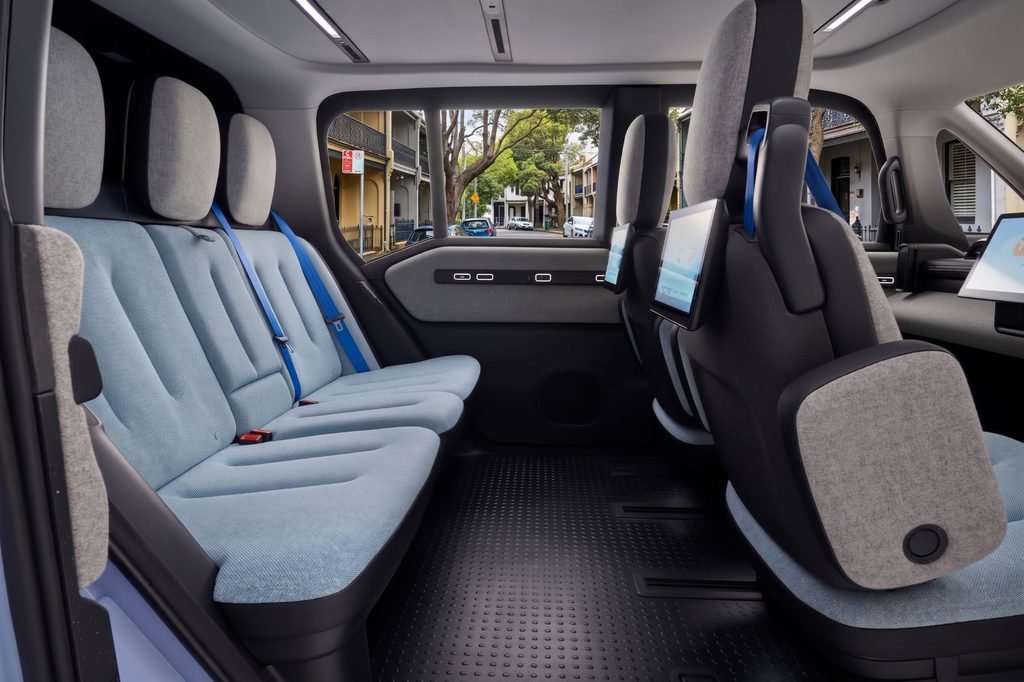
There’s no doubt that international carmakers like Tesla are taking massive strides in the self-driving tech space. Just last week, Tesla embarked on a tour of Japan with its new Cybercab, and this week the vehicle arrived in Sydney. The Cybercab is a model without a steering wheel, pedals or mirrors that’s set to kick their driverless taxi service into gear.
While this technology is improving at a rapid rate, Australian sentiment towards autonomous driving still has a long way to go, as a recent survey revealed.
Savvy’s 2026 EV Sentiments Survey found that worries surrounding self-driving cars have actually grown over the past three years, with the number of people who don’t trust or feel comfortable with it having grown from one in five (22.2%) in 2023 to one in three (34.4%) this year.
Additionally, more than one in four (28.1%) reported that they have some doubts about it, leaving the total number with concerns at 62.5%, compared to 47.3% who put themselves in that category in 2023.
On the flip side, the percentage of respondents who felt either mostly or fully comfortable with the idea of autonomous driving fell significantly over that period. Over a quarter (29.3%) trusted the technology to some extent three years ago, which slid to less than a fifth (17.5%) this year.
Notably, the segment of respondents who fully trusted the technology in 2023 (9.0%) had almost halved (5.4%) by 2026.
Possible explanations
Part of the growing hesitation comes down to a glaring gap between perception and statistical reality. An overwhelming body of real-world data shows that leading autonomous and supervised driving systems from the likes of Waymo and Tesla are already significantly safer on average than human drivers, who are prone to distraction, fatigue, and intoxication.
Public perception, however, is rarely shaped by data sheets. It is driven by headlines. When an autonomous system falters, it instantly becomes sensationalised international news, amplified without context or proportion. The millions of uneventful kilometres driven flawlessly every single day do not make the evening broadcast; only the anomalies do. Isolated failures, such as reports citing ex-Tesla staff claiming Full Self-Driving (FSD) beta software missed obstacles or emergency vehicles, naturally stick in the public consciousness far longer than any statistical reduction in accident rates.
Compounding this unease is a lack of regulatory certainty at home. Australia’s legal framework to approve and govern fully autonomous vehicles remains pending. Under the National Transport Commission’s proposed Automated Vehicle Safety Law (AVSL), federal and state governments are still working to resolve complex questions around in-service safety, liability, and road rule updates. Until these comprehensive guardrails become law, fully driverless operation remains off-limits on public roads, reinforcing the public impression that the technology is not yet ready or vetted for everyday use.
Add to that lingering questions around digital control and cybersecurity. Tesla’s demonstrated ability to remotely disable vehicles running altered software highlights just how connected these platforms are, while broader anxieties persist around how vehicle telemetry is captured, stored, and shared, particularly across foreign-owned ecosystems.
Not everyone needs as much convincing
One major company backing the technology is Zurich, which has announced discounted car insurance for Tesla owners using their FSD Supervised function on the roads. It claims that the number of accidents occurring during the self-driving mode is seven times fewer than when a human is at the wheel (though this data comes directly from Tesla).
The announcement is a welcome development for owners of a Model Y or Model 3 running FSD (Supervised), particularly given the higher premiums typically attached to electric vehicles, with some policyholders already reporting noticeable discounts on their coverage.
BYD also announced this year that crashes caused by its autonomous driving function would have full liability coverage. Unlike Tesla, though, this technology and liability coverage are only available in China currently.
Either way, it’s clear that concerns surrounding autonomous driving more generally have done little to halt the momentum of new EV sales in Australia.
As of the end of August 2026, the Model Y is the third best-selling car in Australia, behind only the Ford Ranger and Toyota HiLux, and is coming home with a bullet. The Sealion 7 from BYD finds itself just outside the top five, while other new models like the Geely EX5, Jaecoo J5 and BYD Atto 2 are performing strongly as consumers make use of discounted EV loan rates.
As fully autonomous driving continues to develop in Australia, time will tell whether the rusted-on anti-self-driving crowd will soften their stance as local regulations and fully driverless offerings begin to roll out.
Check back often for more exciting news!