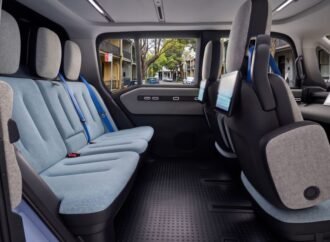
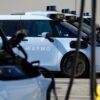
There’s no doubt that international carmakers like Tesla are taking massive strides in the self-driving tech space. Just last week, Tesla embarked on a tour of Japan with its new Cybercab, and this week the vehicle arrived in Sydney. The Cybercab is a model without a steering wheel, pedals or mirrors that’s set to kick
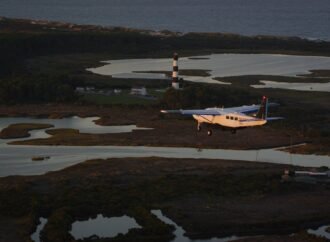
A single-engine prop Cessna Caravan has reportedly become the first airplane to autonomously complete a cross-continental flight across the United States. Overseen by the aeronautics company Joby, the retrofitted aircraft began its challenge in Concord, California, on September 7, ultimately traveling 3,199 miles with no assistance from its onboard human safety pilot. However, the plane
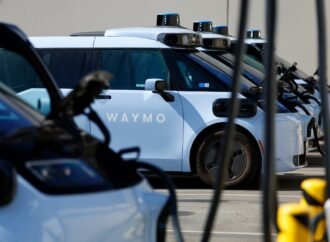
U.S. robotaxi operator Waymo is breaking into a new market. After unveiling roadmaps to bring its self-driving cars to Germany and the United Kingdom, it’s now setting its sights east. On Sept. 18, Waymo announced plans to launch in Singapore by 2028, marking its first entry into Southeast Asia. The announcement came just days after
Robotaxis will be a common sight on the world’s streets within five years, predicted James Peng, founder and CEO of the Chinese autonomous driving firm Pony.ai. “I think the technology problem is pretty much already solved,” he said at the Fortune Leaders Forum in Macau on Sept. 8. “You’ll be able to hail a robotaxi
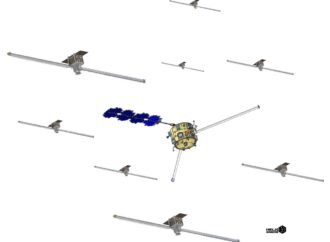
Fully autonomous space mission operations require the ability to detect faults and compensate for them without human intervention. To address this challenge and provide model-based support for system design and operations, it is important to connect fault management (FM) and model-based systems engineering (MBSE). This approach was successfully demonstrated with the model-based generation of a
CEOs have warned that AI will wipe out white-collar and entry-level jobs, but demand for the tools is already creating new opportunities. America’s energy sector is thriving during the world’s latest tech transformation—but there aren’t enough workers to meet the demand. The U.S. power and grid value chain will need around 500,000 additional workers by