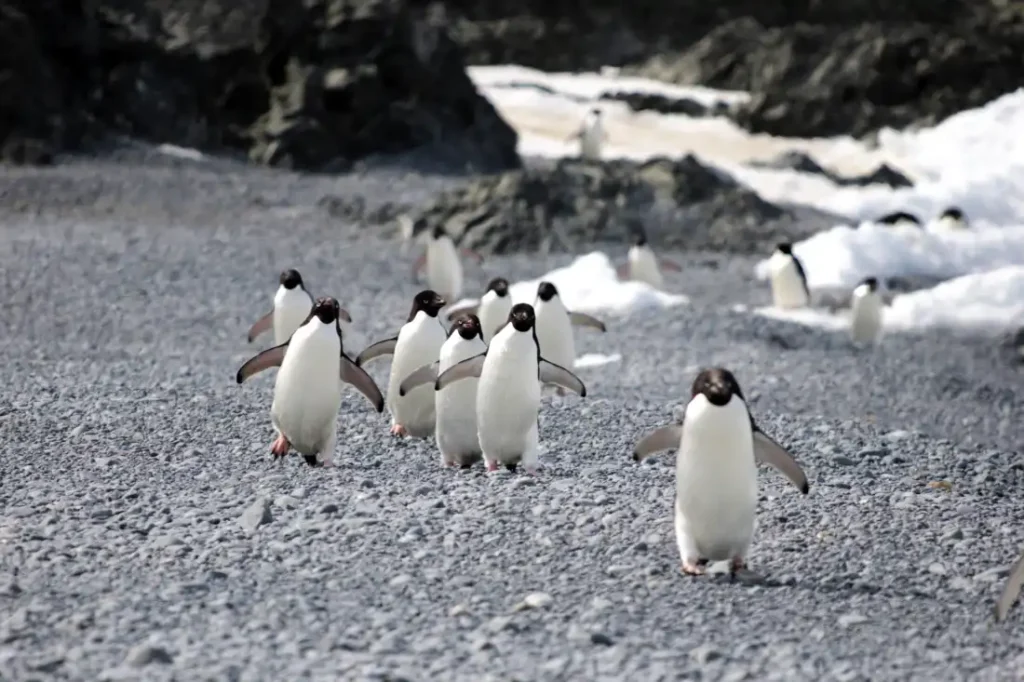
A small group of Adélie penguins return to their colony. A mega-colony of these penguins was hit by a big die-off in early 2024. Ralph Vanstreels hide caption toggle caption i Ralph Vanstreels Sailing toward the Danger Islands, Dr. Ralph Vanstreels had a good idea of what he might find: A lot of dead Adélie
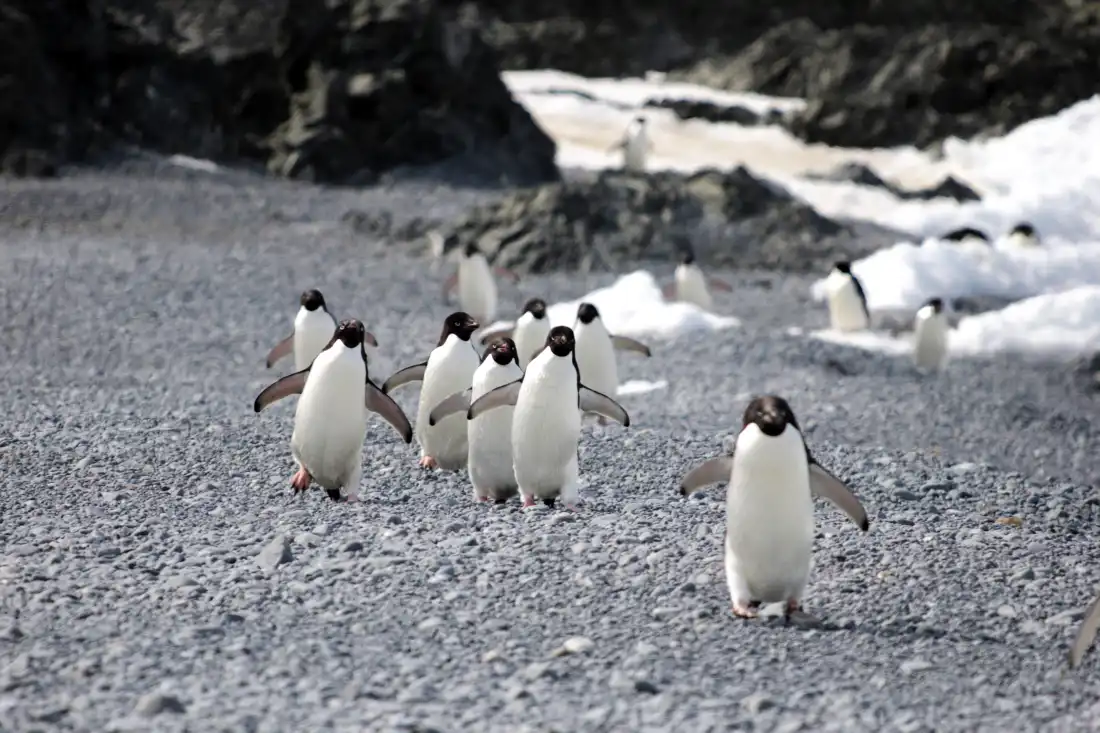
A small group of Adélie penguins return to their colony. A mega-colony of these penguins was hit by a big die-off in early 2024.
Ralph Vanstreels
hide caption
Ralph Vanstreels
Sailing toward the Danger Islands, Dr. Ralph Vanstreels had a good idea of what he might find: A lot of dead Adélie penguins.
It was March 2024 and a virus had been sweeping through the area, leaving deceased birds in its wake.
Vanstreels got the crime right but the culprit wrong. There were dead penguins but a virus was not to blame.
As his vessel pulled up to a landing ramp on one of the islands — located just off the Antarctic Peninsula — Vanstreels and his fellow researchers immediately noticed bumps in the snow.
“Was each bump a rock or was it a carcass? We had to do quite a bit of intensive searching [through the snow],” says Vanstreels, who is based in Argentina and is a wildlife veterinarian with the University of California, Davis.
The team ultimately found more than 537 penguin carcasses on just the ramp, which he estimates was about the size of an airport runway.
There were many more carcasses elsewhere on the Danger Islands, which are home to two mega colonies for penguins. The researchers estimate there were thousands of dead Adélie penguins and other species of birds. But they had to work quickly and couldn’t do a complete count, Vanstreels says.
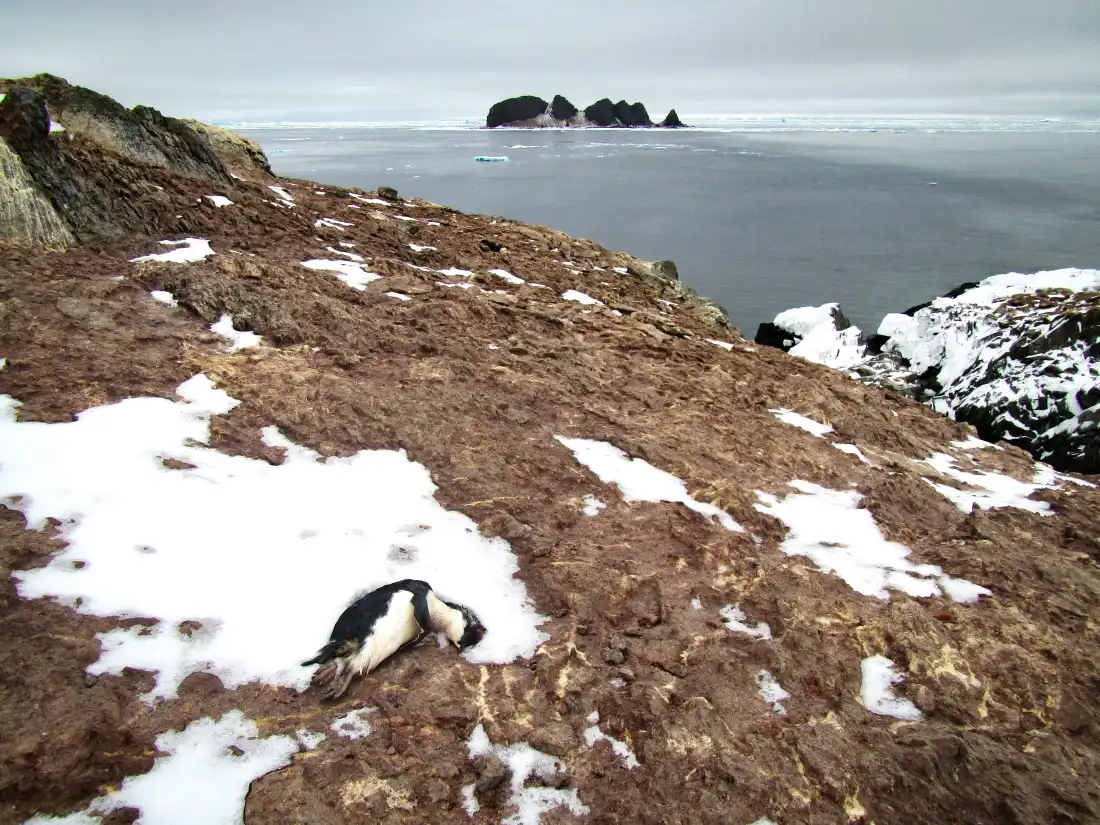
A view of the Adélie penguin colony at Beagle Island, one of the Danger Islands. A few penguin carcasses are scattered on the rocks.
Ralph Vanstreels
hide caption
Ralph Vanstreels
“You cannot stay there very long because you might be locked down with an iceberg blocking your way out,” he says.
As the team has pieced together this tragic penguin mystery, Vanstreels says, the case holds broader lessons for tracking the spread of diseases globally.
The only continent to dodge the virus — until now
Now let’s time jump to Australia a few months ago for another bird disease conundrum.
In June, H5N1 — high pathogenicity avian influenza also known as bird flu — arrived in mainland Australia. Up until that point, Australia had been the only continent to dodge the virus which has traversed the globe, leaving a trail of carcasses in its path.
Since late 2021, the virus has led to the death of nearly 300 million poultry birds. Either the virus killed them or they were culled as a preventive measure to stop the spread of the disease, according to the World Animal Health Information System. Further, bird flu is estimated to have killed millions of wild animals and marine mammals, although it’s hard to get an exact figure.
Researchers were amazed that Australia could stay bird-flu-free for six years. And the virus didn’t take the path that scientists expected.
“We have a lot of migration of birds between Australia and Southeast Asia, so for the first few years, we’re like: That’s where the virus is coming from,” says Dr. Amandine Gamble, an assistant professor at Cornell University in the Department of Public and Ecosystem Health.
The way bird flu eventually got there was from the other direction. It came from Antarctica likely via migrating birds.
“This is a virus that’s not assisted by airplanes,” Michelle Wille, senior research fellow at the Center for Pathogen Genomics at the University of Melbourne, told NPR in 2025. “This is a virus that’s traveling by mass mortality after mass mortality after mass mortality after mass mortality.”
“The virus loads are low”
So when Vanstreels set sail to check on the penguins, he assumed bird flu would be the culprit.
Bird flu arrived in Antarctica in late 2023 and early 2024. Vanstreels and his colleagues rapidly arranged for a trip to try to figure out exactly what was happening.
“The expedition was initially fully set up to look for bird flu because that was the panic,” he explains, adding that ongoing fear of a continuing global panzootic — or pandemic among animals — is justified.
In several layers of warm clothes covered by protective gear — double gloves, coveralls, glasses and masks — Vanstreels and the team started taking samples of the penguin corpses they found.
“We looked a little bit stiff when walking — like a penguin walking almost — because of all the gear,” he says. “We had very strict biosafety standards.”
They brought samples from the deceased penguins back to a mini-lab on their boat. By evening, they had early results. But not the results they expected.
“There is bird flu here, but the virus loads are low,” he recalls. “That was a little bit puzzling.”
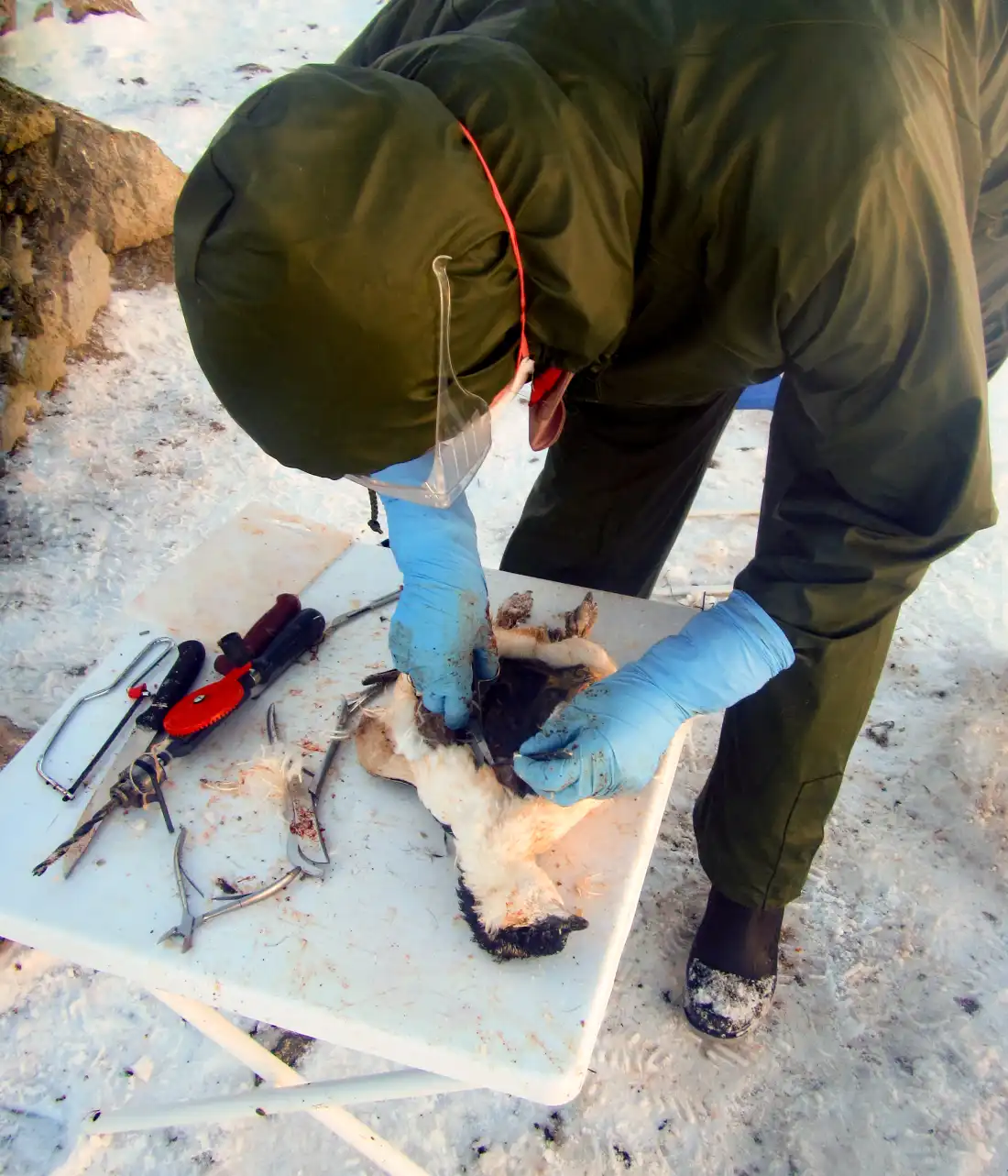
A scientist conducts the necropsy of an Adélie penguin chick collected at Heroina Island, one of the Danger Islands where disease struck.
Ralph Vanstreels
hide caption
Ralph Vanstreels
The carcasses were not very old, so Vanstreels would have expected to find far more bird flu virus if that had killed the birds. Perhaps something else was the main driver? “We were unsure what was happening,” he recalls.
What the microscope revealed
So what killed the 500-plus penguins on the landing ramp and the many others on the island?
Back on land several months after the voyage, in the Netherlands, Vanstreels’ colleagues did more investigation. “Under the microscope, you can see that there’s bacteria in the tissues,” he says — not virus.
They discovered a different disease, a bacterial disease that causes avian cholera (which is distinct from human cholera).
Vanstreels and his team’s findings were published in October in the journal the Proceedings of the Royal Society B.
So how worried are they about avian cholera?
The disease is not considered a major threat to humans since the strain that is specialized to birds is distinct from the strain specialized to mammals. “The risk for human infection is not really that high when you see an outbreak on birds,” Vanstreels says. But, it does kill birds worldwide — especially in cold environments where the bacteria thrives.
While there’s not enough research to know exactly how common avian cholera is, the disease has been on the radar of scientists for decades. However, it’s not exactly top of mind. The last time researchers looked for it in the Antarctic Peninsula was 25 years ago.
“One could be misled to think that: Well, that was a unique thing that happened back in 2001, and nothing’s happened ever since,” says Vanstreels. Instead, it is possible that avian cholera die-offs could be occurring regularly, only scientists haven’t been checking.
One of his big takeaways from this bird-flu-that-turned-out-to-be-avian-cholera event?
“Yes, there is a big thing with bird flu. But we still want to keep checking for the other diseases because they might be mixing up in the middle,” Vanstreels says.
Antarctica isn’t as remote as it seems
Like any good mystery, the case of the cholera-stricken penguins has got scientists wondering: Whodunit?
There’s a theory that avian cholera might have been introduced to Antarctica decades ago from researchers who brought poultry from the U.S., Vanstreels says.
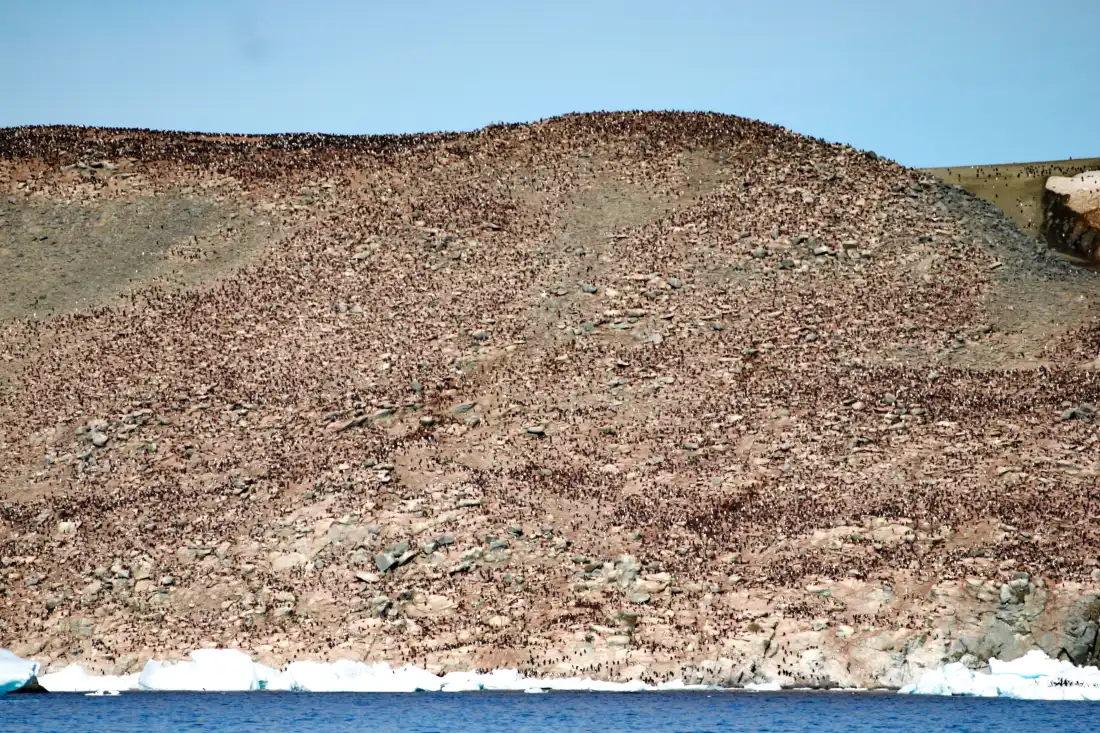
The Adelie penguin mega-colony at Heroina Island at the peak of the breeding season. The photo was taken in January 2025, a year after the outbreak.
hide caption
Gamble, of Cornell University, adds that the strain of avian cholera found in penguins in Antarctica is “very close” to the strain found 5,000 miles away on Île Amsterdam in the Southern Indian Ocean.
“Antarctica is way more connected to the rest of the world than we think it is,” she says.
It’s hard to track diseases in Antarctica but, she says, it’s turning out to be an important piece in the global pathogen puzzle.
The work of keeping tabs on what’s happening has fallen to a number of different countries since Antarctica is not governed by any one government. It was designated as a continent of peace and science by the mid 20th-century Antarctic Treaty, which now has 58 parties — among them are the U.S., France, Japan and Russia. Many nations have research stations and team up on scientific undertakings, including tracking pathogens — be it bird flu or avian cholera — that travel great distances and don’t respect borders.
“So this Avian cholera outbreak is just showing this is not a unique event,” says Gamble. “We really need international collaboration.”
For stories about life in our changing world, subscribe to NPR’s Global Health newsletter.
{For more tech updates, stay tuned to our blog.|Keep following us for the latest insights.|Check back often for more exciting news!}