Warning: This story contains distressing details and discussion of attempted suicide Lindsay Clancy was “begging for help” before killing her three children, her former mother-in-law testified on Tuesday, echoing others who have told a court that Clancy’s mental health deteriorated after the birth of her youngest son. “She had insomnia. She was losing her appetite,”
Warning: This story contains distressing details and discussion of attempted suicide
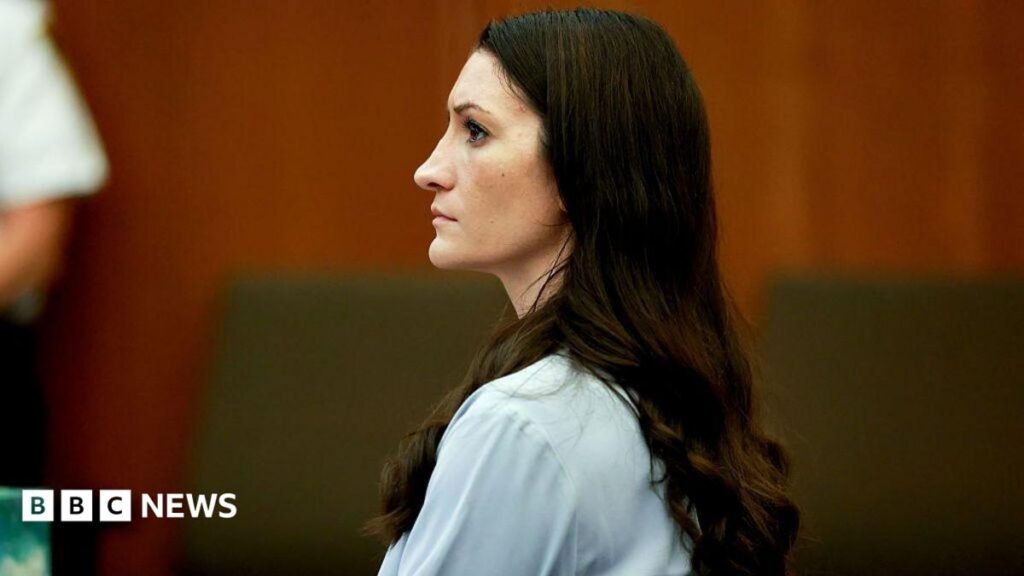
Lindsay Clancy was “begging for help” before killing her three children, her former mother-in-law testified on Tuesday, echoing others who have told a court that Clancy’s mental health deteriorated after the birth of her youngest son.
“She had insomnia. She was losing her appetite,” the mother-in-law, Susan Clancy, said at the murder trial. “She was very anxious and sad.”
Lawyers for Clancy, who does not dispute carrying out the killings but has pleaded not guilty to murder charges, argue she was experiencing postpartum psychosis at the time.
Prosecutors, meanwhile, alleged she made a calculated decision to intentionally kill her children – Cora, 5, Dawson, 3, and Callan, who was eight months.
When asked by a defence attorney if Lindsay Clancy had been “interested at all times in trying to get better and see doctors”, Susan Clancy answered: “Very much so.”
“She was begging for help,” she said of a woman she described as a “very nurturing, very loving” mother.
Following three weeks of testimony from dozens of witnesses, prosecutors rested their case on Monday. The defence then began presenting their arguments with personal anecdotes from family members.
Clancy has been charged with three counts of first-degree murder.
“She always wanted to be a mother, have many children, and I felt it was the best thing that ever happened to her,” Paula Musgrove, Clancy’s mother, testified on Monday.
Then, Clancy supposedly began having problems sleeping and sent a text message that she was “really sick”.
A month before the killings, Musgrove said, her daughter came to her and Clancy’s then-husband, Patrick Clancy.
“She told us she had thoughts of harming the children,” Musgrove said.
Musgrove also testified that Lindsay Clancy, a nurse, “would say to me, ‘This isn’t me, I’ve never been like this before.’ And I would agree, because she wasn’t”.
Prosecutors have said that in January 2023, Clancy intentionally strangled the three children with fitness bands in their Massachusetts home before jumping out of a second-floor window. Clancy, now 36, was paralysed by the jump and has attended the trial in a wheelchair.
The defence have said Clancy experienced hallucinations and delusions after giving birth to Callan and she was undergoing medical treatment for psychiatric problems. She checked herself into a psychiatric hospital for a few days just before the deaths.
Clancy also told her sister that she was experiencing suicidal thoughts every day over the course of the month leading up to the killings, the sister, Allison Ozga, has testified.
The UK’s National Health Service (NHS) defines postpartum psychosis as a rare serious mental health illness that can affect someone soon after having a baby.
“Postpartum psychosis is very different from the ‘baby blues’,” the NHS adds. “It’s a serious mental illness and should be treated as a medical emergency.”
If you are suffering distress or despair and need support, you could speak to a health professional, or an organisation that offers support. Details of help available in many countries can be found at Befrienders Worldwide. www.befrienders.org.
In the UK a list of organisations that can help is available at bbc.co.uk/actionline.
Check back often for more exciting news!