On Sunday, heavy rain began to fall in Renhe village in southern China’s Guangxi province. The villagers were used to it. But the rain didn’t stop and suddenly the water rose. In the early hours of Monday, the water had reached their knees. By dawn, the first floor of their houses had completely submerged. “The
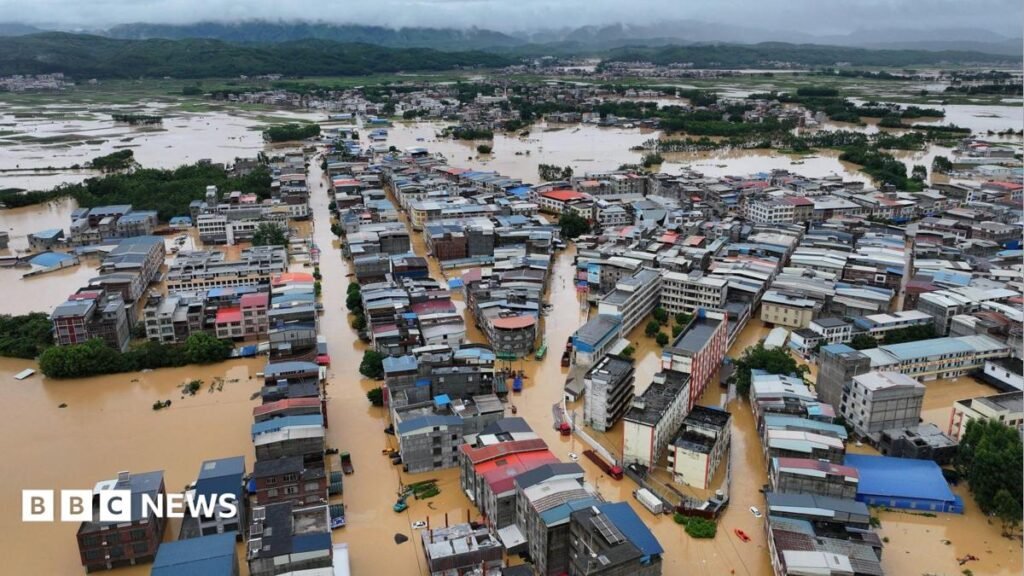
On Sunday, heavy rain began to fall in Renhe village in southern China’s Guangxi province.
The villagers were used to it. But the rain didn’t stop and suddenly the water rose.
In the early hours of Monday, the water had reached their knees. By dawn, the first floor of their houses had completely submerged.
“The floods happened so quickly, the water came so quickly. The villagers didn’t have time to take food with them when they fled,” a woman from Renhe, whose surname is Zhou, told the BBC.
Zhou’s family is among tens of thousands of people in Guangxi displaced from their homes since Typhoon Maysak swept through the region over the weekend, causing rivers to rise and dam walls to break. At least four people have died.
The typhoon flooded the city of Nanning and surrounding villages, with residents calling for rescue from their rooftops.
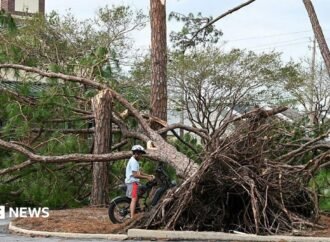
It has also caused storms and even tornadoes in the central province of Hubei, hundreds of kilometers away.
At least 17 people have died, hundreds more have been injured and tens of thousands have been evacuated, according to state media.
The devastation caused by days of extreme weather has prompted President Xi Jinping to order rescue and relief operations “at all costs.”
Typhoons causing widespread flooding are common in China at this time of year and Maysak is the first to make landfall in the country for the 2026 season.
State media said it has been characterized by “its sudden appearance and intense, short-lived winds.”
Another storm, Super Typhoon Bavi, is battering the Pacific and is on track to hit China’s eastern coast later this week, according to forecasts.
Nanning authorities have warned that “extremely heavy rain” could hamper rescue efforts.
Extreme weather conditions, which experts link to climate change, have increasingly threatened China’s residents and economy, especially its trillion-dollar agricultural sector.
Check back often for more exciting news!