Pakistan’s Gateway to Global News, Tech Updates, and Emerging AI Trends.
APOD
- Home
- APOD

APOD: 2026 September 4 – Na Uhane Mahoe Huki Pu i ke Ola – NASA Science0
- APOD, SCIENCE, Science / Health, Science Mission Directorate, scientists, Space, Space Communications & Navigation Program, Space Launch System (SLS), Space Telescope, space-x-ipo, SpaceX
- September 5, 2026
Explanation: Nā ʻUhane Māhoe Huki Pū i ke Ola, is the Hawaiian name given to this image of a pair of spiral galaxies locked in a mutual gravitational embrace. Some 200 million light-years distant toward the high flying constellation Pegasus their spectacular, galactic scale merger is captured in sharp detail in the image from the
READ MOREAPOD: 2026 September 3 – The Eclipse and the Stork – NASA Science0
- APOD, SCIENCE, Science / Health, Science Mission Directorate, scientists, Space, Space Communications & Navigation Program, Space Launch System (SLS), Space Telescope, space-x-ipo, SpaceX
- September 3, 2026
Explanation: How do animals react to a total solar eclipse? The featured image shows a stork roosting on her nest in Poland at a partial phase of the recent total solar eclipse. If you are lucky enough to experience a total eclipse somewhere quiet and close to nature, you may be able to notice unusual daytime animal behaviors. During totality,
READ MOREAPOD: 2026 September 1 – A Plane Lunar Eclipse – NASA Science0
- APOD, SCIENCE, Science / Health, Science Mission Directorate, scientists, Space, Space Communications & Navigation Program, Space Launch System (SLS), Space Telescope, space-x-ipo, SpaceX
- September 1, 2026
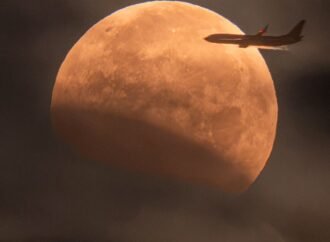
Explanation: Did you need to be on the right side of this airplane to see this eclipse? No. Lunar eclipses are routinely seen from the half of the Earth facing the Moon when the eclipse occurs, making them some of the most commonly witnessed astronomical events. You don’t even need any special equipment to see one — just your unaided eyes. Lunar
READ MORE


APOD: 2026 August 31 – Launch of the Roman Space Telescope – NASA Science0
- APOD, SCIENCE, Science / Health, Science Mission Directorate, scientists, Space, Space Communications & Navigation Program, Space Launch System (SLS), Space Telescope, space-x-ipo, SpaceX
- August 31, 2026
Explanation: A new telescope has been launched into space to study the universe. The Nancy Grace Roman Space Telescope (RST) has the same size main mirror as the Hubble Space Telescope (HST) but sees 100 times more sky during each snapshot. This is possible because when compared to HST, RST’s main mirror is more curved,
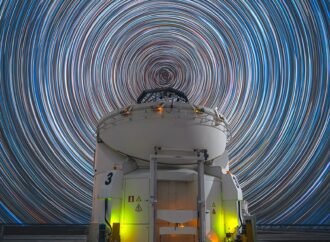
READ MOREAPOD: 2026 August 28 – The Sky Turns Above Paranal – NASA Science0
- APOD, SCIENCE, Science / Health, Science Mission Directorate, scientists, Space, Space Communications & Navigation Program, Space Launch System (SLS), Space Telescope, space-x-ipo, SpaceX
- August 28, 2026
Explanation: At the latitude of ESO’s Paranal Observatory in Chile, about 25 degrees south, Earth’s rotation moves the planet’s surface eastward at over 1,500 kilometers per hour. And while that’s faster than the speed of sound at sea level, the motion is imperceptible. Still, that motion can be revealed in the apparent rotation of the
READ MOREAPOD: 2026 August 27 – Colorful Aurora over an Icelandic Waterfall – NASA Science0
- APOD, SCIENCE, Science / Health, Science Mission Directorate, scientists, Space, Space Communications & Navigation Program, Space Launch System (SLS), Space Telescope, space-x-ipo, SpaceX
- August 27, 2026
Explanation: What a sight to behold, when a night sky became filled with colors that appeared to rain over the Skógafoss waterfall in Iceland. This image was taken in a single 5 second exposure by the photographer in April 2025. Seeing an aurora is on many people’s bucket lists. But it is not easy. It requires high solar activity, dark
READ MORE