Pakistan’s Gateway to Global News, Tech Updates, and Emerging AI Trends.
APOD
- Home
- APOD

APOD: 2026 August 26 – JWST Images The Lion’s Head Nebula – NASA Science0
- APOD, SCIENCE, Science / Health, Science Mission Directorate, scientists, Space, Space Communications & Navigation Program, Space Launch System (SLS), Space Telescope, space-x-ipo, SpaceX
- August 26, 2026
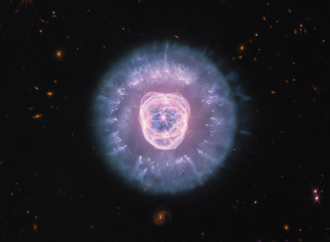
Explanation: Are we looking at the future of our Sun? The James Webb Space Telescope captured today’s composite image of the Lion’s Head Nebula (NGC 2392) with its NIRCam and MIRI instruments. The Lion’s Head Nebula is the remnant of a Sun-like star. This star was unable to sustain the nuclear fusion in its core
READ MOREAPOD: 2026 August 24 – Comet 220P in Outburst – NASA Science0
- APOD, SCIENCE, Science / Health, Science Mission Directorate, scientists, Space, Space Communications & Navigation Program, Space Launch System (SLS), Space Telescope, space-x-ipo, SpaceX
- August 24, 2026
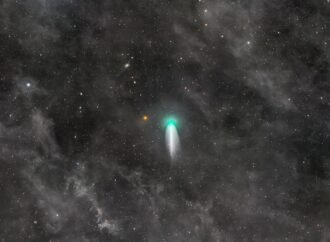
Explanation: Comet 220P is unexpectedly bright. Normally, periodic Comet 220P/McNaught is so dim that to see it requires a telescope. Two surprising outbursts this year, however, have made it about 20,000 times brighter than usual, so that it is now visible with binoculars and long-duration camera exposures. As expected, Comet 220P continues to orbit the
READ MOREAPOD: 2026 August 22 – Mostly Perseids – NASA Science0
- APOD, SCIENCE, Science / Health, Science Mission Directorate, scientists, Space, Space Communications & Navigation Program, Space Launch System (SLS), Space Telescope, space-x-ipo, SpaceX
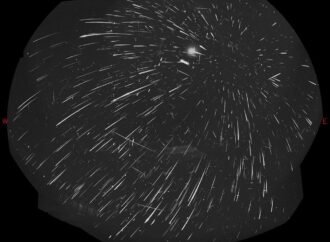
- August 22, 2026
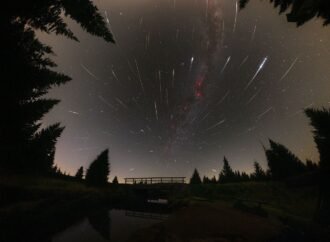
Explanation: Recorded the night of August 12-13, images from four dedicated meteor-monitoring cameras at an astronomical observatory in Czechia were aligned and combined to create this all-night, all-sky view. On that night, the total count came to 1,706 meteors. And since that coincided with the peak activity of the 2026 Perseid Meteor Shower, most are
READ MORE
APOD: 2026 August 20 – The Elephant’s Trunk in Cepheus – NASA Science0
- APOD, SCIENCE, Science / Health, Science Mission Directorate, scientists, Space, Space Communications & Navigation Program, Space Launch System (SLS), Space Telescope, space-x-ipo, SpaceX
- August 20, 2026
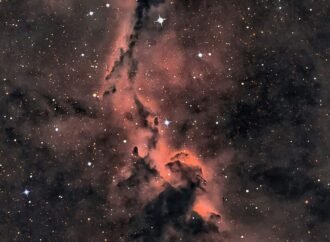
Explanation: Like an illustration in a galactic Just So Story, the Elephant’s Trunk Nebula winds through the emission region and young star cluster complex IC 1396, in the high and far off constellation of Cepheus. Also known as vdB 142, this cosmic elephant’s trunk is over 20 light-years long. The detailed telescopic view features the
READ MOREAPOD: 2026 August 19 – The Case of the Mysterious Maybe Meteor – NASA Science0
- APOD, SCIENCE, Science / Health, Science Mission Directorate, scientists, Space, Space Communications & Navigation Program, Space Launch System (SLS), Space Telescope, space-x-ipo, SpaceX
- August 19, 2026
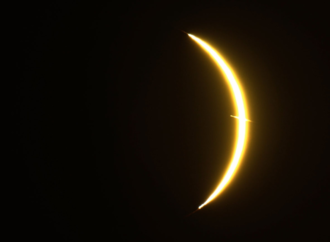
Explanation: Whatdunit? What disappeared while crossing a partially eclipsed Sun? Let’s present the evidence. The 24 frames-per-second video was taken in Spain (40°34’30.3″N 1°12’28.8″W) at 20:28 local time on August 12, 2026. The Perseids meteor shower was at its peak during this time. Is this a meteor? Meteor showers trace back to a region of
READ MOREAPOD: 2026 August 18 – Perseids from Perseus – NASA Science0
- APOD, SCIENCE, Science / Health, Science Mission Directorate, scientists, Space, Space Communications & Navigation Program, Space Launch System (SLS), Space Telescope, space-x-ipo, SpaceX
- August 18, 2026
Explanation: This was a good year for the Perseids meteor shower. A key reason was the Moon was absent from lighting up Earth’s night sky so that more meteors were visible than usual. Where was the Moon? It was busy visiting the Sun. Near the Perseids peak, the Moon moved directly in front of the Sun and created a total solar eclipse visible from Greenland and Spain. The Perseids occur when
READ MORE