
Pakistan’s Gateway to Global News, Tech Updates, and Emerging AI Trends.
Deep Space Network
- Home
- Deep Space Network

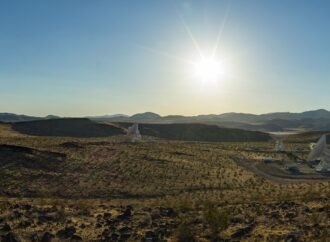
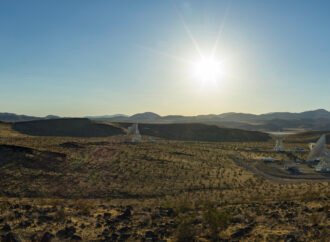
Panorama Showcasing the 34-Meter Antennas of the DSN’s Goldstone Complex – NASA Science0
- Deep Space Network, Photojournal, SCIENCE, Science / Health, Science Mission Directorate, scientists, Space, Space Communications & Navigation Program, Space Launch System (SLS), Space Telescope, space-x-ipo, SpaceX
- August 30, 2026
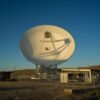
Five antennas soak in the summer sun at the Deep Space Network’s Goldstone complex near Barstow, California, in August 2026. The recently completed Deep Space Station 23, a 34-meter (114-foot) beam-waveguide antenna, can be seen to the right of the frame in the foreground. The other three 34-meter antennas are, from left, DSS-26, DSS-25, and DSS-24.
READ MORENASA Deep Space Network’s New Goldstone Antenna Goes Online – NASA Science0
- Deep Space Network, Photojournal, SCIENCE, Science / Health, Science Mission Directorate, scientists, Space, Space Communications & Navigation Program, Space Launch System (SLS), Space Telescope, space-x-ipo, SpaceX
- August 30, 2026
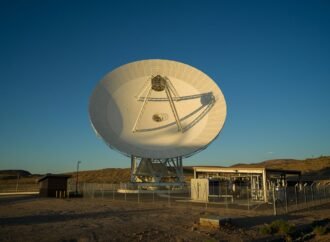
Long shadows are cast by the recently completed Deep Space Station 23 at the Deep Space Network’s Goldstone complex near Barstow, California, in August 2026. A 34-meter (114-foot) multifrequency beam-waveguide antenna, DSS-23 will boost the DSN’s capacity and enhance NASA’s deep space communications capabilities for decades to come. NASA leadership and personnel as well as
READ MORERibbon-Cutting Event for NASA Deep Space Network’s Deep Space Station 23 – NASA Science0
- Deep Space Network, Photojournal, SCIENCE, Science / Health, Science Mission Directorate, scientists, Space, Space Communications & Navigation Program, Space Launch System (SLS), Space Telescope, space-x-ipo, SpaceX
- August 30, 2026
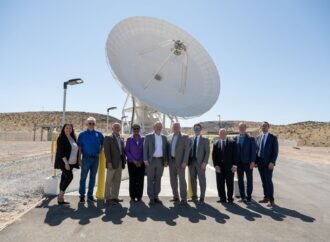
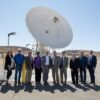
Leadership from NASA Headquarters, the Jet Propulsion Laboratory, and the Deep Space Network (DSN) stand in front of the recently completed Deep Space Station 23 antenna at the Deep Space Network’s Goldstone complex near Barstow, California, on Aug. 25, 2026. From left: Germaine Aziz (project manager, DSN Aperture Enhancement Project, JPL); Bradford Arnold (manager, Telecom
READ MORE
New Next-Gen Dish Adds Muscle to NASA’s Deep Space Network – NASA0
- Deep Space Network, Jet Propulsion Laboratory, Research and Technology Mission Directorate, SCIENCE, Science / Health, Science Mission Directorate, scientists, Space, Space Communications & Navigation Program, Space Launch System (SLS), Space Operations Mission Directorate, Space Telescope, space-x-ipo, SpaceX
- August 25, 2026
NASA’s Deep Space Network facility in California is marking the addition of a brand new 34-meter-wide (114-foot-wide) radio frequency antenna to the agency’s deep space communications and navigation system. The network uses giant dish antennas located at three global facilities to support more than 40 spacecraft exploring the solar system and interstellar space. The new
READ MORENASA’s New Horizons spacecraft awakens from hibernation in good health – NASA Science0
- Deep Space Network, New Horizons, SCIENCE, Science / Health, Science Mission Directorate, scientists, Space, Space Communications & Navigation Program, Space Launch System (SLS), Space Telescope, space-x-ipo, SpaceX
- July 7, 2026
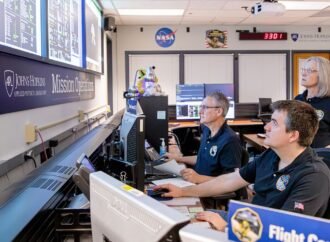
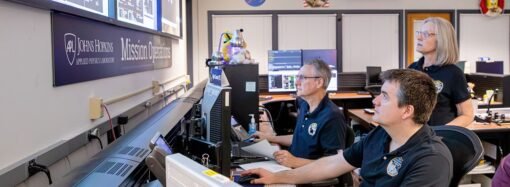
After its longest hibernation period of nearly a year, NASA’s New Horizons spacecraft has emerged in good health and is ready to begin transmitting scientific data collected in the distant Kuiper Belt, far beyond Pluto. On June 23, flight controllers at the Johns Hopkins Applied Physics Laboratory (APL) in Laurel, Maryland, confirmed that New Horizons,
READ MORE
New Next-Gen Dish Adds Muscle to NASA’s Deep Space Network - NASA
- Deep Space Network, Jet Propulsion Laboratory, Research and Technology Mission Directorate, SCIENCE, Science / Health, Science Mission Directorate, scientists, Space, Space Communications & Navigation Program, Space Launch System (SLS), Space Operations Mission Directorate, Space Telescope, space-x-ipo, SpaceX
- August 25, 2026
Latest Posts
-
-
-
-
New Next-Gen Dish Adds Muscle to NASA’s Deep Space Network - NASA
- Deep Space Network, Jet Propulsion Laboratory, Research and Technology Mission Directorate, SCIENCE, Science / Health, Science Mission Directorate, scientists, Space, Space Communications & Navigation Program, Space Launch System (SLS), Space Operations Mission Directorate, Space Telescope, space-x-ipo, SpaceX
- August 25, 2026


Top Authors
-
matechpros@gmail.com
ADMINISTRATOR
-
OWS
ADMINISTRATOR

