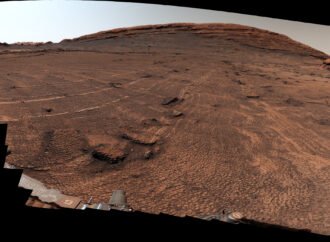
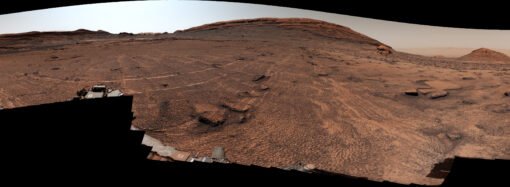
When NASA’s Curiosity rover recently began ascending a Martian valley nicknamed “Big Valley,” it sent back images that were familiar to scientists on the mission: honeycomb textures called polygonal fractures, each about 1.5 to 3 inches (4 to 8 centimeters) wide. The mission has detected small specks of these geometric shapes several times before, but
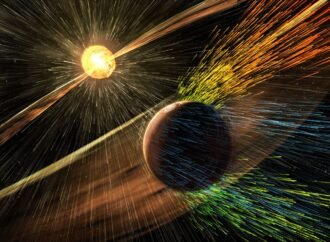
Scientists on NASA’s MAVEN (Mars Atmosphere and Volatile Evolution) mission have discovered a key piece of the puzzle in understanding certain types of auroras on Mars, discovering that they form similarly to terrestrial auroras.Results published Thursday in Nature Communications show that the same mechanism that circulates and catapults charged particles into Earth’s atmosphere is happening