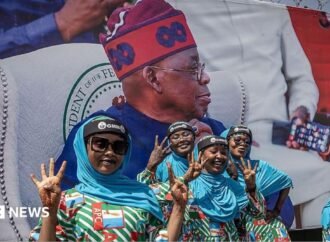
Nigeria’s President Bola Ahmed Tinubu has launched his re-election manifesto, promising to grow the economy, tackle insecurity and address housing shortages. The plan targets 6% annual economic growth by 2031, 78,000 additional security personnel and 200,000 affordable homes. Titled From Reform to Prosperity, the manifesto builds on Tinubu’s first-term economic reforms, including the removal of
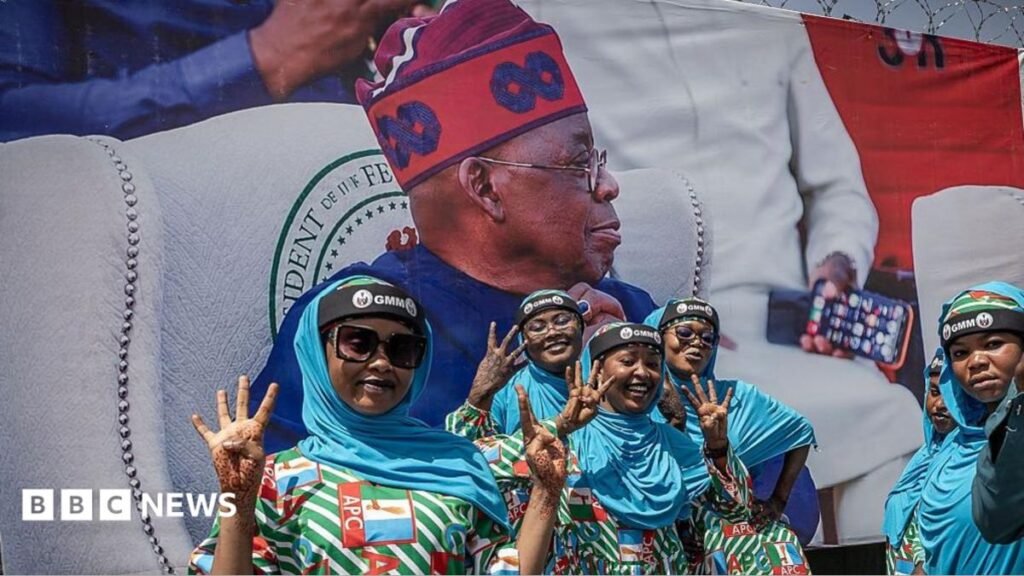
Nigeria’s President Bola Ahmed Tinubu has launched his re-election manifesto, promising to grow the economy, tackle insecurity and address housing shortages.
The plan targets 6% annual economic growth by 2031, 78,000 additional security personnel and 200,000 affordable homes.
Titled From Reform to Prosperity, the manifesto builds on Tinubu’s first-term economic reforms, including the removal of the fuel subsidy, which has pushed up living costs.
Nigeria is due to hold a general election in January 2027, with Peter Obi and former Vice-President Atiku Abubakar among Tinubu’s main challengers.
The manifesto, launched on 10 November by his party, the All Progressives Congress (APC), reflects the government’s bid to win back the trust of Nigerians.
Elected in 2023, Tinubu undertook a series of economic reforms, including the removal of fuel subsidies, the harmonisation of official and parallel foreign exchange rates, and tax reforms in Africa’s largest oil producer.
“That manifesto was trying to get Nigeria back on its feet, given the condition of the country at that time, slipping into austerity,” Joshua Osiyemi, who heads Tracka, a platform launched by the BudgIT Foundation, which is a non-profit organisation that aims to make government financial data easier to understand.
The reforms, although considered necessary by some economists, have been painful for many Nigerians.
“Fuel prices went up, and everything that Nigerians consume skyrocketed,” Osiyemi told the BBC.
“Most Nigerian families are saying they cannot survive on 10,000 naira [$7.40; £5.50] a day,” he said, referring to a survey conducted by his organisation.
Analysis by Nigeria’s International Centre for Investigative Reporting (ICIR) found that the price of imported rice rose by 184% between May 2023, when Tinubu took office, and October 2025. Other staples, including beans, garri (cassava flour) and bread, also recorded substantial increases.
In a sign that the reforms might be starting to pay off, SBM Intelligence, a security risk consulting firm, found that the cost of preparing a pot of jollof rice fell by 11.5% between June and September 2026, the sharpest decline it had recorded in the 10 years it has been running its Jollof Index.
However, this has not translated into significant relief for most households.
“Nigerians spend more and more of their income on basics,” said Ikenna Okonkwo, head of research at SBM Intelligence.
The reforms were praised by the World Bank and the International Monetary Fund (IMF) for their effectiveness.
Nigeria’s headline inflation stood at 14% in September 2026, according to the National Bureau of Statistics, down from a high of 34% in 2024. The gap between the official and parallel exchange rates has also narrowed.
Tinubu has said the removal of fuel subsidies freed up more than one trillion ($740m; £550m) naira in government resources in just the first two months.
For more tech updates, stay tuned to our blog.