Early in her career, Nancy Grace Roman ignored those who advised her not to become a scientist because of her gender.Credit: NASA/Science Photo Library Astronomers have a new tool for peering into the Universe to probe dark matter, dark energy and exoplanets. The Nancy Grace Roman Space Telescope, launched on 30 August, is the first
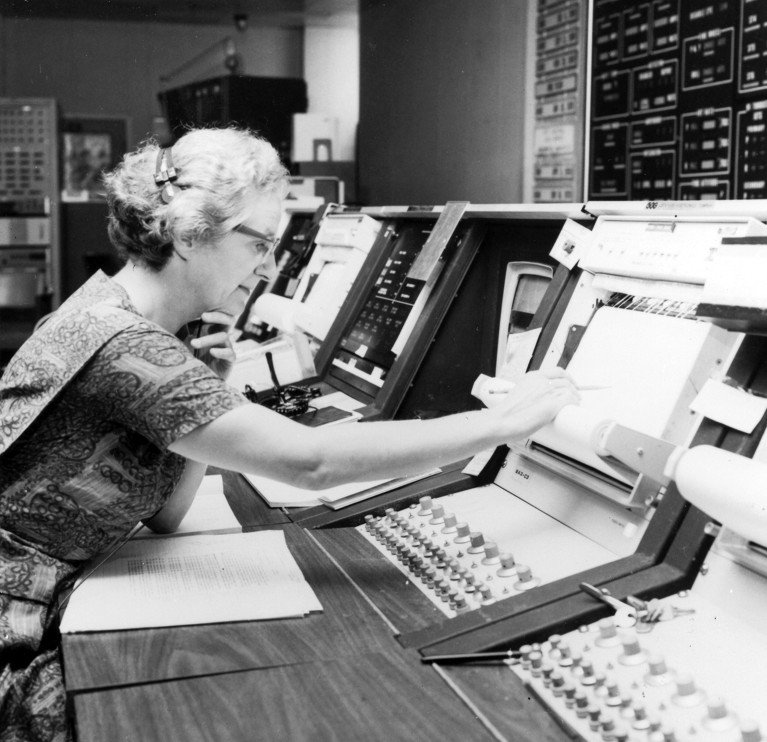
Early in her career, Nancy Grace Roman ignored those who advised her not to become a scientist because of her gender.Credit: NASA/Science Photo Library
Astronomers have a new tool for peering into the Universe to probe dark matter, dark energy and exoplanets. The Nancy Grace Roman Space Telescope, launched on 30 August, is the first space telescope to be named after a woman. It was renamed in 2020 from the Wide-Field Infrared Survey Telescope (WFIRST) to recognize the scientist who created NASA’s first space-astronomy programme in 1959 and who is known as the mother of the Hubble Space Telescope.
By the time of its renaming, WFIRST had suffered deep cuts or been cut entirely from the US President’s Budget several times, meaning that it almost didn’t survive. Naming it made it “not cancellable”, according to Thomas Zurbuchen, who was head of NASA’s Science Mission Directorate in 2020. In this way, even after her death in 2018, Roman performed one more service for the impressive space-astronomy programme she had set in motion and led for decades.
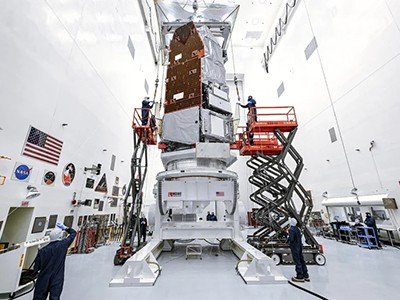
NASA’s Roman telescope holds promise far beyond mapping the invisible Universe
Through teaching the history of astronomy over the past three decades, I have been persuaded that the growth of astronomical knowledge that was fuelled by the emergence of space astronomy in the 1950s and 1960s is arguably the most remarkable transformation in the history of the discipline.
At the time of NASA’s founding in 1958, astronomers had flown instruments aboard sounding rockets (which follow suborbital trajectories), balloons and high-altitude aircraft. The next goal was to go above the layers of Earth’s atmosphere — which obscure and distort electromagnetic radiation from celestial objects — for much longer than the five minutes or so that were possible with sounding rockets.
But as Roman told me in a 1984 interview, even in the mid-1960s “the people who were in favour of any kind of telescope in space, large or small, were in a minority” (see go.nature.com/4qywze8). Space astronomy was seen as a threat by some ground-based astronomers because they worried that it would drain money from their activities.
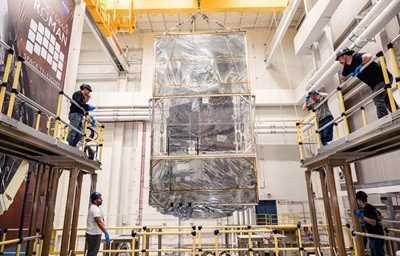
The Roman telescope is about to take planet-hunting to the next level
Others regarded its pursuit as too costly. What was the rush? Why not devote the funding to ground-based astronomy, which was also undergoing rapid advances? And for sceptics, events such as the 1966 catastrophic failure of an Orbiting Astronomical Observatory called OAO-1, due to its batteries overheating three days after its launch, underlined the risks involved. Roman explained that others were unhappy that NASA had, in their opinion, sold the Apollo Moon programme as a scientific mission, and “they felt that they’d been used, and they objected to that” because they reckoned that it had little to do with science.
As NASA’s first chief astronomer, Roman set about constructing a robust programme of missions and technology development. She raised awareness of, and drummed up interest in, space astronomy among both scientists and the public.
Keep following us for the latest insights.