There’s no question that David Ellison, the doggedly ambitious CEO of Paramount Skydance, loves movies and filmmaking. In making his case for Paramount’s eye-poppingly pricey megadeal to merge with Warner Bros., he has repeatedly pledged that the combined company will release a lot more movies — to the tune of at least 30 titles per
There’s no question that David Ellison, the doggedly ambitious CEO of Paramount Skydance, loves movies and filmmaking. In making his case for Paramount’s eye-poppingly pricey megadeal to merge with Warner Bros., he has repeatedly pledged that the combined company will release a lot more movies — to the tune of at least 30 titles per year in theaters.
When Ellison launched his hostile takeover bid for Warner Bros. Discovery, before he beat out Netflix to clinch a deal, he planted a flag with a pledge that the merged entity would pump more than 30 titles into theaters with “traditional” windows. And ever since, he’s been waving the 30-film number around like a magic wand that will save the movie business.
Ellison is now offering three-year contractually enforceable commitments to the U.S.’s two biggest theater chains, AMC Entertainment and Regal Cinemas, Bloomberg reported. That would guarantee exclusive 45-day theatrical windows and a moratorium on distributing the movies on streaming services for at least 90 days, with potentially financial penalties if Paramount failed to hold up its end of the bargain. It’s worth noting that the CEOs of AMC and Regal have come out strongly in support of the Paramount-WBD merger.
Paramount has publicly stated that it’s willing to put the 30-movie commitment into writing. That’s designed to counter the allegation in the antitrust lawsuit filed by 12 state attorneys general that a merged Paramount-Warner Bros. would have excessive control over the market for theatrical releases. The idea seems to be that it would serve as a guardrail against Paramount-WBD hoarding its studio output for the benefit of its own Paramount+ and HBO Max streamers. A trial in the case is slated to start in March 2027. Ellison is under pressure to find an out-of-court settlement with the states before then. But it’s unclear whether the 30-title/45-day window guarantee would be an acceptable concession for the state AGs. Meanwhile, it doesn’t address another key allegation in the states’ lawsuit: that Paramount-WBD would have excessive power in the U.S. market for basic cable TV.
But the question is this: What if most of these promised 30 movies are duds or just small-draw specialty titles?
In a New York Times op-ed last week, Ellison admitted he can’t guarantee the financial performance of a particular theatrical movie release. What he is willing to stand behind is a vow to take more shots on goal.
“In my career, ‘G.I. Joe: Retaliation’ met financial expectations, ‘Top Gun: Maverick’ exceeded them, and ‘Terminator: Dark Fate’ fell short. I am proud of all these films, but nobody can dictate what audiences will love,” he wrote. “What I can promise is the work, and more of it.”
But higher studio output in terms of the number of titles doesn’t correlate with a bigger payoff for the industry (or Paramount-WBD itself). In focusing on quantity, Ellison is glossing over the question of actual financial returns.
You don’t have to take my word for the fact that a bigger slate doesn’t necessarily translate into more revenue. Paramount has acknowledged it.
Paramount’s 2025 film slate nearly doubled from eight films in 2025 to 15 this year. This year, Paramount has told Wall Street it expects “significantly lower theatrical revenue year-over-year due to lower average box office revenue per film across more releases.” A big reason is a tough year-over-year comparison because of Tom Cruise’s “Mission: Impossible – The Final Reckoning” blockbuster in 2025, which took in almost $600 million at the global box office.
In the second quarter of 2026, Paramount Pictures’ theatrical revenue plummeted 45%, to $138 million (again, largely because of the comparison to the year-earlier period that included “Mission: Impossible – The Final Reckoning”). Its biggest theatrical release in the quarter was “Scary Movie,” which has grossed $108 million domestically (and $231 million worldwide) since its June 5 release date.
For now, Paramount isn’t producing the billion-dollar box office smashes that drive millions of butts into theater seats (not to mention robust sales of novelty popcorn buckets). There’s nothing from the studio that is close to rivaling, say, the 2026 successes of Disney-Pixar’s “Toy Story 5,” Universal’s “The Odyssey” from Christopher Nolan, Sony’s “Spider-Man: Brand New Day” or Lionsgate’s “Michael.” To be sure, Warner’s “Dune 3” releasing in December 2026 could be a billion-dollar hit but unless the merger unexpectedly closes before then, that’s not part of a Paramount-WBD lineup.
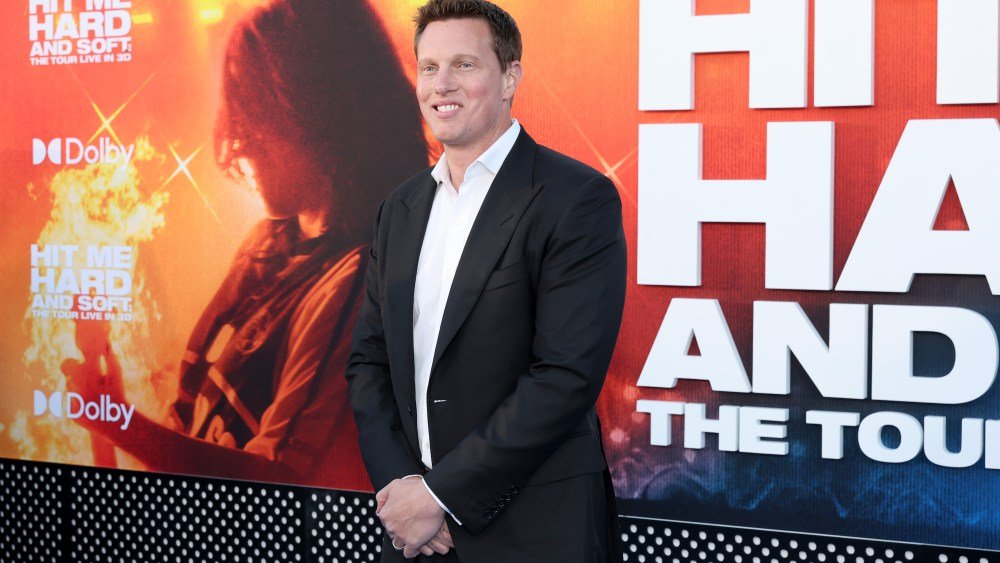
One Paramount Q2 movie release that wasn’t called out by the company in its quarterly filing: 3D concert film “Billie Eilish: Hit Me Hard and Soft,” directed by Eilish and James Cameron. (That’s Ellison pictured above at the L.A. premiere of the movie at Village Theatre on May 6.) It grossed $9.9 million domestically over a two-week theatrical run in May. The film got rave reviews, with a 91% Rotten Tomatoes critics’ score, and was undoubtedly enjoyed by many fans.
But stringing together a bunch of sub-$10 million movie releases isn’t going to turn things around for movie theaters in America.
Check back often for more exciting news!