Sign Up For Goods 🛍️ Product news, reviews, and must-have deals. By signing up, you confirm you are 16+, will receive newsletters and promotional content and agree to our Terms of Use and acknowledge the data practices in our Privacy Policy. You may unsubscribe at any time. For the last five months, I’ve had a
For the last five months, I’ve had a daily date with a little green owl. It cheers me on when I finish a language lesson and sends passive-aggressive reminders when I put it off.
A few months in, I was thrilled to realize I could follow bits of a German conversation I happened to overhear. But I still wondered: If I keep using this app, will I actually be able to understand entire conversations and express myself clearly? So I asked some experts.
What language apps do well
Apps like Duolingo and Babbel, which break a language into a sequence of bite-size, gamified lessons, have several strengths, says Dr. Luke Plonsky, a professor of applied linguistics at Northern Arizona University. They combine audio, written text, and visuals, which helps learners connect how new words look, sound, and what they mean.
They also enable something called “spaced practice”—going back to what you’ve learned several times over a longer period. Several studies show this leads to better memory of the new material than cramming.
For example, if students spend 30 minutes learning vocabulary, they remember the words longer if they break that into three 10‑minute sessions spread over several days or weeks, instead of doing all 30 minutes at once.
In fact, “language apps tend to do a good job with vocabulary, short phrases, and other concrete material that benefits from repetition and memorization,” says Dr. Gillian Lord, a professor of Hispanic linguistics at the University of Florida.
Researchers at Duolingo published a peer‑reviewed study claiming that finishing certain parts of their French and Spanish courses gives learners reading and listening skills similar to those of students who have taken four university semesters—and in much less time. But it’s important to note this study didn’t compare speaking or writing ability.
On the practical side, apps are often free and “very convenient since they’re on our phones and can be accessed 24/7,” Plonsky says.
Another strong point is their emotional appeal. “Duolingo’s character Lily [a teenager known for her sarcastic comments] is funny. The Owl is charming. The sounds and haptics are pleasing and rewarding. And the apps are gamified by features like streaks and hearts, which motivate us to keep going,” Plonsky explains. Starting a new language can feel intimidating, and—by making the process more playful—these apps lower the barrier to entry, says Lord.
oy nambir oscar tuş
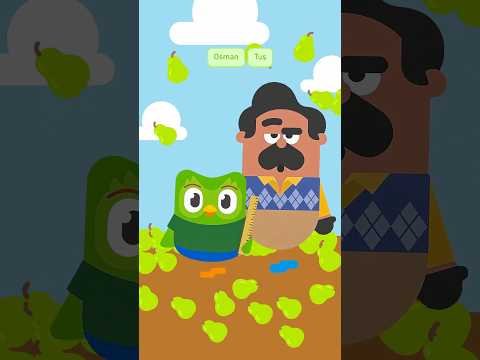
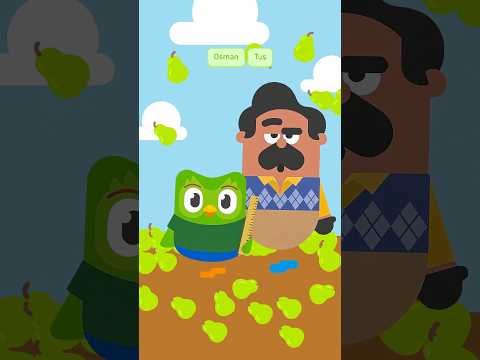
The Duolingo owl can help you learn Spanish, but it can also dance. Video: oy nambir oscar tuş, @duolingo
Dr. Daniel Isbell, an associate professor in the Department of Second Language Studies at the University of Hawaiʻi at Mānoa, points out how these apps help make learning a habit by sending reminders and using gamified elements like experience points (also known as XP, points you earn when you finish a lesson) or streaks (number of days in a row in which you’ve completed lessons). That consistency matters because language learning is “more of a marathon than a sprint,” and it can take several thousand hours to reach high proficiency, he says.
Where the apps fall short
The bad news for language app learners like me is that an app alone may not equip you with the skills you need for real-life communication.
“Even when they incorporate speaking practice, it is usually highly controlled—repeat this phrase, pronounce this word, give the expected answer,” says Lord. “Someone can perform quite successfully in an app and still be entirely unprepared for a real, unscripted conversation!”
Live human communication involves “interpreting meaning in real time, responding to unpredictability, managing misunderstanding, and adjusting to another person—a level of complexity that apps just can’t replicate,” she says.
What this means, Isbell explains, is that an app can help you “get the basics of the language under your belt,” “enough to read some subway signs and ask for directions,” but not to use the language comfortably at school or work.
Plonsky points out another limitation: Apps often avoid clear explanations of grammar, even though many adults “actually want to know what’s going on structurally!”
Related ‘Ask Us Anything’ Stories
Culture, which is integral because “language always exists within a varied and living human context,” is often treated “too superficially,” says Lord. When it does appear, “it is often presented as though it were fixed and uniform, reduced to a handful of customs, holidays, or tourist-facing facts.”
Another big issue is dropout. Despite reminders and gamified elements, studies show many language app users quit before achieving fluency. For example, a 2019 study found that 64 percent of people had stopped using the app after four months, and 87 percent had stopped after a year.
“So for every 1,000-day streak you see on social media, there are thousands and thousands of people who stop using their language learning app within a month, which is a big problem,” Isbell says. Language classes, meanwhile, “create some social expectations to show up and participate,” he notes.
Expert tips for learning a new language
So where does that leave me? “Sure, use the apps!” Plonsky says. “They’re probably the most efficient way to go, at least in the early stages. And they’re fun.” Lord agrees that apps are “fine as a starting point,” and Isbell recommends using them to build more practice and exposure into your daily routine.
But you should also seek out other opportunities to use the language. Ideally, learners immerse themselves where the language is spoken, Lord says, but if that’s not possible, they should seek “the most interactive option available”—“very often that means taking a class, whether in person or online.”
It also helps to expose yourself to films, TV, podcasts, and music in your target language to “get used to the sounds of the language, the rhythms of interaction, and the cultural norms that shape communication,” she adds.
For example, with Korean, “you can get some of the basics from an app like Duolingo,” but you should also watch K-dramas and focus more on listening than reading subtitles, Isbell says.
So my plan is to keep the owl happy and maintain my streak—but also to sign up for a class where I can put my new vocabulary into practice with real people. Gulp.
In Ask Us Anything, Popular Science answers your most outlandish, mind-burning questions, from the everyday things you’ve always wondered to the bizarre things you never thought to ask. Have something you’ve always wanted to know? Ask us.

2026 Popular Science Home of the Future Awards
For more tech updates, stay tuned to our blog.