When The Elder Scrolls Online (ESO) shifted away from its traditional yearly Chapter and DLC cadence to embrace a seasonal model—something we broke down earlier this year when ZeniMax outlined their 2026 roadmap—the goal was simple on paper: give developers freedom to innovate. In practice, running a decade-strong MMORPG requires balancing the practical realities of
When The Elder Scrolls Online (ESO) shifted away from its traditional yearly Chapter and DLC cadence to embrace a seasonal model—something we broke down earlier this year when ZeniMax outlined their 2026 roadmap—the goal was simple on paper: give developers freedom to innovate. In practice, running a decade-strong MMORPG requires balancing the practical realities of game design, respecting player expectations, and maintaining momentum through studio changes.
When I last spoke with former Creative Director Rich Lambert about the studio’s long-term vision and community focus, the team was laying the groundwork for how ESO delivers content. Following the foundational changes in Update 49 and our coverage of the full seasonal reveal during the Seasons Direct, I sat down with Nick Giacomini (Co-Head of Studio and Game Director) and Michael Zenke (Lead Narrative Events Designer and Loremaster) to talk about the Update 51 release and the rollout of High Seas of Tamriel.
We talked through the mechanics of the new difficulty system, the reality of class reworks following studio restructuring, honouring former developers’ legacies, and taking wild risks with experimental content like undersea exploration.
Moving beyond the traditional Chapter model
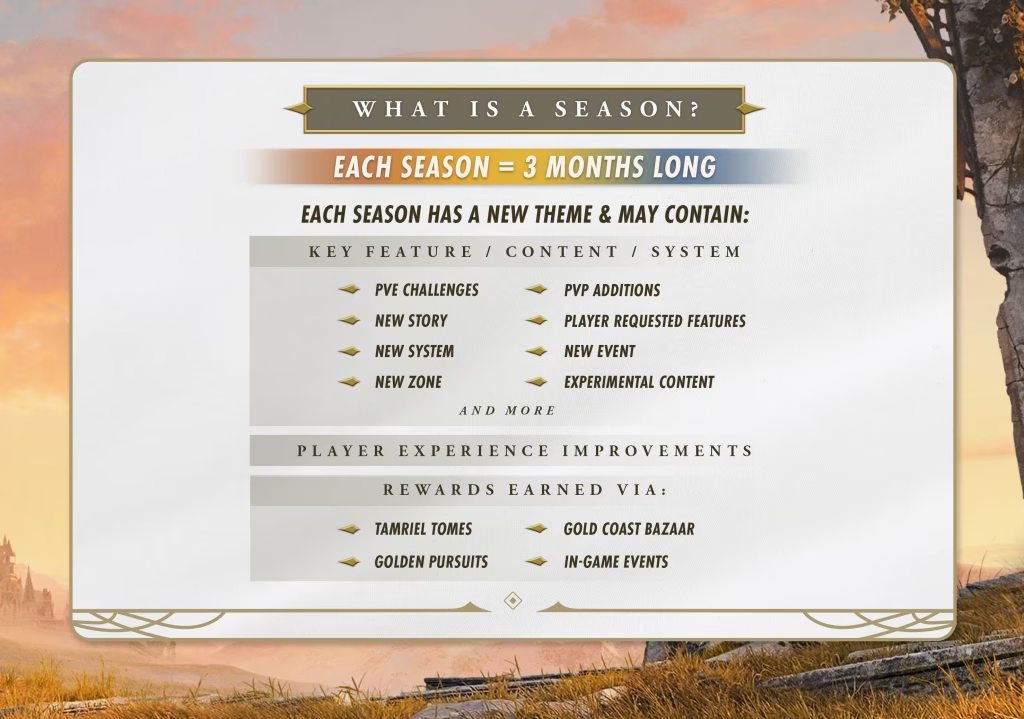
For years, Elder Scrolls Online operated on a predictable cadence: a major Chapter mid-year followed by quarterly DLC releases (dungeons, story zones, and feature additions). Switching to seasonal content was a deliberate move to break away from those rigid expectations.
“A Chapter and DLCs carried a set of expectations for players that resulted in us having all hands on deck driving toward that set of expectations,” Giacomini explained. “There was room for innovation, but it was still fairly limiting. Switching to the seasonal model was a way to break free and give the team the ability to innovate, to create more, and build more things that players were asking for that didn’t fit within the traditional DLC or Chapter model.”

The traditional model meant fixed deliverables, rigid production timelines, and everyone focusing on the upcoming Chapter. Seasons on the other hand allow the team to be flexible in their priorities, experiment with content, and iterate on feedback faster, as Zenke explains “we can put something out, get people’s reaction to it, get feedback, [and then] implement”.
Narratively, the change has been equally liberating. Zenke noted that the team no longer feels compelled to write every storyline to the same scale or format:
“The Chapter model worked for us for a long time, but […] it had a certain amount of expectations in terms of quests and scale of [the] story. [For example] Thieves Guild and Sheogorath, and then the upcoming Vault content, the types of stories we can tell in the seasonal framework are very different and experimental”.
This flexibility allows the team to gauge reactions to experimental content and adapt future iterations based on community reception.
Designing for everyone: The new Overland Difficulty System
One of Update 50’s most talked-about additions is the custom Overland Difficulty system. As we discussed when the system was first detailed during the Seasons Direct, the gap between casual story-seekers and high-end endgame players has widened over time. Creating a system like Overland Difficulty that addresses both audiences without splitting the player base was a major technical hurdle.
Rather than inflating enemy health pools—which can make combat feel sluggish—the team opted for individual damage-scaling mechanics. It’s a rather clever implementation of the system, allowing teams of players to party together, whilst maintaining individual level difficulty. “It was one of our most-requested features,” Giacomini said.
“There was a lot of internal tuning and testing, but the design team came up with structure […] we didn’t want to make it too complicated, so the type of scaling that we chose we arrived at it [through testing and tuning]. We wanted to start with this, [… a] fundamental, easy to understand system to see how players engage with it.” Giacomini hinted at new things coming, explaining that a very high percentage of players have tried it, and a large portion have stuck with at least one of the higher settings.
Class refreshes, shifted timelines, and honouring former developers
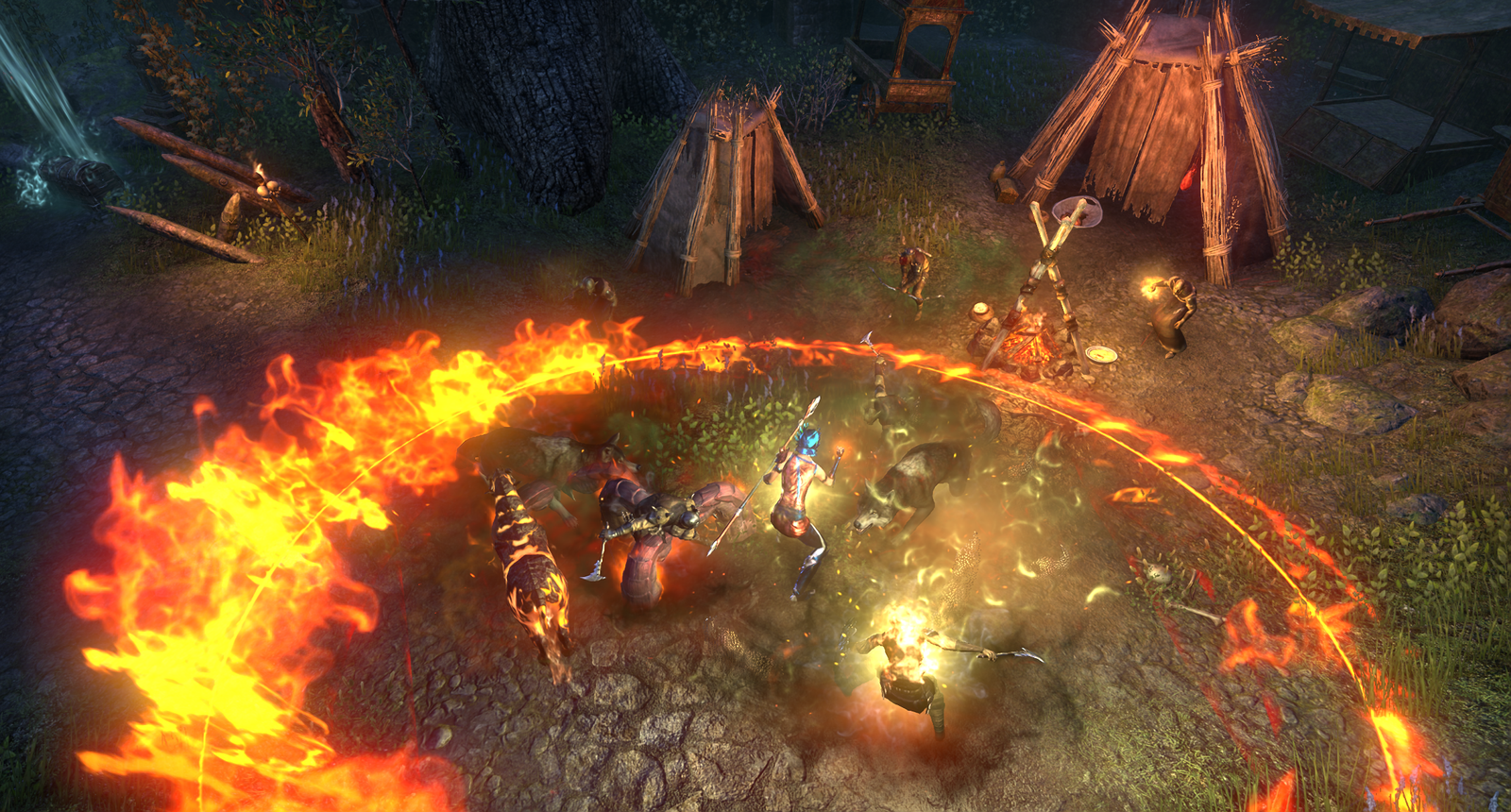
As a Dragonknight main, I’ve loved seeing the Dragonknight class rework that debuted in Update 49 settle into the meta. However, members of the community playing other classes—especially Wardens—have voiced frustration over shifted timelines for their respective refreshes.
Addressing these delays directly, Giacomini spoke candidly about the impact of the July studio layoffs and the team’s commitment to quality over arbitrary release dates:
“July was a big deal for us, and it’s been very challenging. We’re people at the end of the day, and it’s not an easy thing to go through. […] But we love this game, we love this community, [… and] we’re not looking to just maintain this game. We are looking to build, to grow, and to give players what they are hoping for […] When July happened, we decided we weren’t going to just chase an arbitrary date. It has to meet a certain bar.”
Zenke added another dimension to why the team is taking time with these updates: carrying forward the work of colleagues affected by the changes.
“The stuff we’re releasing right now and in the near future is content that people we worked with cared a lot about and put a lot of passion into. we feel this sense of obligation to them and respect for their work that we want to see what they worked on and the things that they cared about kind of come into light […] in the best possible viewpoint. That’s one of the reasons for some of the timeline shifts.”
While the Warden refresh requires more runway, work continues across the board, with early planning already underway for classes like the Templar. Zenke and Giacomini also hinted at some really great things coming soon and we’re excited to see things continue to develop.
Taking risks: High Seas of Tamriel & underwater exploration
Launching alongside Update 51 is High Seas of Tamriel (running September 30 – October 14), one of the most experimental events The Elder Scrolls Online has introduced. Instead of simply offering bonus loot in existing zones, High Seas introduces a self-contained, multi-phase activity featuring naval combat and underwater exploration, an idea ZeniMax first teased when previewing their experimental pipeline.
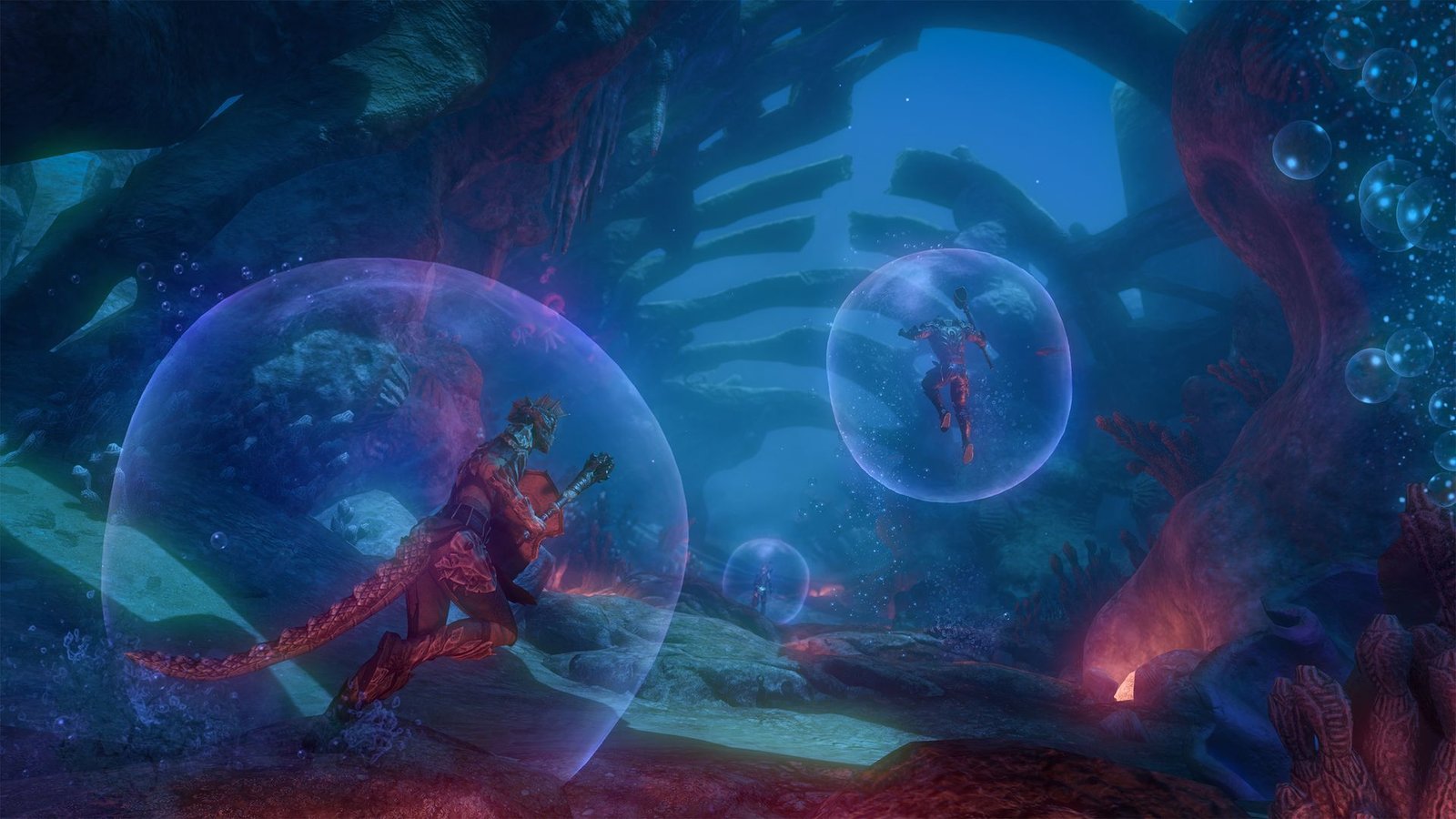
“Most events in ESO give you more rewards in a specific region for a week,” Zenke explained. “With High Seas, we wanted to create a brand-new experience, a place to visit within the game.”
The event starts with a brief quest line alongside a ghost pirate captain before launching players into a multi-stage instance:
- Shipboard Naval Combat: Players repel invading Sea Elves in a high-tension deck battle, balancing mob control with ship defense.
- Dwemer Submersible Descent: After clearing the deck, players enter a Dwemer diving chamber to travel to the ocean floor.
- Seafloor Exploration: Utilising “Dwemer Magic,” players navigate the seabed with low-gravity jumping while maintaining standard combat mechanics against deep-sea bosses and creatures.
The team purposefully designed the event to be accessible to solo players, avoiding the mandatory group scaling tested in previous events like the Night Market.
Puzzles and Non-Combat Features: Nowhere Vault & Rumors
Alongside High Seas, ESO’s Update 51 introduces two major non-combat systems designed to widen the variety of gameplay in Tamriel: the Nowhere Vault and the Rumors System.
Nowhere Vault
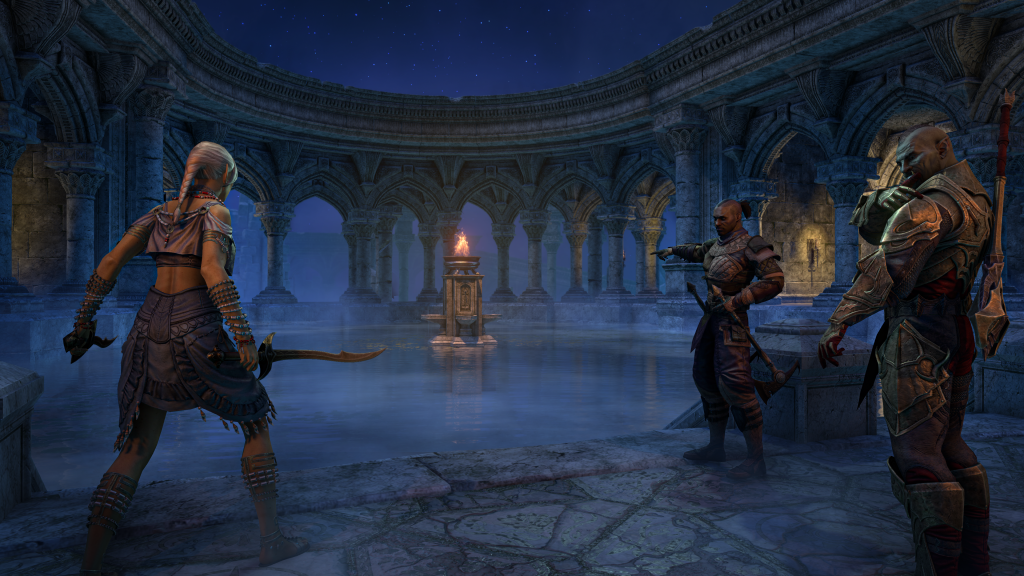
Focusing heavily on environmental puzzles, navigation, and mechanics outside standard combat rotations, the Nowhere Vault offers a shift in pace for solo and small-group players seeking non-traditional challenges.
The Rumors System
Designed to bridge the gap between static lore books and fully voiced quest lines, Rumors acts as a narrative scavenger hunt across Tamriel.
“The Rumor system lives in a really cool space,” Zenke noted. “It gives us an opportunity to highlight characters, stories, and lore concepts that might not fit into a full questline, delivering narrative context through exploration.”
Looking ahead: 2028 and beyond
There are exciting things on the horizon for the team, and whilst all these updates are awesome, I couldn’t help but ask one question. Everyone in the technology space is talking about AI right now, so I thought I’d get the team’s thoughts on how AI is changing the way they develop games. When I asked about the role of emerging tech like AI in game development, both Giacomini and Zenke emphasised that technology should support developers rather than replace human creativity.
“AI is interesting as a tool for logistics and data review, but not as a replacement for creativity,” Giacomini stated. “Games are art. Our players care if an experience is fun, surprising, and worth their time. We ask if a tool can help developers spend more time on parts of development that create real value for players, but not as a replacement.”
Looking further into the future, the studio is actively planning long-term roadmaps stretching out to 2028. For Giacomini, maintaining ESO isn’t about chasing individual pet features, it’s about ensuring Tamriel remains a living home for its community.
“This game is a place where people live, explore, and connect,” Giacomini said. “My hope is that our players feel heard, that they have a say in how this home is built, and that it continues to be a space of comfort, surprise, escape, and delight”. Giacomini wants ESO to remain forever and be a place that people can come home to. Update 51 is now live, bringing with it Nowhere Vault, the Rumors System, and High Seas.
Check back often for more exciting news!