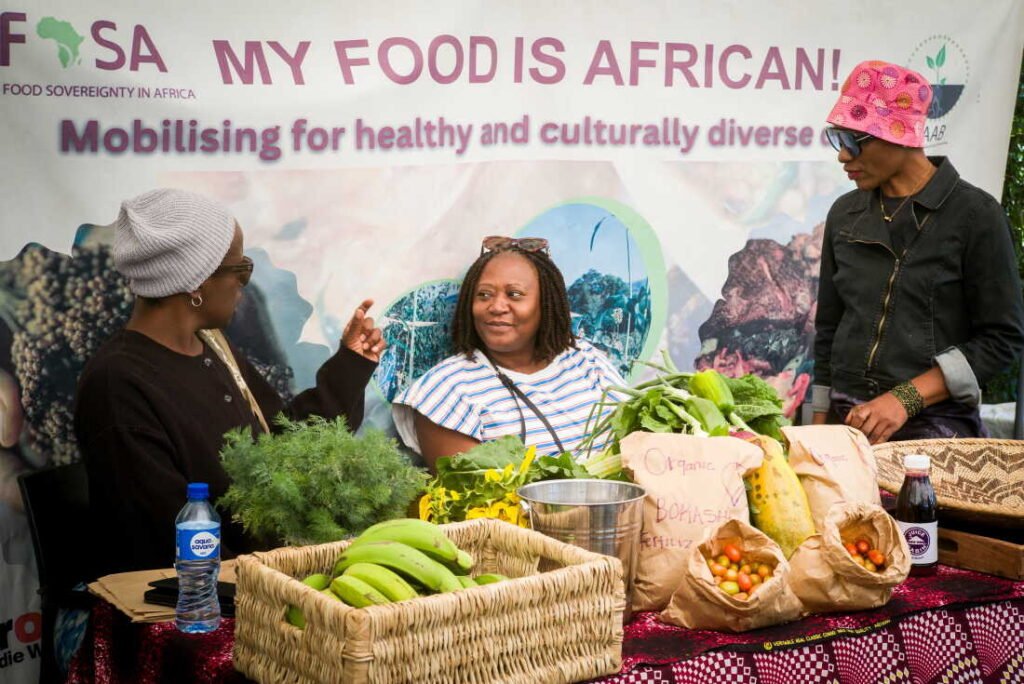
At a market in Zambia, organic vegetables share table space with bags of homemade bokashi fertilizer that sell for about $2.50 each. Andy Higgins for NPR hide caption toggle caption i Andy Higgins for NPR On 12 acres outside of Lusaka, Kanangwa Newlove has built a paradise. Shady fruit trees dot her fields. During the
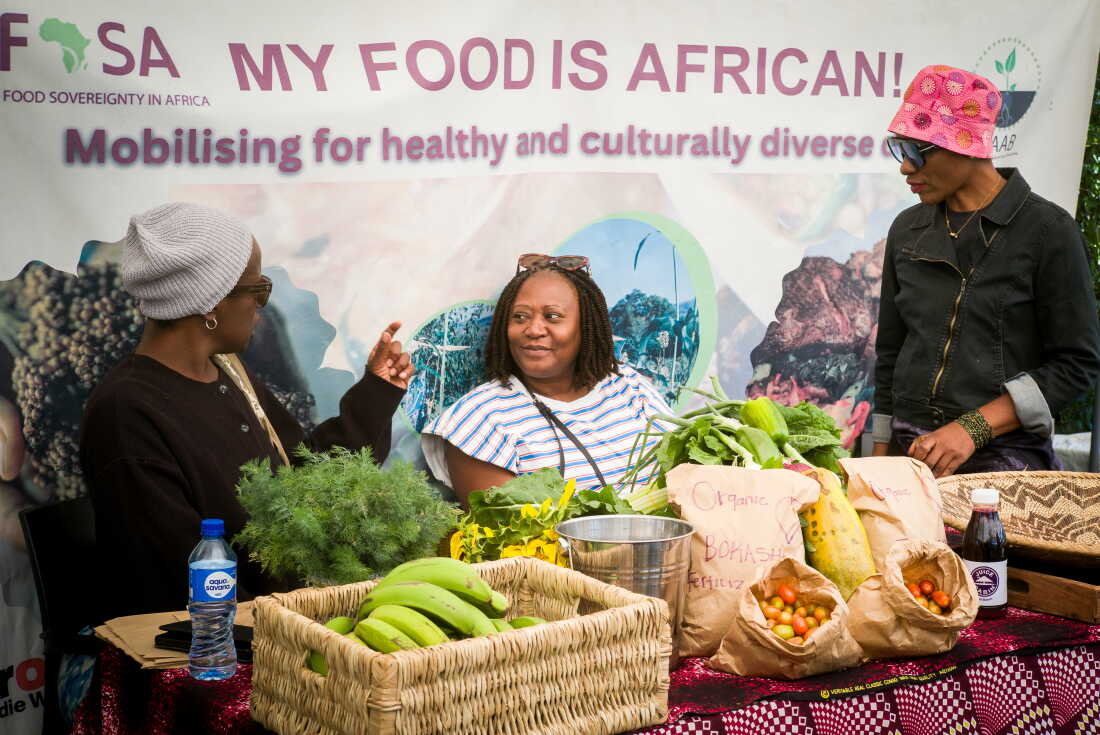
At a market in Zambia, organic vegetables share table space with bags of homemade bokashi fertilizer that sell for about $2.50 each.
Andy Higgins for NPR
hide caption
Andy Higgins for NPR
On 12 acres outside of Lusaka, Kanangwa Newlove has built a paradise.
Shady fruit trees dot her fields. During the growing season, long tomato vines drape over trellises. There are tidy rows of corn, pumpkins and a local leafy green called blackjack. Eleven varieties of lettuce.
“I started taking vegetables to my workmates, and before I knew it I was supplying the supermarket,” Newlove says. “It went on and on.”
For many farmers, 2026 has been a challenging year. The Iran war choked off the Strait of Hormuz and dramatically halted international trade shipments — including fertilizers. Prices spiked globally. The effects were quickly felt in African countries, where smallholder farmers are often vulnerable to rapid changes in fertilizer costs.”
Newlove, however, didn’t feel the pinch. For years, she’s fertilized her plants with a homemade, fermented compost known as bokashi.
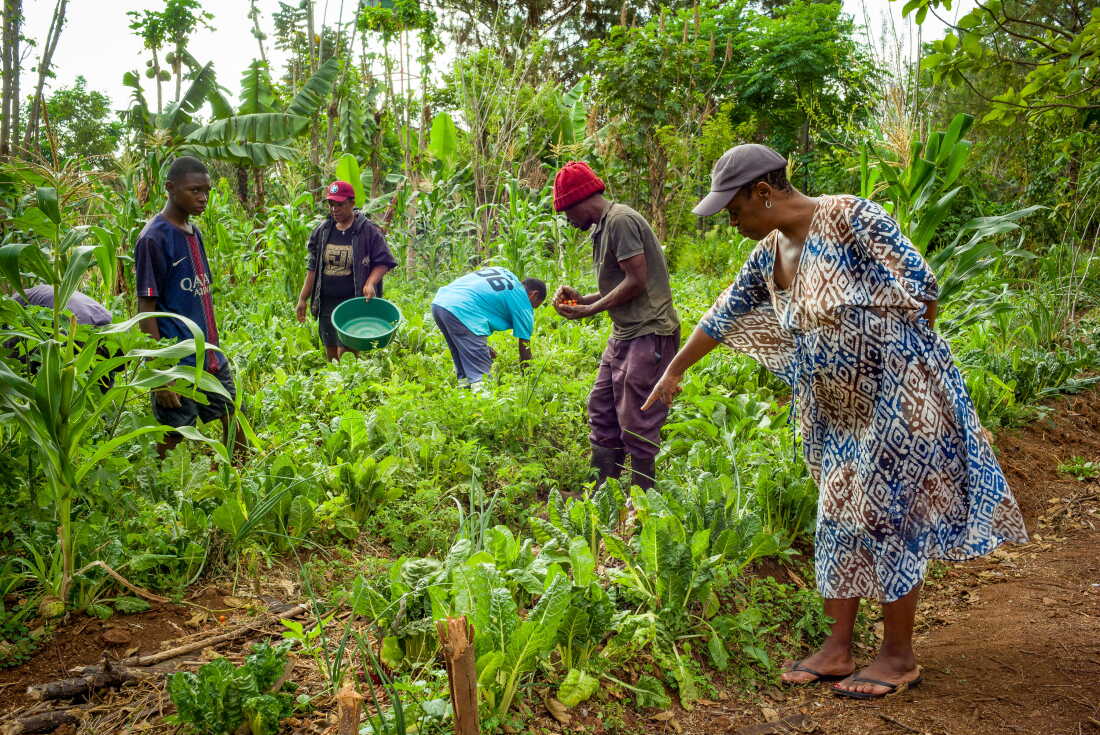
Kanangwa Newlove (right), the founder of Loctaguna Organics, and her team harvest organic vegetables. She also makes fertilizer known as bokashi.
Andy Higgins for NPR
hide caption
Andy Higgins for NPR

A solution from ancient Asia
With roots in ancient Korean farming traditions and popularized in Japan, bokashi is relatively easy to make. According to Newlove, it’s also highly effective.
“We could now have a potent fertilizer —– organic —– which is ready in [weeks]. For us that was amazing,” Newlove says. “It was a game changer, to be honest.”
Bokashi has become so popular in Zambia, she says, that farmers now sell homemade bokashi compost at markets and swap tips on social media. The Kasisi Agricultural Training Centre offers bokashi training and often sends students to her farm to see it in action.
“[Zambian farmers] have been looking for alternatives — how to grow food but reduce costs,” says Rabecca Mwila of the Knowledge Platform for Organic Agriculture and Agroecology in Africa. “Inputs such as bokashi have come in to provide a cushion for them.”
Here’s the recipe
For home composters, bokashi is a method of fermenting food scraps in an anaerobic environment — no oxygen allowed! But many farmers make a version of bokashi outdoors. Ingredients are often easy to find on a farm: leaves or crop residues, animal dung, charcoal and ash from a fireplace. Then, they add yeast and a source of sugar (molasses or bananas, in a pinch) to jump start the fermentation process. The mixture heats up as microbes break it down.
After a couple of weeks of fermentation, the concoction is buried underground near Newlove’s crops, so it can break down completely.
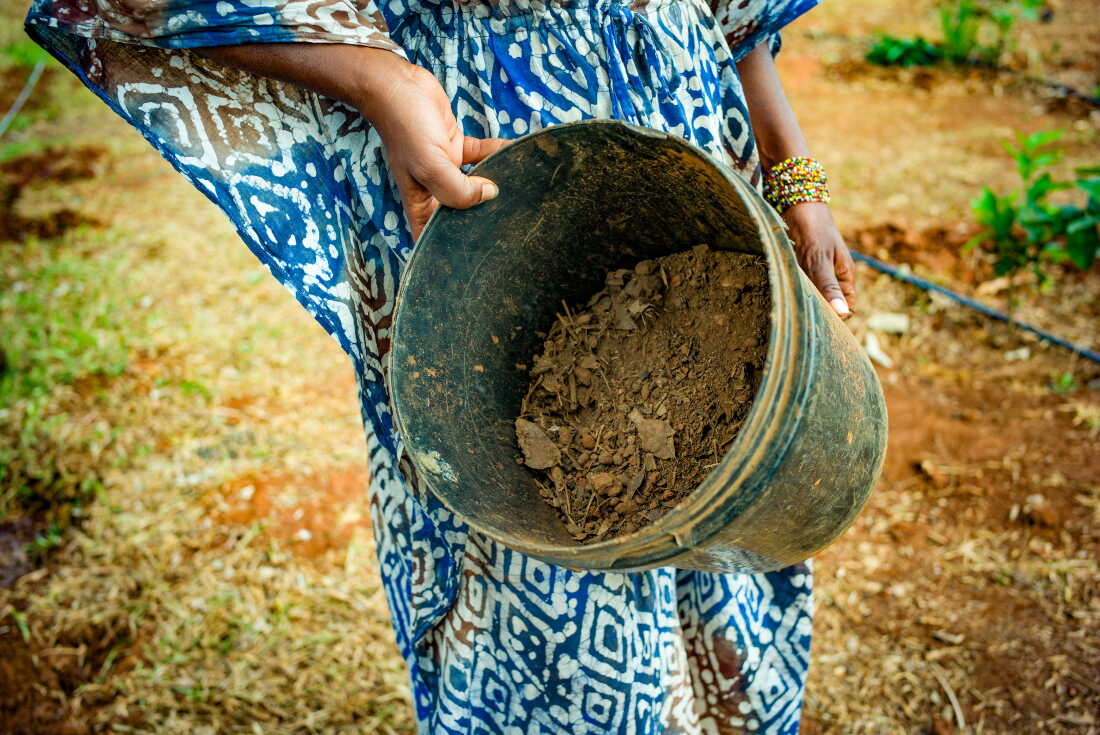
Plant matter, animal dung, ash, molasses or a banana and a pinch of yeast are ingredients that ferment to yield a bucket of bokashi fertilizer.
Andy Higgins for NPR
hide caption
Andy Higgins for NPR
“There’s a lot of excitement from farmers because they’ve been able to testify that it’s cheaper for them, and their soil is rebuilding,” Mwila says. “They’re able to see earthworms.”
As climate change makes rainfall less predictable and dry seasons longer, Mwila says farmers are increasingly interested in inexpensive, sustainable options.
Many voice concerns about the longer-term impact of commercial fertilizers. “Because of the overuse of synthetic fertilizers and pesticides and herbicides, the soil is completely depleted,” says Mwila.
Zambia once imported nearly all of its fertilizer. After global prices tripled following the COVID-19 pandemic and the Russian invasion of Ukraine, finding alternatives became a matter of food security.
In addition to bokashi, the Zambian government has promoted the growth of its domestic fertilizer industry. Last week, a Chinese-Zambian conglomerate announced its intention to build a $1.5 billion fertilizer plant in the country.
Although global fertilizer prices largely dropped over the summer, including in Zambia, some fertilizers remain expensive in southern African countries, including Malawi, Tanzania and South Africa.
While the government subsidizes fertilizer, there isn’t always enough to go around. Donald Zulu, a lecturer and researcher at Copperbelt University in northern Zambia, says that without subsidies — a farmer will pay about $400 USD to buy enough fertilizer to grow 2.5 acres of corn.
“It’s quite expensive and out of reach for many smallholder farmers,” Zulu says.
Do veggies like it?
Seeking an alternative, he started working with WeForest and local farmers to study how well bokashi worked on corn and cabbage in 2024.
“The results were very encouraging,” Zulu says. “Bokashi echoed the yields of mineral fertilizer.”
This suggested that small-scale farmers could use bokashi — which is cheaper — and grow a comparable amount of food. But to his surprise, the best-performing crops were planted with smaller amounts of both bokashi and mineral fertilizers.
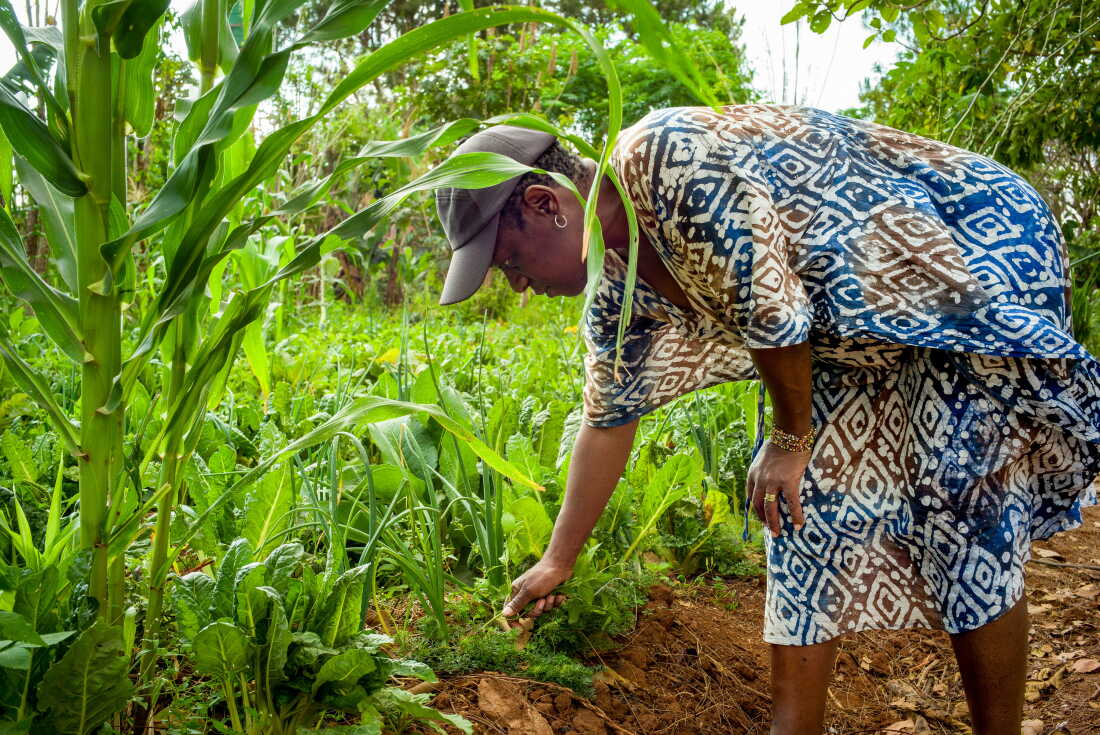
Kanangwa Newlove makes her own fertilizer, called bokashi. “Even when you’re making it, you don’t need to wear a mask because it’s not toxic. There’s no harmful chemicals,” Newlove says. “So it’s all just like a labor of love.”
Andy Higgins for NPR
hide caption
Andy Higgins for NPR
“That’s where bokashi becomes key in terms of helping farmers to be food secure,” he said.
For farmers like Kanangwa Newlove, bokashi is less about the cost, and more about building a sustainable farming practice that preserves the land.
“Even when you’re making it, you don’t need to wear a mask because it’s not toxic. There’s no harmful chemicals,” Newlove says. “So it’s all just like a labor of love.”
For stories about life in our changing world, subscribe to NPR’s Global Health newsletter.
{For more tech updates, stay tuned to our blog.|Keep following us for the latest insights.|Check back often for more exciting news!}