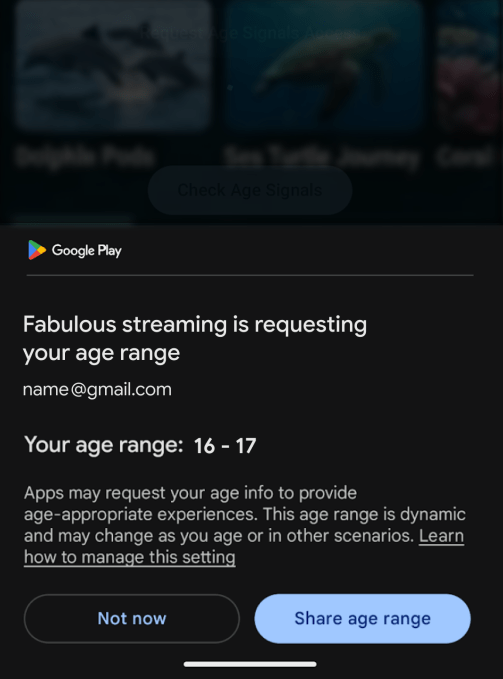
Google is expanding its response to Apple’s age monitoring tools with news Wednesday that it will bring its Play Signal API to users around the world by the end of 2026. The technology, already available in Brazil, allows Android developers to identify the youngest users of their apps to provide them with safer, age-appropriate experiences.
Google is expanding its response to Apple’s age monitoring tools with news Wednesday that it will bring its Play Signal API to users around the world by the end of 2026. The technology, already available in Brazil, allows Android developers to identify the youngest users of their apps to provide them with safer, age-appropriate experiences.
The expansion will initially bring the API to Australia and Canada in mid-August, before rolling out globally to all markets by the end of the year.
Its arrival comes as lawmakers and regulators around the world put increasing pressure on app stores to provide better protection for minors. Apple, for example, launched its age verification tools globally in February to comply with the growing number of age verification laws.
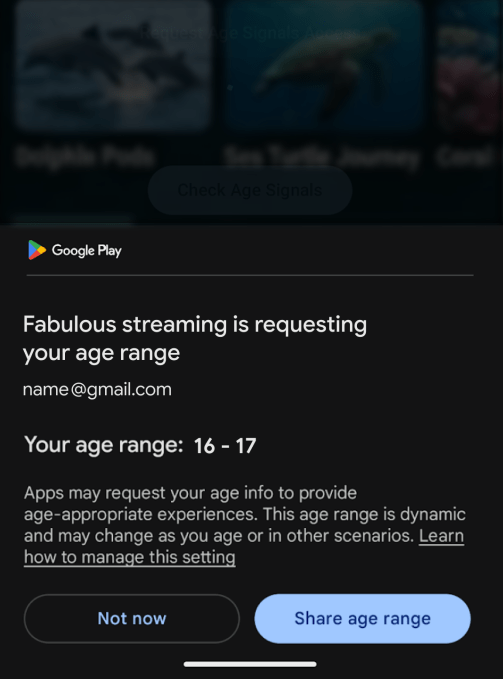
Like Apple, Google’s technology allows developers to obtain a user’s age range without needing access to personal information, such as their date of birth. Instead, it allows parents to share their children’s age range directly with the apps. It also allows adults to share their age when prompted by app developers, allowing for personalized experiences.
Parents will also not have to manage the sharing of this information on an app-by-app basis. To make it easier, Google centralizes these controls within its parental control panel, Family Link. Once entered, any developer who chooses to incorporate age range information can access this signal to customize their apps accordingly.
Google notes, however, that age ranges are not shared by default: parents must opt-in by entering that information.
The feature joins other safety tools on Google Play, including those that allow developers to restrict a child’s ability to discover their apps. In the meantime, parents can continue using Google Play’s Family Link app to manage their kids’ screen time limits, approve app downloads, or set up PIN-based content filters for specific apps.
When you buy through links in our articles, we may earn a small commission. This does not affect our editorial independence.
For more tech updates, stay tuned to our blog.