President Trump says he “made the deal” that put Jensen Huang back in charge of Nvidia. “I convinced them,” Trump told CNBC on Nov. 23, shortly after the company’s board voted unanimously to reinstate Huang, 11 days after he resigned. Nvidia contributed $25 million to Trump’s White House ballroom project, according to The Washington Post.
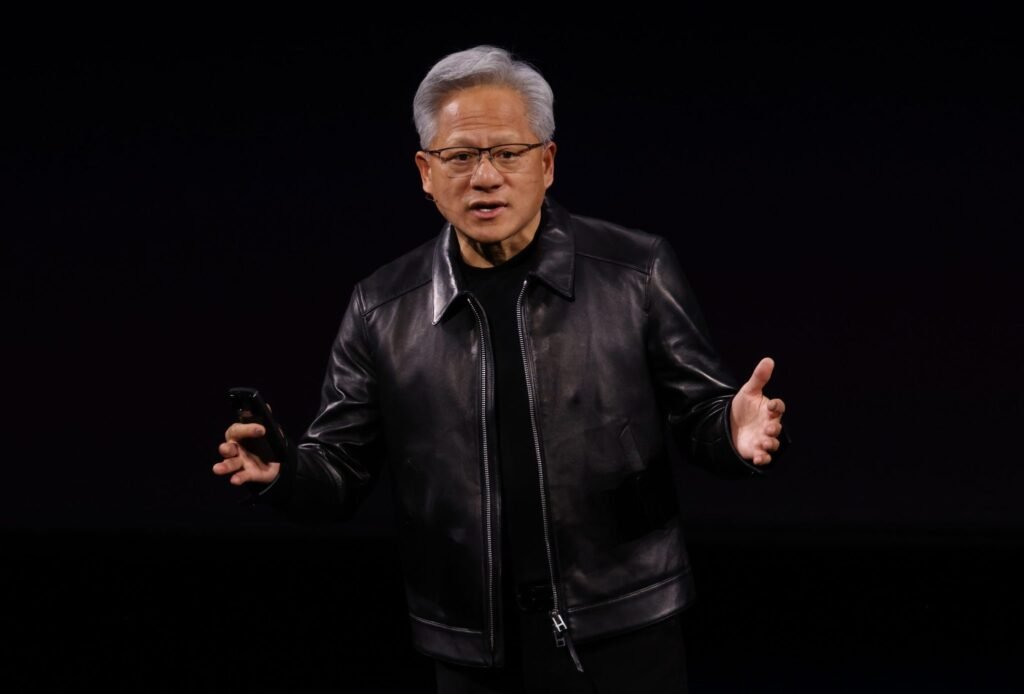
President Trump says he “made the deal” that put Jensen Huang back in charge of Nvidia. “I convinced them,” Trump told CNBC on Nov. 23, shortly after the company’s board voted unanimously to reinstate Huang, 11 days after he resigned.
Nvidia contributed $25 million to Trump’s White House ballroom project, according to The Washington Post. The company asked to remain anonymous, though Huang publicly acknowledged the donation in October 2025 without disclosing the amount. Senate Minority Leader Chuck Schumer has explicitly linked the gift to Trump’s handling of the intelligence allegations surrounding Huang.
Jensen Huang returns to Capitol Hill on Dec. 1 for a closed-door transcribed interview with the House Intelligence, Foreign Affairs, and China select committees. It will be his first appearance before Congress since Nvidia’s board reversed course and put him back in charge. Two days later, he faces a public hearing before the Senate Banking Committee, which Chairman Tim Scott, R-S.C., has said will focus on oversight of U.S. export controls.
The hearings will test whether Huang’s return settled anything. Nvidia reinstated him on Nov. 23, 11 days after he resigned following reports of extramarital affairs, including one with Alice Huang, a former executive at Singapore-based Megaspeed whom U.S. authorities suspect of ties to Chinese intelligence. The two are not related.
Investors cheered. Nvidia shares jumped more than 30% on Nov. 23, the stock’s best day since May 2003, adding nearly $1 trillion in market value. Lawmakers were less impressed.
The stakes go well beyond one executive. Nvidia, No. 16 on the 2026 Fortune 500, makes the chips at the center of the AI boom, and Huang has been the industry’s loudest advocate for selling them to China. How Washington answers questions about him will shape how far the U.S. lets its most valuable chipmaker sell into China, and how seriously it enforces the rules already on the books.
How Huang got his job back
The reversal came fast. Days before it, board chair Harvey Jones said the company did not intend to reinstate Huang. President Trump, who said he had been in contact with Nvidia’s board “directly and indirectly,” publicly pushed for his return, and the board said it voted unanimously after receiving input from senior levels of the U.S. government.
Fortune has reconstructed the 11 days that brought Huang back to Nvidia. That sequence is what troubles critics. Sen. Elizabeth Warren, D-Mass., the Banking Committee’s ranking Democrat, called the reinstatement reckless, and Sen. John Cornyn, R-Texas, questioned Nvidia’s assertion that Huang’s return posed no national security risk.
Sen. Chris Coons, a Delaware Democrat expected to chair the Senate Foreign Relations Committee in January, had already pledged to investigate what he called the “insane relationship between the Trump Administration, Chinese spies, and AI billionaires.”
What is established about Alice Huang, and what isn’t
Strip away the speculation and three facts hold. Alice Huang is a former executive of Megaspeed, a major buyer of Nvidia chips. Jensen Huang has acknowledged an affair and apologized. He has long advocated continued sales of AI chips to China.
None of those facts proves that Alice Huang was recruited to influence Nvidia’s policies, or that company information was compromised. U.S. officials themselves disagree. In recent briefings, the FBI has assessed that U.S. intelligence does not show she is an officer or asset of Chinese intelligence, while some officials see her contact with China’s Ministry of State Security as a sign of cooperation, Reuters reported Nov. 25.
China denies the allegations. Megaspeed says it conducts lawful business and complies with U.S. export controls, and Nvidia’s board has said it has no reason to believe national security or company secrets were compromised.
Megaspeed itself may be the sharper business question. The company has been investigated over allegations that it diverted advanced U.S. chips to China, which it denies. A short seller, Culper Research, flagged Nvidia’s exposure to Megaspeed and Alice Huang six months before the scandal broke.
The H200 question Congress will press
Huang’s lobbying is on the record. In January, he won Trump’s approval to sell Nvidia’s H200 chips to China, provided they undergo third-party review before export, the Associated Press reported. The Financial Times has reported that U.S. national security officials were frustrated by his efforts to persuade Trump on the H200.
Earlier this month, Fortune’s Jeremy Kahn argued that even if Huang kept his job, his influence on U.S. AI policy was over. He kept the job. The hearings will show what influence remains.
The Commerce Department issues export licenses, but Congress is weighing bipartisan bills that would tighten restrictions on chip sales to foreign adversaries and require manufacturers to track sensitive chips after shipment. The push comes amid concerns, reported by the Financial Times, that advanced AI chips could help accelerate China’s military. Commerce Secretary Howard Lutnick has agreed to testify before the Banking Committee.
Would cutting China off matter?
Chips are unusually hard to replace. A January 2025 Federal Reserve staff note found that chipmaking is “extremely low substitutability throughout the value chain,” because of huge fixed costs, specialized talent, and geographic concentration. Because semiconductors feed a wide range of manufactured goods, supply shocks can have large, persistent global effects.
China is working to reduce its dependence. The Fed note describes how its Made in China 2025 plan “set the goal of achieving a high degree of self-sufficiency across a range of frontier sectors, including information technology, robotics, and new energy vehicles.” China now leads the world in chipmaking capacity by wafer volume.
That capacity, though, is concentrated in older legacy chips, and China has essentially no production capacity for high-end chips. China’s technological ambitions clearly extend beyond American exports. At the frontier, where AI demand is heaviest, chips like Nvidia’s still matter.
That is the tradeoff lawmakers will put to Huang: whether the U.S. can keep its AI lead while capturing the economic benefits of global chip trade, and whether Nvidia can account for where its chips end up. A House Intelligence Committee spokesperson told CBS News that the reinstatement “changes nothing.” Nvidia general counsel Tim Teter is scheduled to appear before the same House panels on Dec. 2.
For more tech updates, stay tuned to our blog.