The Industrial Revolution overturned centuries of English agrarian life, but the rapid societal transformation came at steep costs to the laborers themselves. Miserable working conditions, poor housing, and pollution all contributed to health problems among factory employees as well as their families. Meanwhile, children faced countless diseases like rickets, which prevents developing skeletons from adequately
The Industrial Revolution overturned centuries of English agrarian life, but the rapid societal transformation came at steep costs to the laborers themselves. Miserable working conditions, poor housing, and pollution all contributed to health problems among factory employees as well as their families. Meanwhile, children faced countless diseases like rickets, which prevents developing skeletons from adequately mineralizing.
However, a recent investigation into a 19th century Quaker cemetery in northeast England indicates the Industrial Revolution wasn’t the sole culprit behind this rickets endemic. After analyzing teeth from some of the graveyard’s inhabitants, archaeologists now believe that reduced exposure to ultraviolet (UV) rays likely exacerbated vitamin D deficiencies during the waning years of the Little Ice Age. The dental evidence—along with the Quakers’ corroborating records—is presented in a study published today in the journal Frontiers in Environmental Archaeology.
“We think of climate instability as a modern challenge, but it’s really nothing new as human problems go,” explained study co-author and Durham University archaeologist Ellen Kendall.
Unlike today’s climate crisis, humans didn’t generate the Little Ice Age. Instead, the prolonged period of cooling during the 13th through 19th centuries was the result of increased volcanic eruptions and lower solar activity. For hundreds of years, these combined factors minimized the UV exposure humans often rely on to generate vitamin D.
Although the Little Ice Age is well documented in historical records, it is still largely analyzed for its effects on the environment and agriculture. Kendall’s team wondered if the same climatic shifts were visible in the remains of the people who lived through it.
“Human bioarchaeologists’ primary area of expertise is understanding health from the human skeleton,” explained Kendall. “To do that, we have to consider a wide range of issues: political, environmental, dietary, social, and more.”
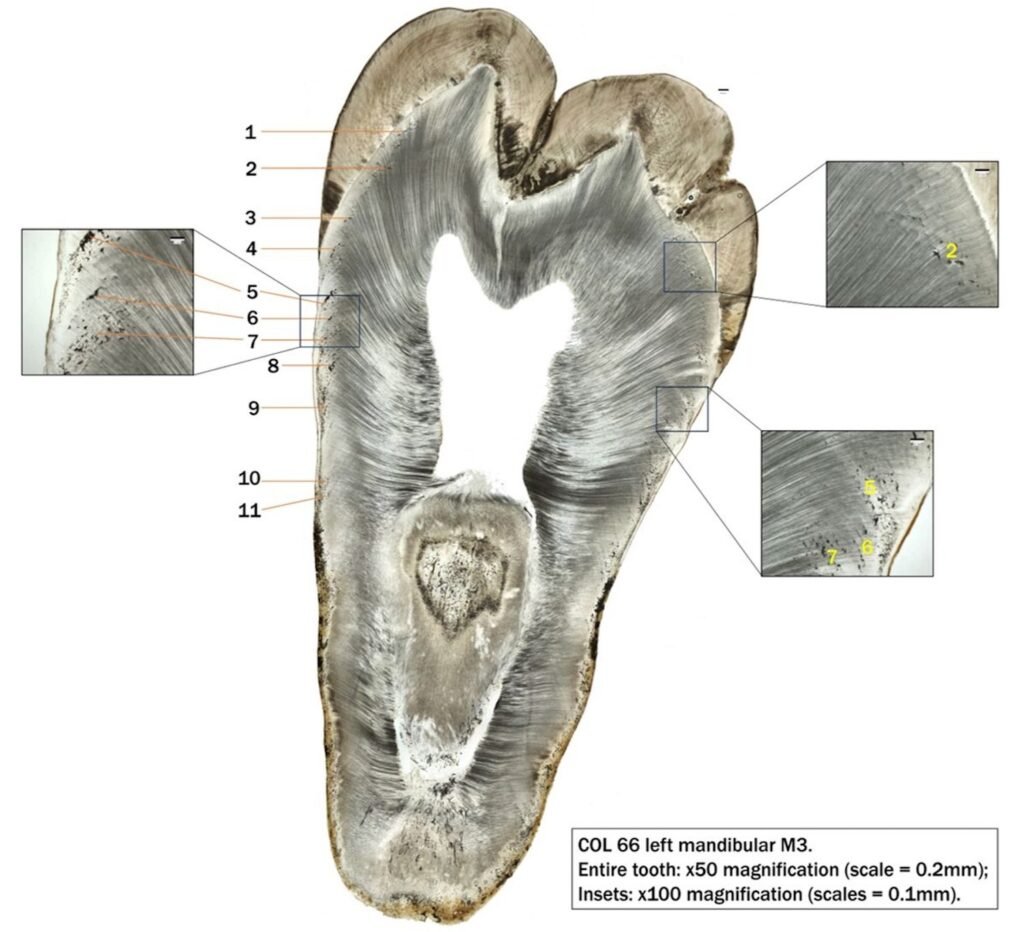
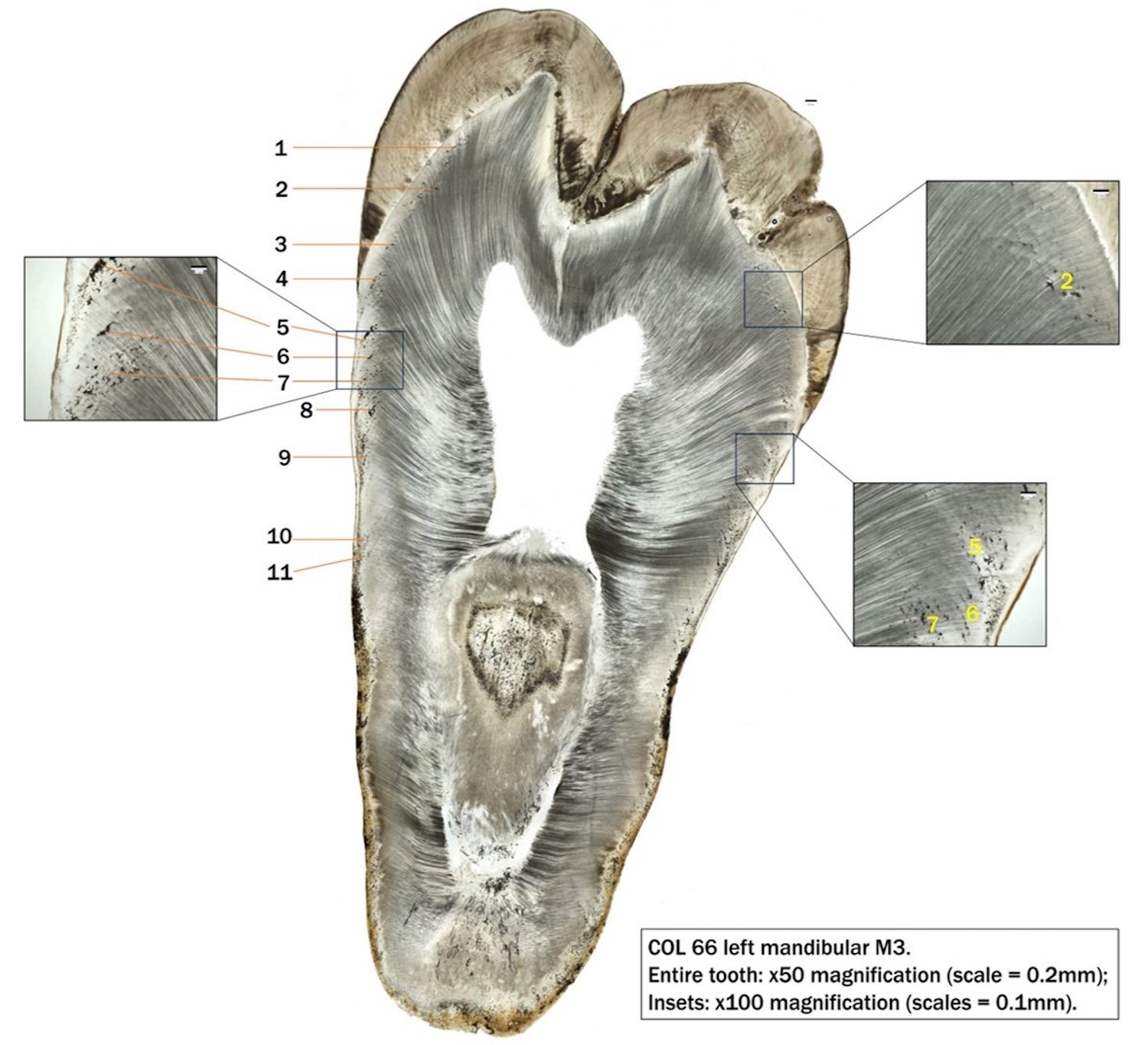
The study’s authors suspected climate’s influence on human bodies during the Industrial Revolution still remained overlooked. To investigate, the team examined 30 teeth from 21 previously recovered individuals buried in a Quaker cemetery between 1711 and 1829. They particularly focused on mineralization problems, such as a lack of calcification in the inner tooth layers called dentin.
Deficient calcification sometimes occurs naturally, but biologists suspect vitamin D deficiency when teeth are regularly stratified by layers of hardened and soft dentin. Teeth grow on a predictable schedule, so the team looked at each individual’s dentin and confirmed most of their issues occurred during infancy and childhood. This is where many researchers would have ended their work, but meticulous historic records allowed Kendall’s group to date each individual’s dentin issues even more precisely.
“The Quakers were known to keep precise records, which makes them an important source of information about themselves, but also about the northeast of England, where they were very prominent in local history,” said Kendall.
Researchers couldn’t match teeth to specific individuals, but archival information allowed them to look at the wider community. Of 109 individuals matched to birth years, 91 were born within a decade following a major volcanic eruption. Of these, 41 were born during periods where volcanic activity and low solar energy overlapped.
Kendall and the study’s co-authors aren’t arguing the Industrial Revolution had less of an impact on human health than experts think. Instead, they contend that these natural factors also exacerbated the problems. It’s rare to find a sole culprit in these situations, but acknowledging the larger picture allows a fuller, more nuanced understanding of historical highs and lows. According to Kendall, humanity is a complicated species defined by biology, cultural systems, and the environment around us.
“No part overrides another; they all interact,” she added.

2026 Popular Science Home of the Future Awards
Keep following us for the latest insights.