Namkoong Sun, director of Netflix’s Korean romance “Love Untangled,” said her first commercial feature felt little different from her independent films once cameras rolled, apart from the scale. The freedom, she added, came with weight. Namkoong was speaking at “New Voices in Film,” an industry panel staged by the Busan International Film Festival and Netflix
Namkoong Sun, director of Netflix’s Korean romance “Love Untangled,” said her first commercial feature felt little different from her independent films once cameras rolled, apart from the scale. The freedom, she added, came with weight.
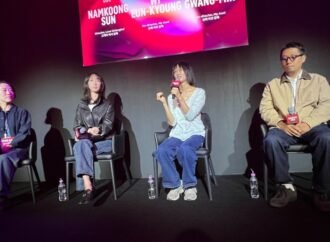
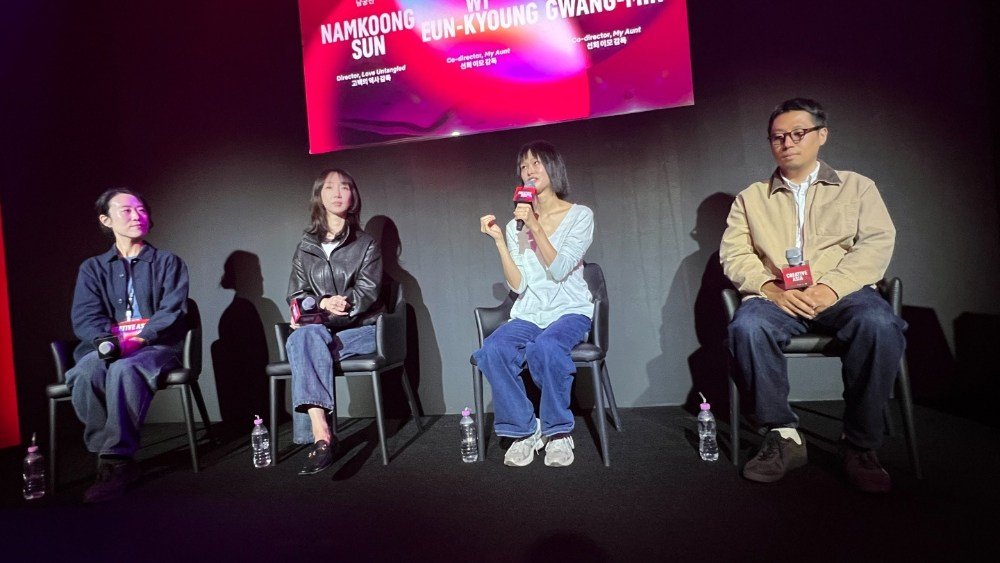
Namkoong was speaking at “New Voices in Film,” an industry panel staged by the Busan International Film Festival and Netflix as part of Creative Asia, alongside Ryu Eun-jung and Song Kwang-min, the married co-directors of the short “My Aunt.”
Namkoong’s first two features, “Ten Months” and “Time to Be Strong,” were independent titles released in theaters. She joined “Love Untangled” when the project and screenplay were already in place, coming on at the adaptation stage, and said the offer landed just as she wanted to find joy again after two films about thorny social problems. A little over a year passed between opening the production office and release.
“Once we went into production, it was a system where we could focus only on the film,” Namkoong said. “There may be upsides and downsides to that. I didn’t want to imagine what would happen if I failed to take responsibility within that freedom. But because that freedom was there, there were definitely things I was able to bring to it.”
Netflix staff sat in on meetings and worked inside the team throughout, she said, and the changes to the script were her own, made in service of what she saw as the film’s theme of happiness. The story is set in 1990s Busan, and with a modest budget for a period piece, the production recreated the Gwangan Bridge under construction to give the film a sense of place.
Her message to younger directors was that a director always carries responsibility for the story, “but within a space where creative freedom is guaranteed, I think you have to take that responsibility really seriously.”
Namkoong said she missed crying and laughing with audiences and cast in theaters, a ritual a streaming release doesn’t allow. “Once it was out on Netflix, people all over the world were watching it at the same time. On Twitter, Instagram, all kinds of social media, everyone flocked in and enjoyed it together, me included,” she said. “Small, sweet romance films don’t make up a big share of the Korean audience. But I was getting messages from people in Brazil and friends in Poland and Colombia saying the film was popular there.”
The film reached No. 1 in many countries and stayed in the global top 10 for more than six weeks, she said, even though it was made in Korean and is “really just a Busan story, a very local story.”
Her earlier releases had harder luck with timing. “Ten Months” premiered in the first year of the pandemic, with festivals shut and cinemas at half capacity. The press screening for “Time to Be Strong” took place on the day martial law was declared in Korea. “We did all the press, went home excited, and then that happened that night, so our news disappeared,” Namkoong said.
“My Aunt” is a 24-minute short. It follows a dog groomer looking after an abandoned dog over the course of one day, when the niece she raised 10 years earlier turns up at her door. It won three prizes at this year’s Mise-en-scène Short Film Festival, where Namkoong served on the jury. It is streaming on Netflix in Korea until December as part of the platform’s showcase of the festival’s prizewinners.
Ryu, who also plays the lead, drew on her own childhood, when she was raised by her fifth aunt, who later took in an abandoned dog. She had no plans to act in it but, having worked as an actor before, took the role herself and asked Song, her husband, to co-direct. Song handled directing on set, the pair shared storyboarding in pre-production, and Ryu led post-production. A previous collaboration had involved shouting matches over the phone, both recalled. This time, both said, speaking to each other without a filter built trust.
Song said he had first felt torn about a Netflix release, given what cinemas offer in image texture and sound, but came to see it as a stroke of luck. On a film-rating app, his previous film drew responses from about 15 people. “My Aunt” has been logged by 7,000 to 8,000 viewers, with more than 1,000 comments.
Namkoong, who was once a Mise-en-scène breakout herself, described the festival as a launchpad for the next generation of Korean directors. “These days, unlike in the past, anyone can upload their film to YouTube. You can screen it anywhere, really,” she said. “But what we do is pick out films and say, these are films that are more like real cinema, these are the films we’d like people to see, and put them on a list somewhere. When that came together with Netflix, the impact became huge.”
Asked by an audience member to name the single biggest challenge facing Korean independent filmmakers, the three directors answered in turn.
“The difficulty in the independent film world, then and now, is raising the budget. But more than that, the biggest challenge is not knowing in advance where a film will go after it’s made,” Namkoong said. “Even when a film is shown at a festival, you can’t tell whether it will get a release, because of what a release costs and various other things. We manage somehow to get it made, but there isn’t the infrastructure, like theatrical infrastructure, to show it.”
Ryu said cost was her main worry with “My Aunt” too. “Independent film is film made independently of capital, so it has to be made with the individual creator’s own money,” she said, noting that platforms for indie film, and interest in it, remain limited. Song, who has always paid for his films himself, named capital as the biggest hurdle but said he had no other complaints. “Shooting films is so much fun. I loved it.”
All three are now writing screenplays for their next projects. Namkoong said she hopes to make a film set in present-day Busan, drawn to the city’s two sides. “It’s a city and also the sea, a tourist spot and also a place where people live,” she said.
Check back often for more exciting news!