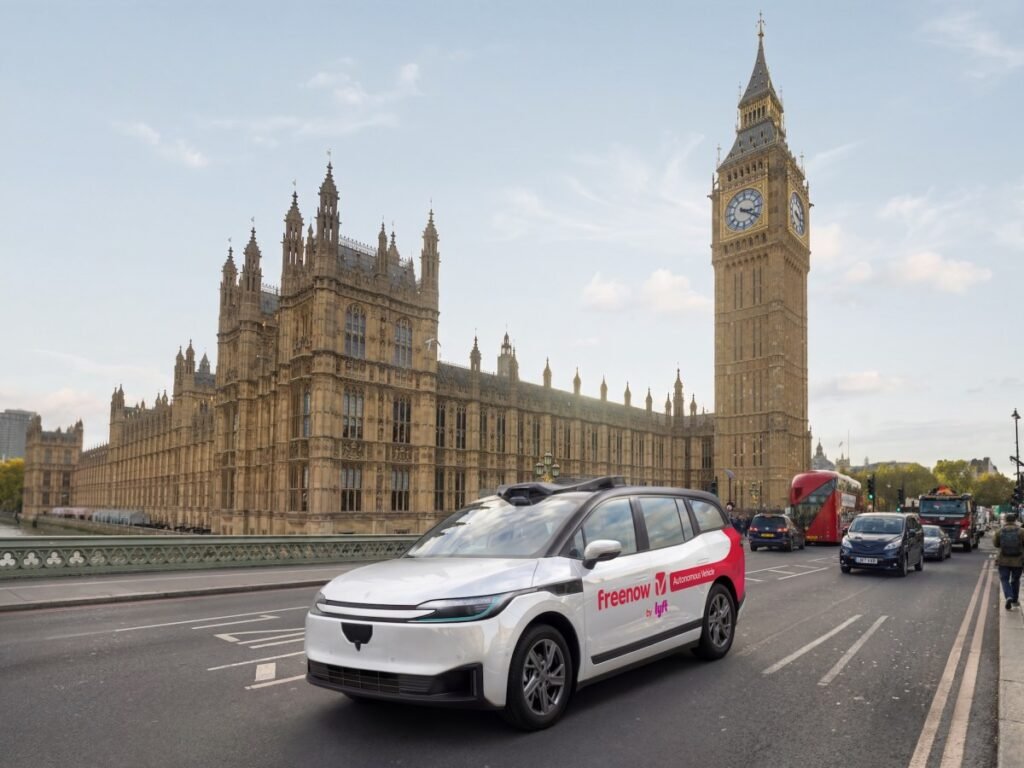
Chinese tech giant Baidu has begun testing autonomous vehicles in London as part of its partnership with Lyft and Freenow, the German taxi and multi-mobility app that Lyft now owns. Baidu is the latest in a series of companies trialling self-driving technology in the UK ahead of commercial robotaxi deployments. The trial, which began Tuesday
Chinese tech giant Baidu has begun testing autonomous vehicles in London as part of its partnership with Lyft and Freenow, the German taxi and multi-mobility app that Lyft now owns. Baidu is the latest in a series of companies trialling self-driving technology in the UK ahead of commercial robotaxi deployments.
The trial, which began Tuesday with life safety operators, comes nearly a year after the two companies established a strategic partnership to deploy Baidu’s purpose-built Apollo Go RT6 robotaxi in key European markets via the Lyft platform. The vehicles will eventually be available through Freenow, which Lyft acquired in 2025 for about $197 million.
That deal gave Lyft a foothold in Europe’s ride-sharing market, where a handful of well-funded companies are now competing to be the first to market robotaxis.
London is particular and is emerging as a key battleground in the region. In April, Waymo began testing its autonomous vehicles with human security operators in the city. Uber and its self-driving technology partner, Wayve, also announced plans to launch a robotaxi service in London this year. That initial service, which customers can now sign up for on an interest list, will have human safety operators behind the wheel before fully driverless operations begin later.
Baidu and Freenow by Lyft (as the latter service is now called) said they hope to invite the public to greet their robotaxis in 2027. The companies, which did not provide a more detailed timeline, noted that the launch will depend on regulatory approval.
For now, dozens of test vehicles will operate in the London borough of Brent. Lyft and Freenow said discussions continue with city and safety officials, including Transport for London (TfL) and the Center for Connected and Autonomous Vehicles (CCAV). The UK government is in the process of creating regulations for autonomous vehicles and opened applications in May for companies interested in an AV pilot program that would allow companies to test autonomous vehicles under government supervision.
When the service launches, Freenow by Lyft said it will operate a hybrid network, using the same language that rival Uber has used, meaning human drivers operating taxis and private-hire vehicles will work alongside robotaxis.
“As a platform with deep roots in the taxi industry, our priority is to ensure autonomous technology supports the professional drivers who keep London moving,” Thomas Zimmermann, CEO of Freenow by Lyft, said in a statement.
When you buy through links in our articles, we may earn a small commission. This does not affect our editorial independence.
Check back often for more exciting news!